
Content updated on September 12, 2026.
Sheet metal bending in Berlin: rotec manufactures bent parts from steel, stainless steel, and aluminum according to your drawings. We tailor the material, bend radius, and production sequence to your component. Whether it’s a single part, a small batch, or recurring production, the requirements of your project are what matter most.
At rotec, you can combine laser cutting, bending, and other processing steps. This allows you to coordinate cutouts, bend lines, and subsequent assembly at an early stage. You’ll receive support with technical clarifications and can submit a single request for related processing steps.
Do you need a sheet metal angle, a cover, or a multi-folded profile? Send us your drawing, including the material thickness, quantity, and desired delivery date. This will allow us to assess the technical feasibility and coordinate the scope of work with you.
Send a drawing and request quoted prices for bent parts
What is the difference between bending and folding?
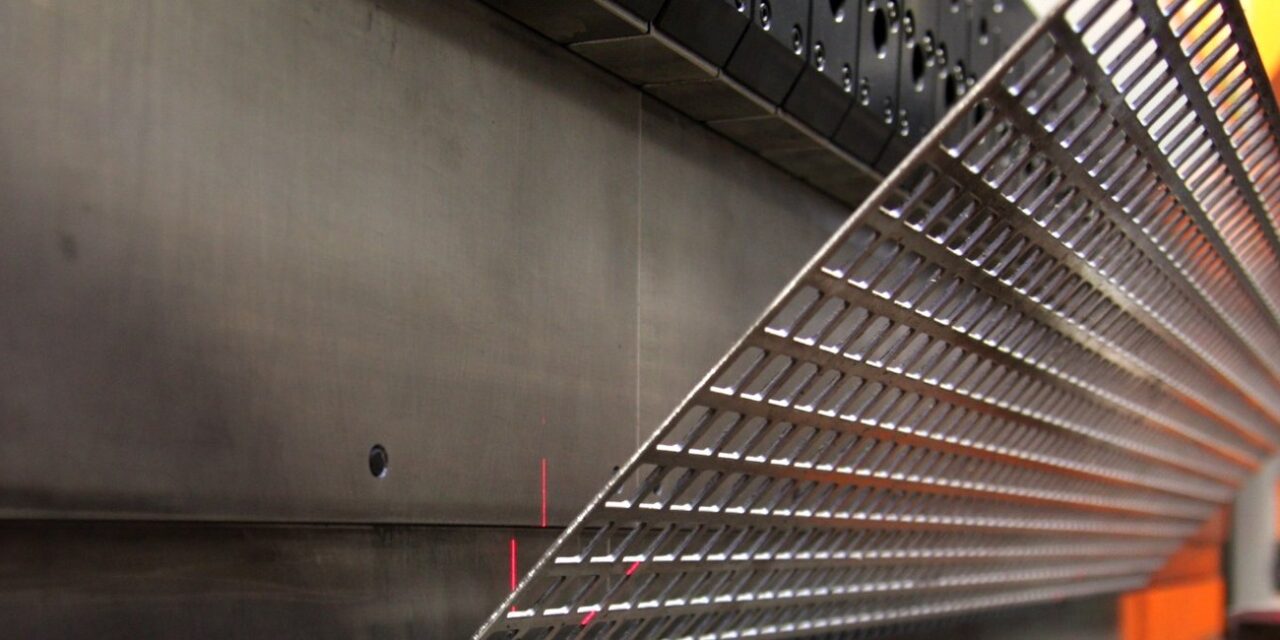
Bending refers to the permanent deformation of a sheet of metal. Press bending creates straight bends, such as those used for angles, U-channels, or covers. In a press brake, the upper die and lower die work together to bend the sheet of metal to the desired angle.
A CNC control system assists with setting up and repeating the manufacturing steps. However, the result also depends on the material, the tool, and the part geometry. That is why technical inspection is part of the preparation for every job.
To ensure a proper bent part, the bending radius, flat pattern, and required tolerances must all match. The flat pattern describes the shape of the flat sheet metal before bending. If these specifications are determined early on, it helps reduce the need for follow-up inquiries and avoidable rework.
Sheet Metal Bending in Berlin: Technical Capabilities at rotec
Our press brake has a pressing force of up to 200 metric tons and a maximum bending length of 3,040 mm. However, the possible sheet thickness depends on the material and the specific component. For this reason, we consider the bending length, material grade, inner radius, and die together.
| Machine Feature | Performance Specifications | Implications for Your Component |
|---|---|---|
| Compression force | Up to 200 metric tons | The required force depends, among other things, on the material, the bending length, and the tool. |
| Maximum bending length | 3,040 mm | The possible material thickness for this length must be checked separately. |
| Material Thickness During Bending | Up to 15 mm, depending on the project | The upper limit does not apply across the board to all materials and component geometries. |
The maximum values listed cannot be combined in any way. In particular, the 15-mm limit does not mean that every sheet of that thickness can be folded beyond 3040 mm. We will provide you with definitive information after reviewing your drawing.
Planning Laser Cutting and Bending Together
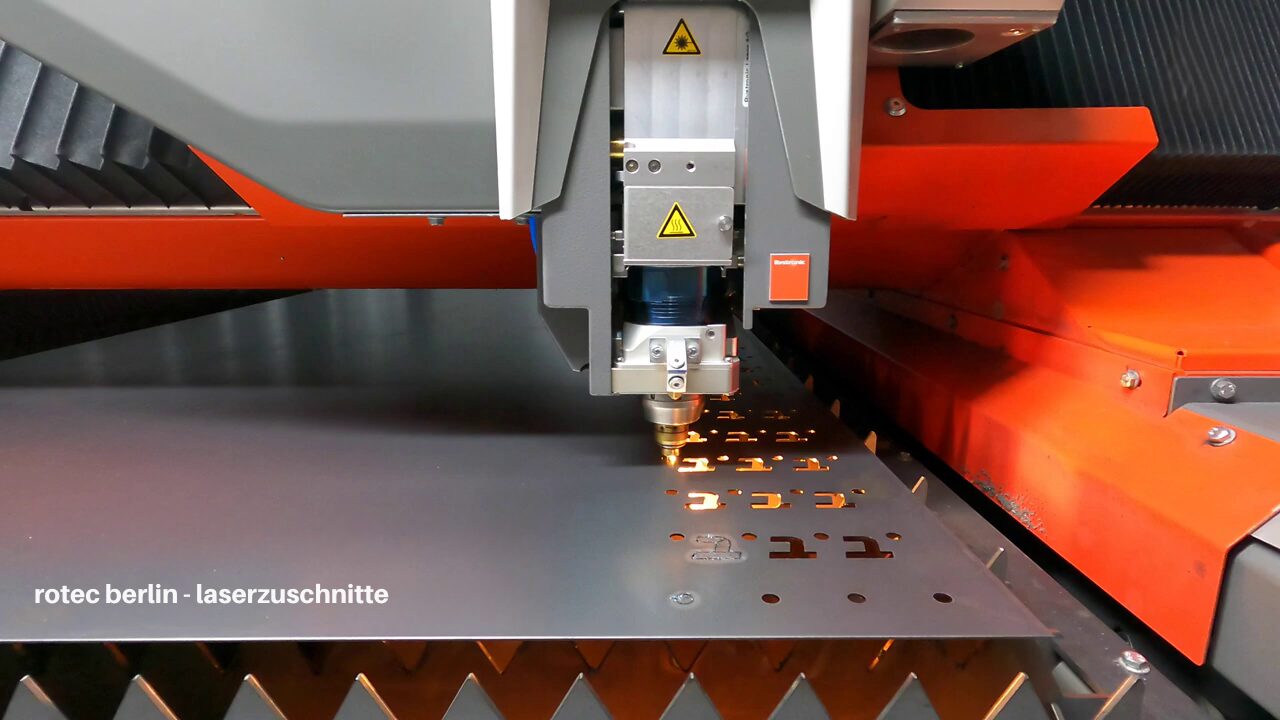
If your component requires cutouts, holes, or special external contours, laser cutting can be combined with subsequent bending. This allows us to align the position of the contours with the subsequent bends.
For laser cutting, our scope of services specifies the following material thicknesses:
| Material | Material Thickness in Laser Cutting |
|---|---|
| Steel | Up to 15 mm |
| Stainless steel | Up to 15 mm |
| Aluminum | Up to 12 mm |
We also check material quality and component requirements during laser cutting. These values describe the cut and do not constitute additional approvals for bending.
For more information, please visit our services page for the Laser Cutting in Berlin.
How to Bend Steel, Stainless Steel, and Aluminum Properly
The choice of material affects weight, corrosion resistance, surface finish, and formability. Therefore, the material should be suitable for both the application and the intended geometry.
Folding Sheet Metal
Sheet steel is suitable for many technical components, such as angle brackets, mounts, covers, and housing parts. The material grade and thickness are key factors in determining which bending radii are appropriate.
The rolling direction and springback also play a role. For this reason, simply specifying „sheet steel“ is often insufficient for complex components. If a specific grade is required, it should be clearly indicated in your drawing.
For outdoor applications, corrosion protection and any subsequent coating must also be suitable for the intended use. If possible, coordinate these requirements before production begins.
Bending Stainless Steel Sheet Metal
Stainless steel is used, among other things, in components exposed to corrosion and in high-quality visible surfaces. However, the appropriate grade of stainless steel depends on the environment and intended use.
For ground or laminated sheet metal, the surface requires special attention. Therefore, you should indicate the visible sides, the direction of grinding, and permissible machining marks in the drawing.
Careful tool selection and proper handling help reduce unwanted marks. We determine the achievable surface quality based on the specific component.
Folding aluminum sheet metal
Aluminum offers advantages when low component weight is important. However, not all aluminum alloys bend equally well.
In addition to the alloy, the material condition, sheet thickness, and bending direction all affect formability. An inner radius that is too small can therefore lead to cracks.
Please provide as complete a description of the material as possible. This will allow us to verify whether the material and the desired edge geometry are compatible.
Folding and Machining Checker Plate and Corrugated Plate
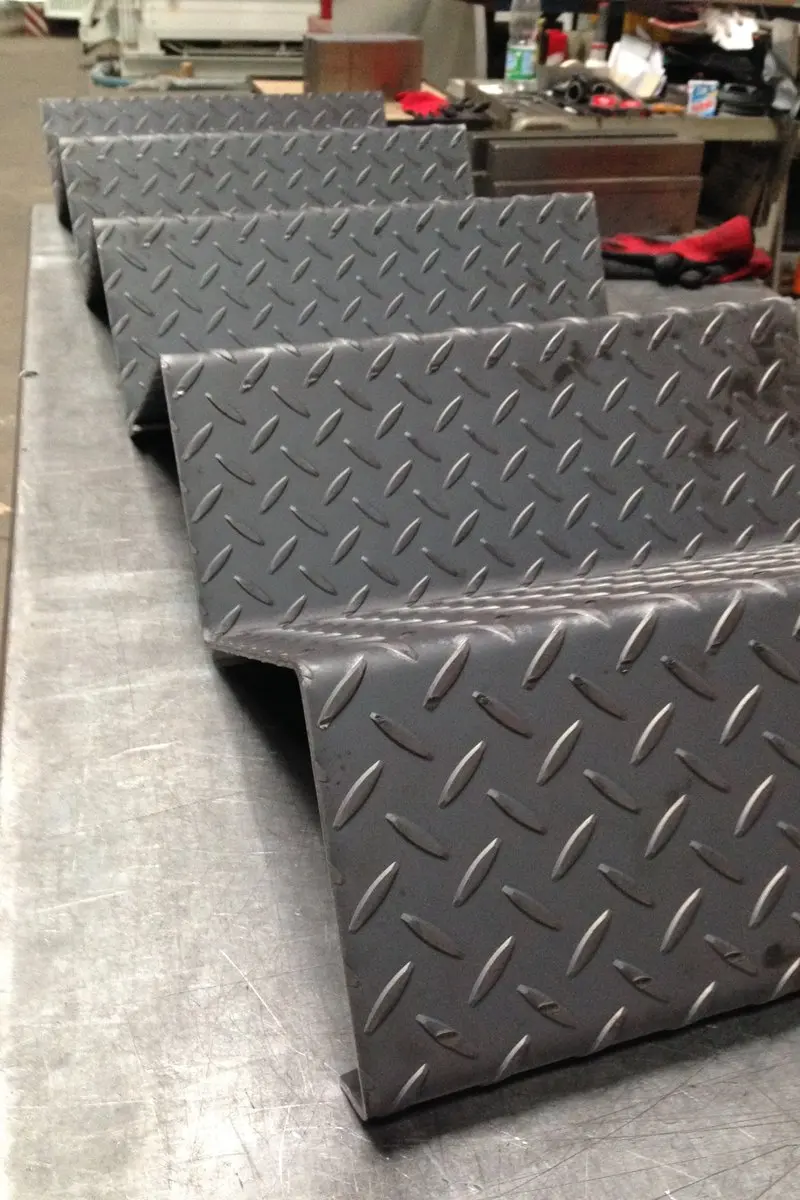
rotec processes checkered and corrugated sheets made of steel, stainless steel, and aluminum. Typical applications include covers, treads, stair components, and parts for vehicles and machinery.
The embossed surface texture must be taken into account during machining. This is because, in addition to the base material thickness, the embossing and the direction of embossing affect the contact pressure on the tool.
Depending on the design, options such as quintet, duet, or mandorla patterns may be considered. The key factors are the requirements for function, appearance, and further processing.
What should you keep in mind when using walkable metal sheets?
An embossed surface alone does not guarantee a specific level of slip resistance. Whether a particular design is suitable for your walking surface depends on its intended use and requirements.
Therefore, please specify any required documentation regarding slip resistance when you submit your inquiry. For load-bearing treads, the load capacity, support structure, and fastening method must also be compatible with the overall design.
For edge folding, we examine, among other things, the bend line, the inside radius, and the desired visible surfaces. This allows us to tailor the machining process to the embossed sheet metal.
For more information on materials and models, please visit our dedicated page for Tear plates and checker plates.
From Laser Cutting to the Finished Edge Part
A properly fitted edge profile starts with coordinated manufacturing data. That is why we view cutting, bending, and further processing as an integrated process.
Cuts near a bend line may change during forming. Similarly, an unfavorable bending sequence can limit accessibility to the die. Such issues should be clarified before cutting.
The typical manufacturing process consists of six steps:
- Inquiry and Technical Review: We review the drawing, material, material thickness, quantity, and desired finish.
- Cutting: The sheet metal is given its outer contour and the required cutouts through laser cutting or another suitable process.
- Preparation: We then adjust the bending sequence, tools, radii, and stops to match the geometry.
- Folding: The individual bends shape the prepared sheet metal into its intended form.
- Exam: Dimensions, angles, and surfaces are inspected in accordance with the agreed-upon requirements.
- Further processing: Depending on the job, this may be followed by, for example, welding, grinding, coating, or preparation for assembly.
Real-World Example: From Laser Cutting to Cable Trays
The video shows the fabrication of a cable tray from pre-laser-cut, 2.0 mm-thick galvanized steel sheet. First, the two longitudinal edges are flanged. The component is then given its profiled shape through additional bending operations.
The folded edges enhance the profile's rigidity and round off the corresponding sheet metal edges. This explains why the cutting and bending sequences are planned together.
This example illustrates rotec's manufacturing process using a specific component. We tailor the dimensions of other cable trays according to the drawings.
Watch the original video: Manufacturing a cable tray at rotec
What are the key considerations in the design of edge parts?
For a functional bent part, the drawing, material, and manufacturing process must all be properly aligned. Bending radii, finished dimensions, tolerances, and the location of cutouts are particularly important.
Match the bending radius to the material thickness
The inner radius affects the stress on the material during bending. A radius that is too small can cause cracks or compromise the quality of the component.
The appropriate radius depends, among other things, on the material grade, material thickness, and rolling direction. In addition, the available tool must be capable of producing the desired finish.
Therefore, clearly define any radii that are functionally necessary. If there is some leeway, early coordination can facilitate the manufacturing process.
Take springback into account
After the load is removed, a bent sheet of metal springs back partially. This means that the angle continues to change after the bending process.
The extent of this effect depends on the material and the machining process. Therefore, tool selection and machining settings must take springback into account.
Consequently, a setting suitable for steel cannot be applied unchanged to every stainless steel or aluminum sheet.
Check the cutouts near the bend line
Holes, slotted holes, and other cutouts can become distorted if they are too close to a bend line. This can make subsequent assembly more difficult.
Adequate clearances help limit such changes. If the design does not allow for this, other machining sequences or design adjustments should be considered.
Therefore, clearly label particularly important hole patterns and connection dimensions in your documentation.
Note the rolling direction and surface finish
The rolling direction can affect a sheet's formability. At the same time, for visible components, the grinding direction often determines the desired appearance.
Therefore, please specify the visible sides, the direction of the surface, and any protective films. This will allow these requirements to be taken into account during cutting and the bending sequence.
Coordinate Finished Dimensions, Unfolding, and Tolerances
In your drawing, specify the dimensions of the finished edge piece. Also indicate whether you are using internal or external dimensions.
Functional dimensions and reference edges are particularly important to ensure that the component will fit into its intended installation environment later on. At the same time, the development must be tailored to the material, bend radius, and manufacturing process.
The drawing, CAD model, and existing development should therefore all reflect the same revision status. This allows rotec to address any potential discrepancies with you at an early stage.
Please explicitly specify the required dimensional and angular tolerances. This will allow us to take the requirements critical to functionality into account during technical testing. A blanket tolerance value does not apply to every folded part.
Checking Short Legs and Complex Profiles
Very short flanges can limit the choice of tools. In addition, the workpiece must remain accessible during each bending operation.
Otherwise, areas that have already been folded may collide with tools or machine parts. That is why it is important to coordinate early on when working with narrow U-channels and sheets that have been folded multiple times.
Depending on the component, different side lengths, different radii, or a different manufacturing sequence may be required. Therefore, please mark the dimensions that must remain unchanged for installation and proper function.
What types of edging does rotec manufacture?
rotec manufactures bent metal parts for metal construction, mechanical engineering, architecture, building services engineering, and industrial applications. The product range extends from simple angles to components with multiple bends.
Typical examples include:
- Angles, as well as U-, Z-, and channel sections
- Covers, trim, and housing components
- Cassettes and Components for Facades
- Brackets and mounting plates
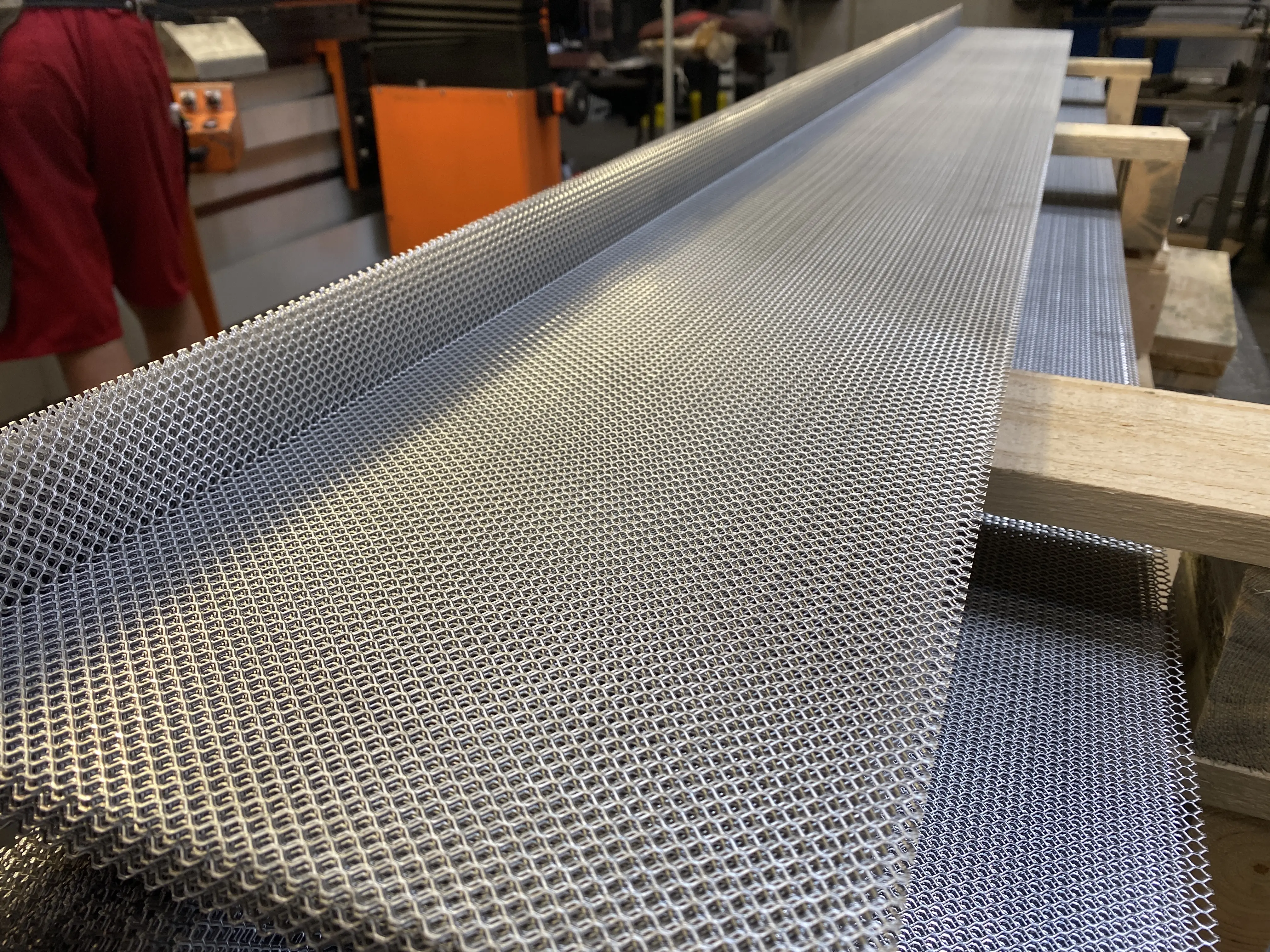
- folded perforated sheets and expanded metal
- Trapezoidal profiles and custom profiles
- Perforated sheet metal components for treads and stairs
- Laser-cut sheet metal parts followed by edge processing
Bending Perforated Sheets and Expanded Metal
In the case of perforated sheets and expanded metal, the openings, web widths, and edge zones influence the forming behavior. Therefore, their processing cannot be equated across the board with that of a solid, closed sheet.
The location of the bend line must match the perforation or mesh structure. At the same time, visible edges and desired connection surfaces should be determined early on.
You can learn more about this in the article on Cutting and Bending Expanded Metal and Expanded Mesh.
Another example of its use is Trapezoidal profiles made of perforated sheet metal for control joints and concrete floor slabs.
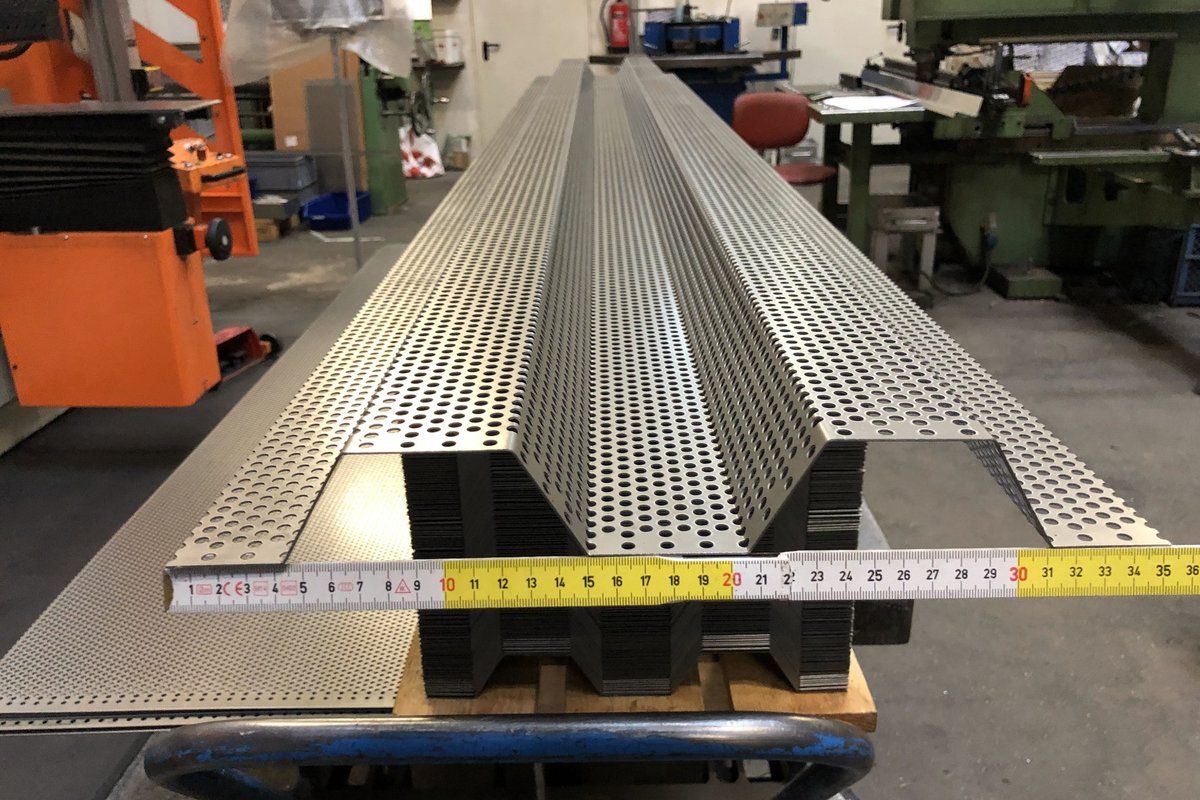
Folded side panels for frames made of structural profiles
A frame made of aluminum profiles can be supplemented with custom-made sheet metal side panels, back panels, and covers. rotec can manufacture these panels in-house custom laser cutting and then bend it to form the required edges or mounting tabs. In doing so, we align the bend lines, cutouts, and connection dimensions with the profile frame.
Our guide explains the basics Select, cut, and join structural profiles Selection and cutting planning using a 3D tutorial example. If you need a complete assembly, we can assist you with Design, Manufacturing, and Assembly of Aluminum Profile Frames. You can find matching profiles and accessories in the rotec Profile Shop.
Plan the material thickness, edge spacing, and fastening methods together to ensure that the cladding and frame fit together properly. Any necessary follow-up work can be handled through our Sheet Metal Fabrication and Metalworking Coordinate with the cutting and folding.
Why have sheet metal bent at rotec in Berlin?
When you commission sheet metal bending in Berlin, technical coordination and traceable production data are crucial. rotec combines personalized consultation with in-house sheet metal fabrication.
For companies in Berlin and Brandenburg, the geographical proximity makes it easier to coordinate drawings, samples, and component details. At the same time, you can bundle related processing steps into a single request.
This offers you specific benefits:
- Coordinated Manufacturing: Cutting, bending, and further processing can all be planned together.
- Personal contact: You can discuss technical questions directly with a representative.
- Different materials: Steel, stainless steel, and aluminum enable solutions tailored to specific applications.
- Custom components: Individual parts and production runs are manufactured according to the agreed-upon specifications.
- Experience since 1982: rotec combines material expertise with practical experience in metalworking.
You can find an overview of complementary procedures on our page about Sheet metal working in Berlin.
Clarify documentation requirements early on
The documentation required depends on the intended use of your component. Therefore, please specify any special requirements for load-bearing components or welded assemblies in your inquiry.
This allows us to clarify the scope of services and the required documentation before production begins. The Certificates published by rotec provide an initial overview.
What factors influence the cost of sheet metal bending?
The costs depend on the material, the cutout, and the required bends. Other factors include the quantity, tooling costs, and requirements regarding dimensions or surface finish.
That is why a general price quote without component specifications is not very meaningful. A simple cover has different requirements than a housing part with multiple bends and tight connection dimensions.
For production runs, preparation and setup are spread out over several parts. At the same time, tight tolerances or specific visible surfaces may require additional work.
A complete drawing therefore makes it easier to provide a quote that reflects the desired scope of services. Please also specify whether you need only bending or also material, cutting, and further processing.
This allows rotec to coordinate the individual steps with you.
What information do we need to provide a quote?
To ensure a reliable quote, we need specific part details. A dimensioned PDF drawing and supplementary DXF or STEP files are particularly helpful.
Please provide the following information if possible:
- Material and, if known, the exact material number
- Material thickness and dimensions of the finished component
- Desired bending angles and inside radii
- Quantity and potential repeat orders
- Required dimensional and angular tolerances
- Visible Sides, Surfaces, and Grinding Direction
- Cutouts, Drill Holes, and Welded Joints
- Desired next steps
- Intended use of the component
- Desired completion date and delivery location
Make sure that the drawing and the CAD data reflect the same revision status. This will help you avoid misunderstandings during technical coordination.
If a complete drawing is not yet available, a dimensioned sketch can be helpful for the initial discussion. However, the critical dimensions and requirements must be clearly defined before production begins.
Frequently Asked Questions About Bending and Folding Sheet Metal
Where can I have sheet metal bent in Berlin?
rotec manufactures bent parts from steel, stainless steel, and aluminum in Berlin. This process allows us to combine laser cutting, bending, and other machining steps. Please send us your drawing so we can review the appropriate design.
What is the maximum length of sheet metal that can be folded at rotec?
The maximum bending length of our machine is 3,040 mm. Whether your component can utilize this length also depends on the material, material thickness, and geometry. That is why we review the specific design based on your documentation.
What is the pressing force of the bending machine?
Our press brake has a pressing force of up to 200 metric tons. However, this figure alone does not determine the permissible sheet thickness, as the material, bending length, and die all influence the required force.
What material thicknesses can be bent?
The maximum material thickness depends on the project and, according to our published scope of services, can be up to 15 mm. The material grade, bending length, radius, and tool must all be compatible. Therefore, the upper limit does not apply uniformly to every design or to the full bending length of 3040 mm.
Can Rotec laser-cut sheet metal before bending it?
Yes. The published scope of services lists steel and stainless steel up to 15 mm and aluminum up to 12 mm for laser cutting. We verify the material grade and component requirements. The limits of laser cutting do not require additional approvals for bending.
What is the difference between edging and bending?
Bending is the general term for permanent deformation. Edging or folding refers to the straight-line bending of a sheet of metal. This process is used to create, for example, angles, profiles, and covers.
Does rotec also process chequered plates?
Yes. rotec processes checkered and corrugated sheets made of steel, stainless steel, and aluminum. In doing so, we take into account the base material, embossing, bending radius, and desired surface finish. For components intended for foot traffic, slip resistance requirements must also be taken into account.
Can perforated sheets and expanded metal be bent?
Yes, provided that the perforations or mesh structure, web widths, edge zones, and component geometry are suitable for forming. That is why we check the bend line and the desired design before production.
Does rotec manufacture individual parts and small batches?
Yes. rotec manufactures custom parts, small batches, and recurring production runs following technical consultation. Therefore, please specify the desired quantity and any potential repeat orders in your inquiry.
What drawing formats are useful?
A dimensioned PDF drawing is helpful for coordination. In addition, DXF or STEP files facilitate data transfer. Therefore, ensure that all files are at the same revision level and include clear specifications regarding materials, finished dimensions, angles, and tolerances.
Can Rotec process folded sheet metal?
Yes. Depending on the job, we can coordinate welding, grinding, coating, or preparation for assembly. Therefore, please specify the desired scope of work when you submit your request.
Who is the contact person for sheet metal bending parts?
Your contact person is Hardy Pusch. You can reach him at 030 789039-0 or by email at h.pusch@rotec-berlin.de. Please also send us your drawing and the key component specifications so that we can assess your project.
Sheet Metal Bending in Berlin: Request a Quote for Your Bent Parts from rotec
A suitable bent part starts with a clear drawing and well-defined specifications. The material, bend radius, finished dimensions, and surface finish all work together to determine the appropriate design.
If you’d like to commission sheet metal bending in Berlin, rotec combines technical coordination with in-house sheet metal processing. You can request laser cutting, press braking, and other processing steps all at once.
Please send us your drawing, including material thickness, quantity, and desired delivery date. Also, please indicate any important tolerances and visible surfaces. This will allow us to determine which design and machining steps are best suited for your project.
Your contact person is Hardy Pusch. Sie erreichen ihn unter h.pusch@rotec-berlin.de oder telefonisch unter 030 789039-0.
Send a drawing and request quoted prices for bent parts
Bildnachweis: Sämtliche Aufnahmen in diesem Beitrag zeigen Originale aus der rotec Fertigung und wurden nicht mit künstlicher Intelligenz erzeugt oder bearbeitet. Beim Motiv „Laser one“ wurde ausschließlich der Schriftzug mit Photoshop ergänzt.

 EN
EN  DE
DE  ES
ES  FR
FR  IT
IT  NL
NL  PL
PL  TR
TR