
Content updated on September 12, 2026.
At rotec in Berlin, sheet metal fabrication doesn’t begin at the machine. Rather, a cost-effective and technically sound solution results from the right combination of consulting, material selection, design, cutting, forming, and further processing. That’s why we review drawings and project data before production begins. This helps avoid unnecessary steps while ensuring that functional dimensions, visible surfaces, and future operating conditions are taken into account early on.
rotec processes steel, stainless steel, and aluminum for architects, design firms, metal fabricators, facade contractors, construction companies, industrial firms, and store fit-out specialists. We manufacture individual parts, prototypes, small batches, and recurring production runs. Depending on the project, we combine laser cutting, CNC press braking, drilling, countersinking, thread cutting, welding, grinding, polishing, marking, and assembly into a coordinated manufacturing process.
Another advantage is our extensive sheet metal inventory at our Berlin location. With approximately 1,200 different types of solid sheet metal, perforated sheet metal, and expanded metal, we ensure short lead times between the material warehouse, work planning, and production for many projects. As a result, our customers receive not just a single component, but a solution tailored to their actual needs.
Image credit: All of the photos in this post are original images taken at the rotec production facility in Berlin. They were not generated using artificial intelligence.
Why choose rotec for sheet metal fabrication in Berlin?
Effective sheet metal fabrication must balance technical requirements, costs, and deadlines. That is why we do not focus solely on individual fabrication steps. We also examine how material, contour, sequence of bends, joining techniques, and surface finish influence one another.
For customers in Berlin and Brandenburg, the short distances allow for direct coordination. At the same time, we deliver fabricated sheet metal parts and metal components nationwide. The shipping costs charged by our contracted freight forwarders are listed separately and billed in the quote.
Our key advantages are:
- In-house sheet metal fabrication at the Berlin location
- Personalized technical advice from a dedicated contact person
- Laser cutting, CNC press braking, and further processing—all from a single source
- Approximately 1,200 different types of solid sheet metal, perforated sheet metal, and expanded metal in stock
- Machining of Steel, Stainless Steel, and Aluminum
- Manufacturing of individual parts, small batches, and recurring production runs
- Welded assemblies and components prepared for assembly
- Documented quality processes and verified certifications
- Nationwide shipping via contracted carriers
Technical Capabilities for Sheet Metal Processing at rotec
The following values describe the maximum technical capabilities of our equipment. They do not constitute a blanket guarantee for every component. The actual material thickness that can be processed depends, among other factors, on the material, alloy, tensile strength, component geometry, bending length, bending radius, and tooling. A reliable assessment is therefore only possible after reviewing the drawing or sketch.
| Performance | Technical Specifications | Important Note |
|---|---|---|
| Pressing Force of the Press Brake | up to 200 metric tons | depending on the tool, material, and part geometry |
| Maximum bending length | 3,040 mm | depending on geometry, material thickness, and strength |
| Bending Steel | up to 15 mm | Feasibility is assessed on a project-by-project basis |
| Bending Stainless Steel | up to 15 mm | Material grade and surface finish are taken into account |
| Bending Aluminum | up to 15 mm | The alloy and the direction of bending are particularly important |
| Laser Cutting of Steel | up to 15 mm | depending on material grade and contour |
| Laser Cutting of Stainless Steel | up to 15 mm | Specify visible surfaces and protective film early on |
| Laser Cutting of Aluminum | up to 12 mm | depending on the alloy and component geometry |
Tolerances in Laser Cutting
Depending on the material, material thickness, contour, and component geometry, tolerances of up to ±0.1 millimeter are possible in laser cutting. The achievable accuracy is assessed on a project-by-project basis. Therefore, particularly tight tolerances should be clearly specified in the initial inquiry. In this context, it is helpful to distinguish between functional dimensions and less critical dimensions.
Laser Cutting of Steel, Stainless Steel, and Aluminum
CNC laser cutting enables the creation of precise outer contours, cutouts, slotted holes, and hole patterns. At the same time, individual parts and production runs can be cost-effectively nested from digital drawing data. This makes better use of the available material, while allowing recurring components to be manufactured with consistent results.
rotec laser-cuts steel and stainless steel up to a maximum material thickness of 15 millimeters. Aluminum can be processed up to a maximum thickness of 12 millimeters. Actual feasibility also depends on the material, alloy, contour, cutouts, and component geometry.
DXF or DWG files are particularly well-suited for two-dimensional contours when a quick technical review is needed. In addition, a dimensioned PDF drawing should be provided. It serves as a clear visual reference for dimensions, material, quantity, tolerances, and revision status.
From Laser Cutting to the Finished Component
Precise cutting is often just the first step. That’s why, even as we prepare for laser cutting, we take into account whether the component will subsequently be bent, welded, or assembled. Cutouts and holes near a bend line can change during forming. A well-designed structure helps prevent such deformations or compensate for them in a targeted manner.
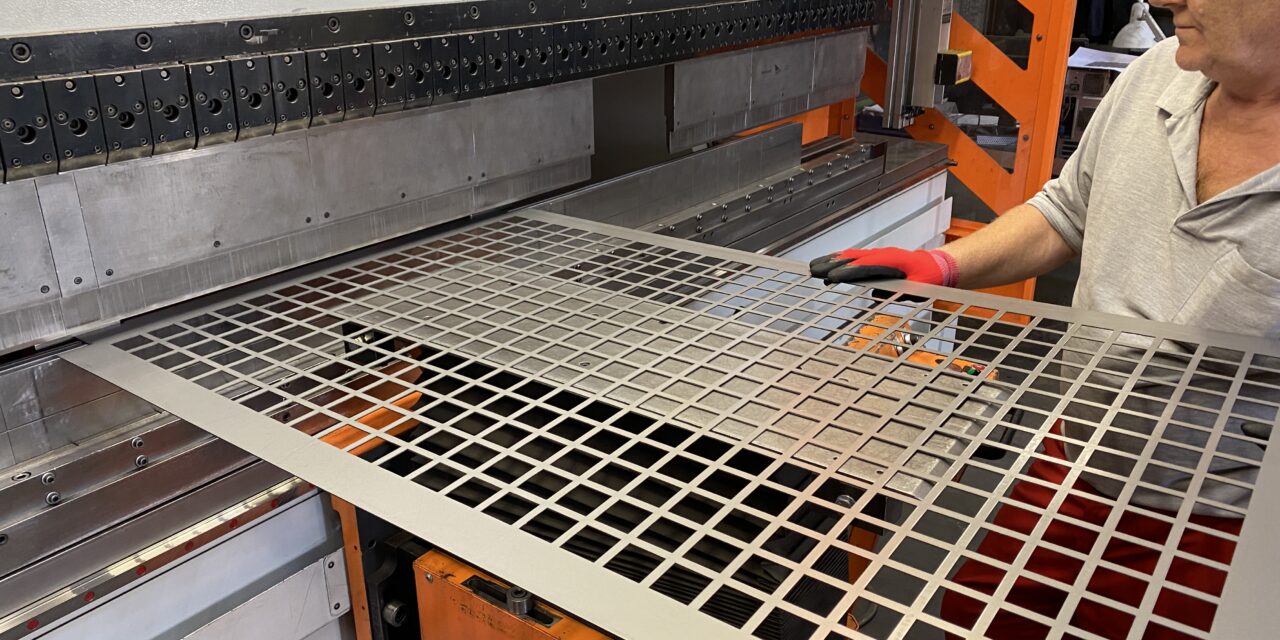
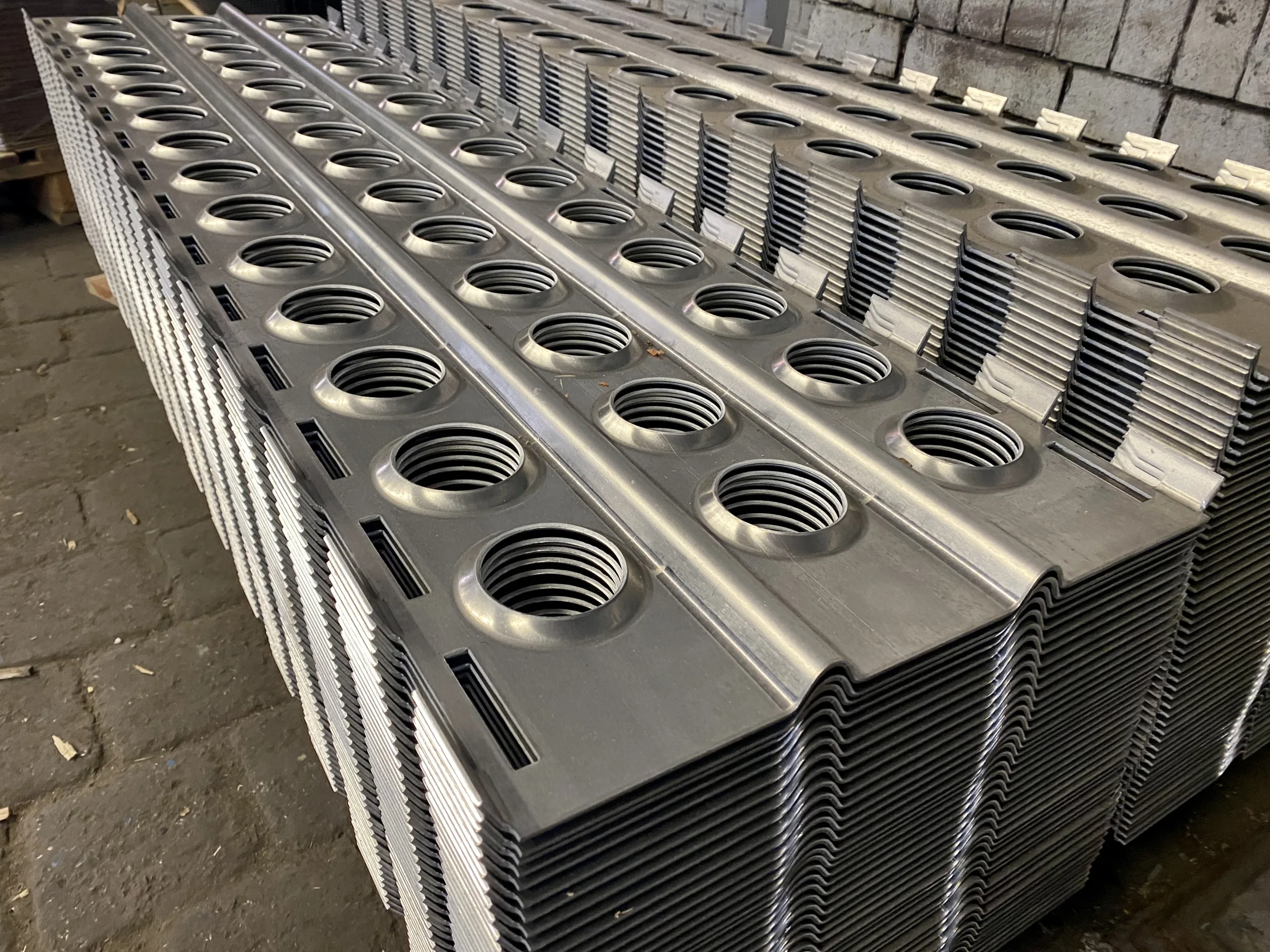
The cover photo for this article illustrates this connection particularly well. The large-format perforated sheet metal was first cut to size on the laser cutting machine. A employee then folded the component on the CNC press brake. The photo thus shows two key manufacturing steps within a continuous workflow at rotec.
CNC Press Braking and Bending of Sheet Metal in Berlin
During press braking, the press brake forms a flat sheet metal blank along defined bend lines. In this process, an upper die presses the sheet metal into a lower die in a controlled manner. The material, material thickness, bend radius, bend length, and desired angle determine the choice of dies and the required pressing force.
Our press brake operates with up to 200 metric tons of pressing force and allows for a maximum bending length of 3,040 millimeters. Depending on the project, steel, stainless steel, and aluminum with a material thickness of up to 15 millimeters can be bent. However, for long bend lines, tight radii, or specific material grades, a thinner material thickness may be required.
Our technical article provides detailed information on materials, bending radii, and design specifications Sheet Metal Edging, Folding, and Bending in Berlin.
Bending radius, springback, and rolling direction
The appropriate inner radius depends on the material, thickness, strength, and tool. A radius that is too small can cause cracks or permanently weaken the component. In addition, the material springs back slightly after bending. This behavior differs between steel, stainless steel, and aluminum and is taken into account during production planning.
The rolling direction can also affect the bending behavior. For visible parts, the grinding direction, protective film, and permissible tool marks must also be clearly specified. The sooner this information is available, the more reliably appearance and function can be combined.
Typical Edge Parts
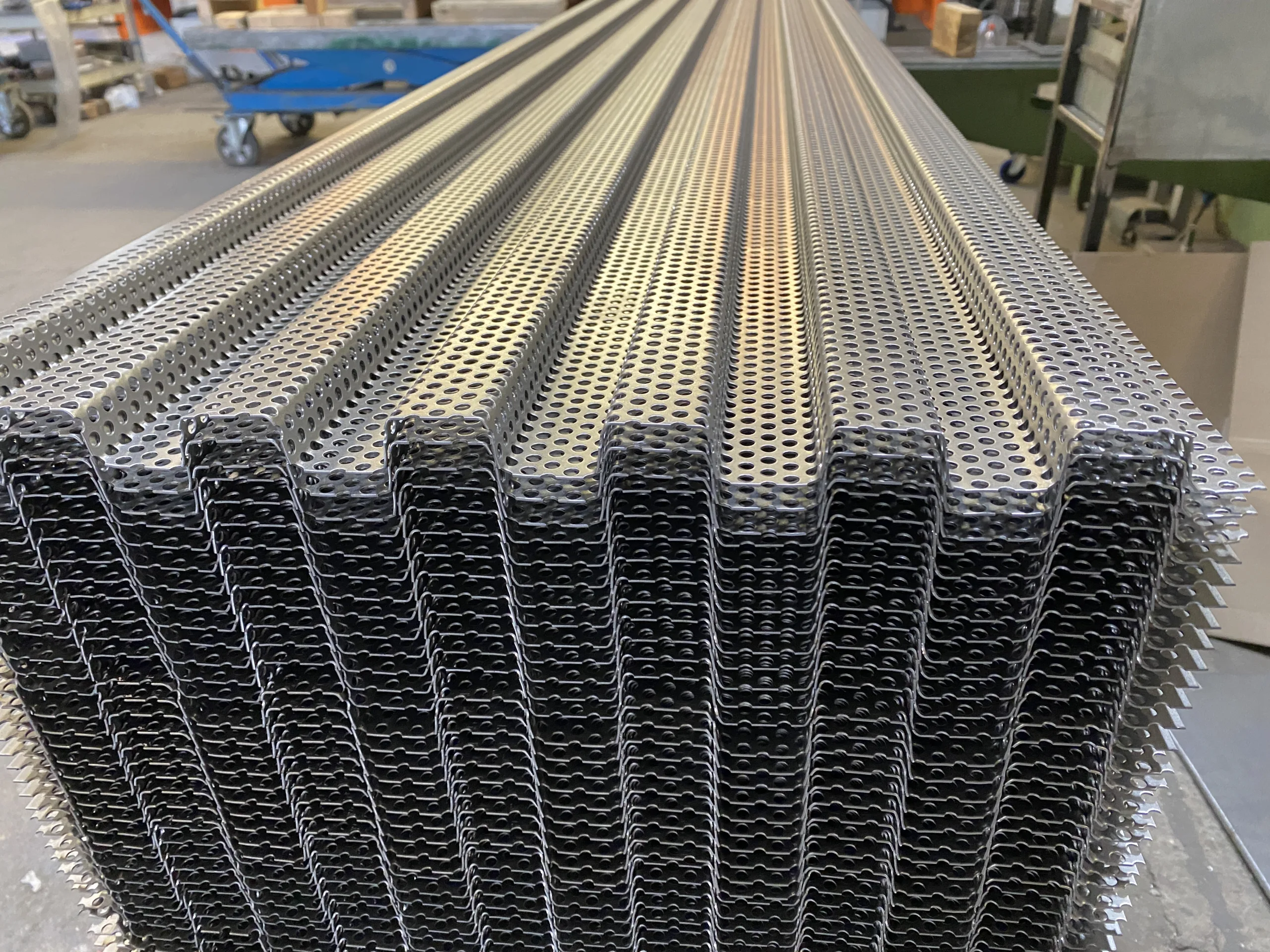
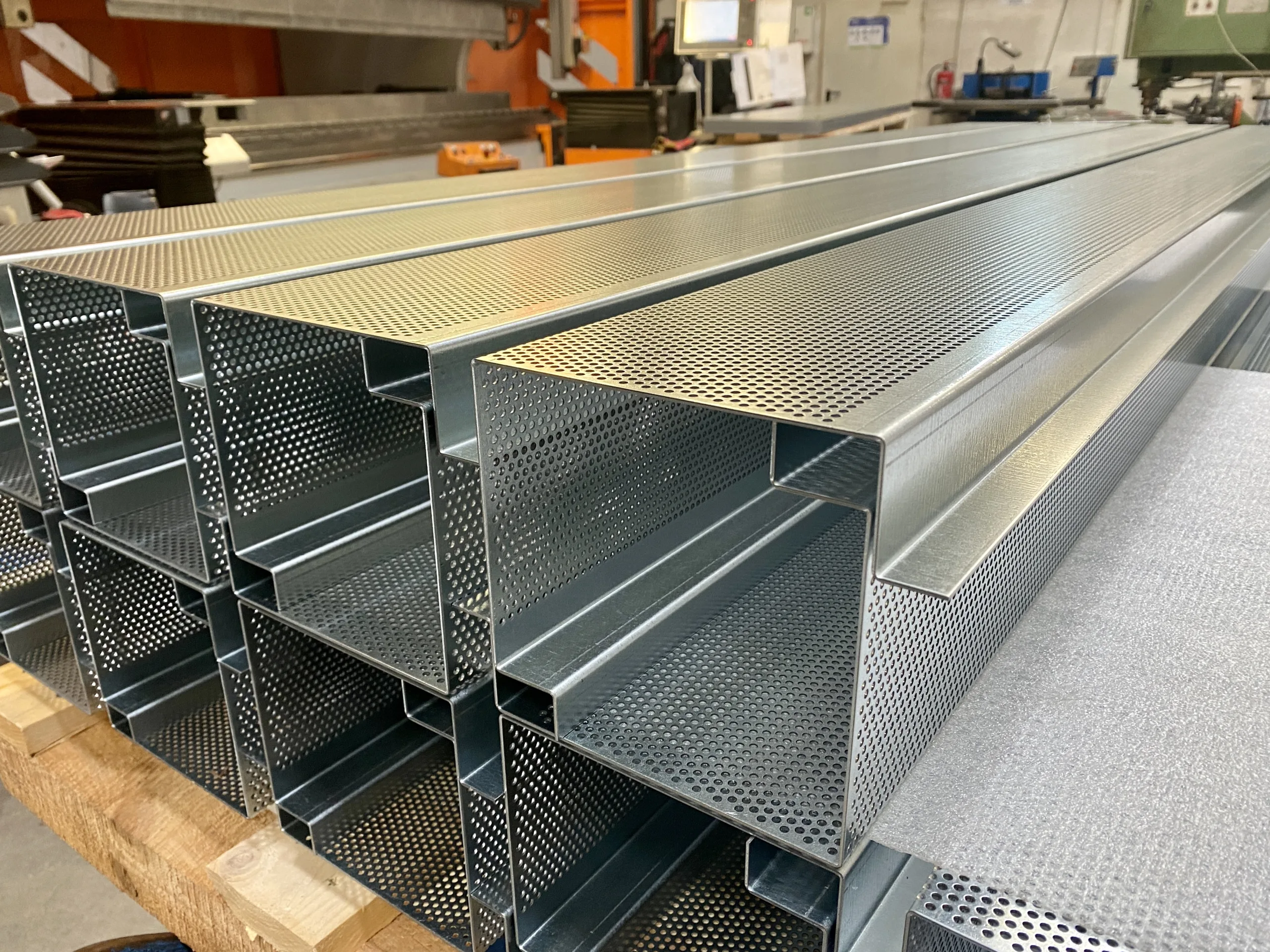
Among other products, rotec manufactures angle profiles, U-profiles, Z-profiles, channel sections, cassettes, covers, brackets, holders, cladding, trapezoidal profiles, facade elements, and custom-designed special bent parts. We also bend suitable perforated sheets and expanded metal. In doing so, the perforation pattern, web widths, edge zones, and mesh geometry must be taken into account in the production planning.
Additional Processing Steps and Assembly Production
Many projects require more than just laser cutting or folded parts. That is why rotec handles additional machining steps as needed for each job. These include drilling, countersinking, thread cutting, welding, grinding, polishing, marking, and the installation of appropriate fasteners.
This process transforms individual parts into welded assemblies, housings, panels, or components ready for assembly. The transitions between work steps are already taken into account during work planning. This reduces unnecessary interfaces and simplifies quality control.
Manufacturing Profile Frames and Sheet Metal Covers Together
When it comes to equipment racks, workstations, and enclosures, structural fabrication and sheet metal fabrication go hand in hand. rotec can Custom laser-cutting side panels in-house and adapt it to the frame with the necessary cutouts, mounting holes, and folded edges. Our contribution to the Laser Cutting and Custom Laser-Cut Parts explains how to prepare the drawing data and how to process it afterward.
The guide shows you which base frame is right for you Select, cut, and join structural profiles, such as how profile dimensions, connectors, and the bill of materials fit together. If you'd like to implement the frame and cladding as a single project, we'll guide you through Design, Fabrication, and Installation of Your Aluminum Structure. You can find individual profiles and accessories in the rotec Profile Shop Select.
This allows us to work together to clarify connection dimensions, material selection, and the assembly sequence early on. To get started, all you need is a sketch of the assembly, along with details about its intended use and the desired trim surfaces.
Welding and Welded Assemblies
Depending on the material and technical requirements, we join components using appropriate welding processes. The location, design, and finishing of the welds must be clearly specified in the drawing. For visible assemblies, it must also be clarified whether the welds are to remain unfinished, be ground down, or be visually adjusted.
Our welding quality requirements are supported by DIN EN ISO 3834-3. For components falling within the scope of DIN EN 1090, the certified requirements specified in DIN EN 1090-1 and DIN EN 1090-2 up to EXC 2 are also available. Which standards, test certificates, and documentation are actually required depends on the component, its intended use, and the contractual agreement.
Surface Treatment and Coating
The surface affects corrosion resistance, cleanability, service life, and appearance. Depending on the material and application, options include galvanizing, grinding, polishing, anodizing, and painting, among others.
Anodizing and color coatings are performed by specialized external contractors. Upon request, rotec coordinates these steps within the production order. This ensures that customers receive coordinated services and have a single point of contact for their project. Requirements regarding color, gloss level, coating structure, visible surfaces, and acceptable machining marks should be specified in the initial inquiry.
About 1,200 types of sheet metal in the rotec warehouse
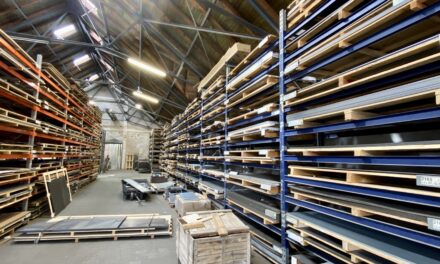
Having a large inventory is a practical advantage when projects start on short notice or when different materials need to be compared. rotec stocks approximately 1,200 different types of solid sheet metal, perforated sheet metal, and expanded metal at its Berlin location.
The range of materials we regularly process includes steel, stainless steel, and aluminum. For special grades, finishes, or dimensions, we check availability and sourcing on a case-by-case basis. Since inventory levels fluctuate, we verify the material, quantity, and sheet size before confirming a delivery date.
Perforated Sheets for Engineering, Architecture, and Interior Design
Perforated sheets combine defined open cross-sections with a wide range of design options. They are suitable for applications such as ventilation openings, machine enclosures, facades, ceilings, railing infills, technical enclosures, and store fit-out projects.
In addition to standard perforations, rotec manufactures custom perforated sheets tailored to specific projects. These can then be cut to size, folded, welded, or further processed into assemblies. An overview of perforation shapes, pitch sizes, edge zones, and important technical terms is provided in the rotec Perforated Sheet Metal Glossary.
Folded profiles made of perforated sheet metal are also used, for example, as control joint profiles for concrete floor slabs. Our article on this topic provides an example of one such application: Trapezoidal profiles made of perforated sheet metal.
Expanded Metal and Expanded Mesh
Expanded metal offers an open structure, a distinctive appearance, and a wide range of technical applications. rotec stocks numerous mesh patterns, materials, and dimensions. We also cut and bend suitable expanded metal grids to fit your project. Round rolling is no longer part of our service offerings.
For more information, see our technical article Cutting and Bending Expanded Metal and Expanded Mesh. You can also find in-stock products in the rotec Profishop.
Tear plates and checker plates
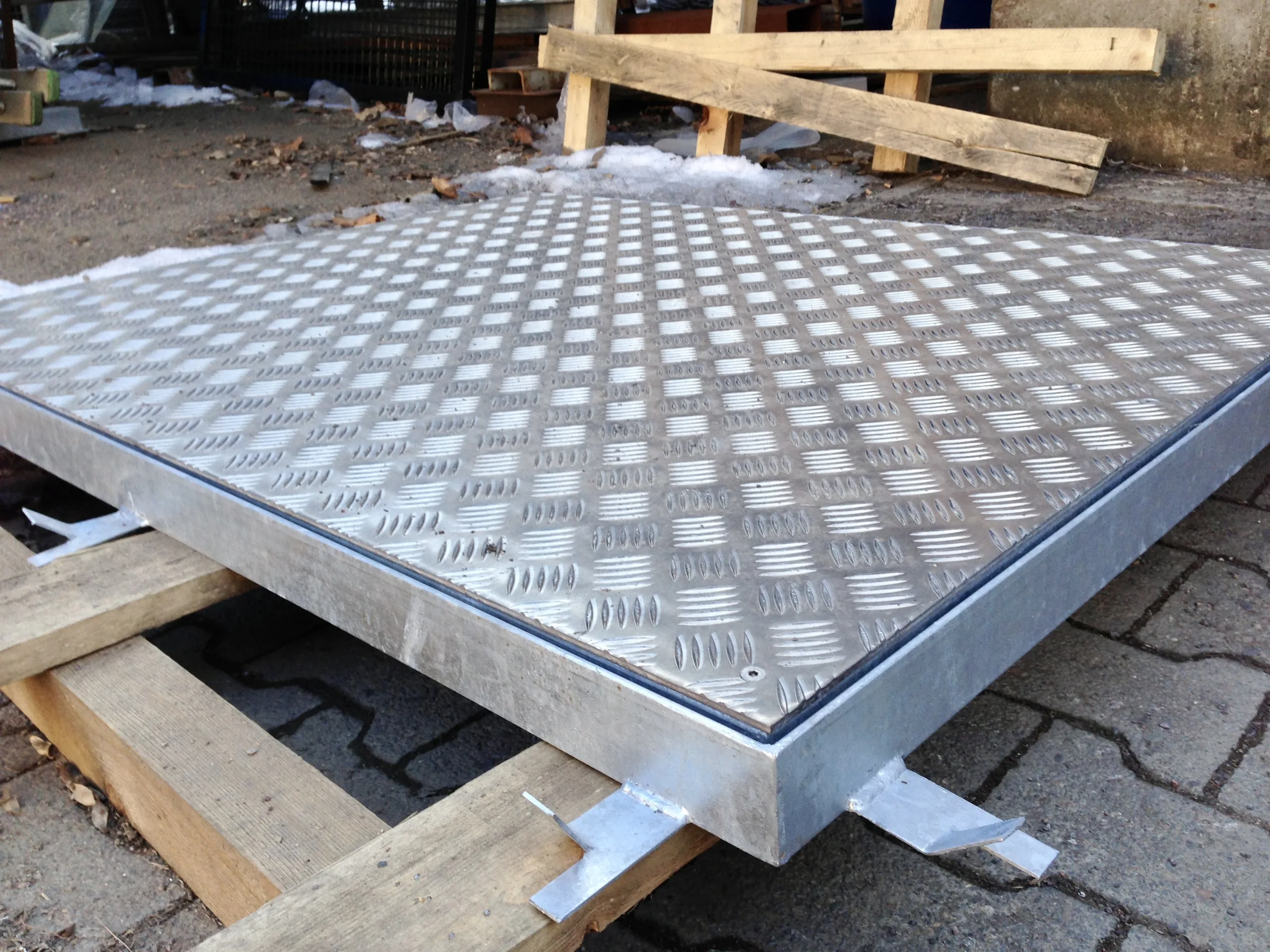
Checker plate and corrugated plate are used when durable surfaces and improved slip resistance are required. Typical applications include stair treads, platforms, covers, ramps, floor hatches, vehicle interiors, and machine components.
rotec processes checkered plates made of steel, stainless steel, and aluminum. In doing so, we take into account not only the base material thickness but also the embossing, profile height, orientation, bending radius, and visible surface. This allows us to effectively coordinate the cutting, bending sequence, and subsequent use.
Case Study: Perforated Metal Steps from rotec Manufacturing
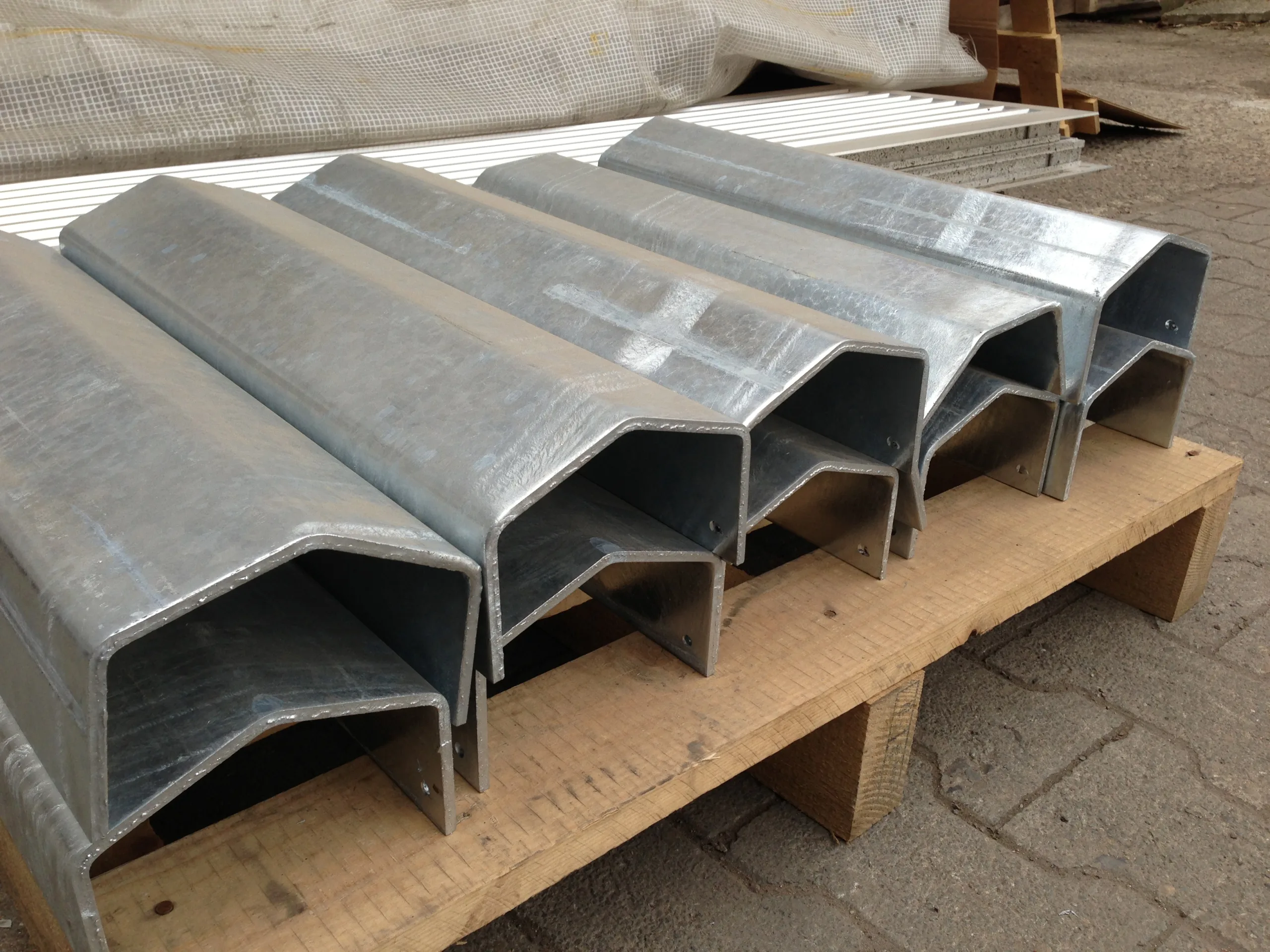
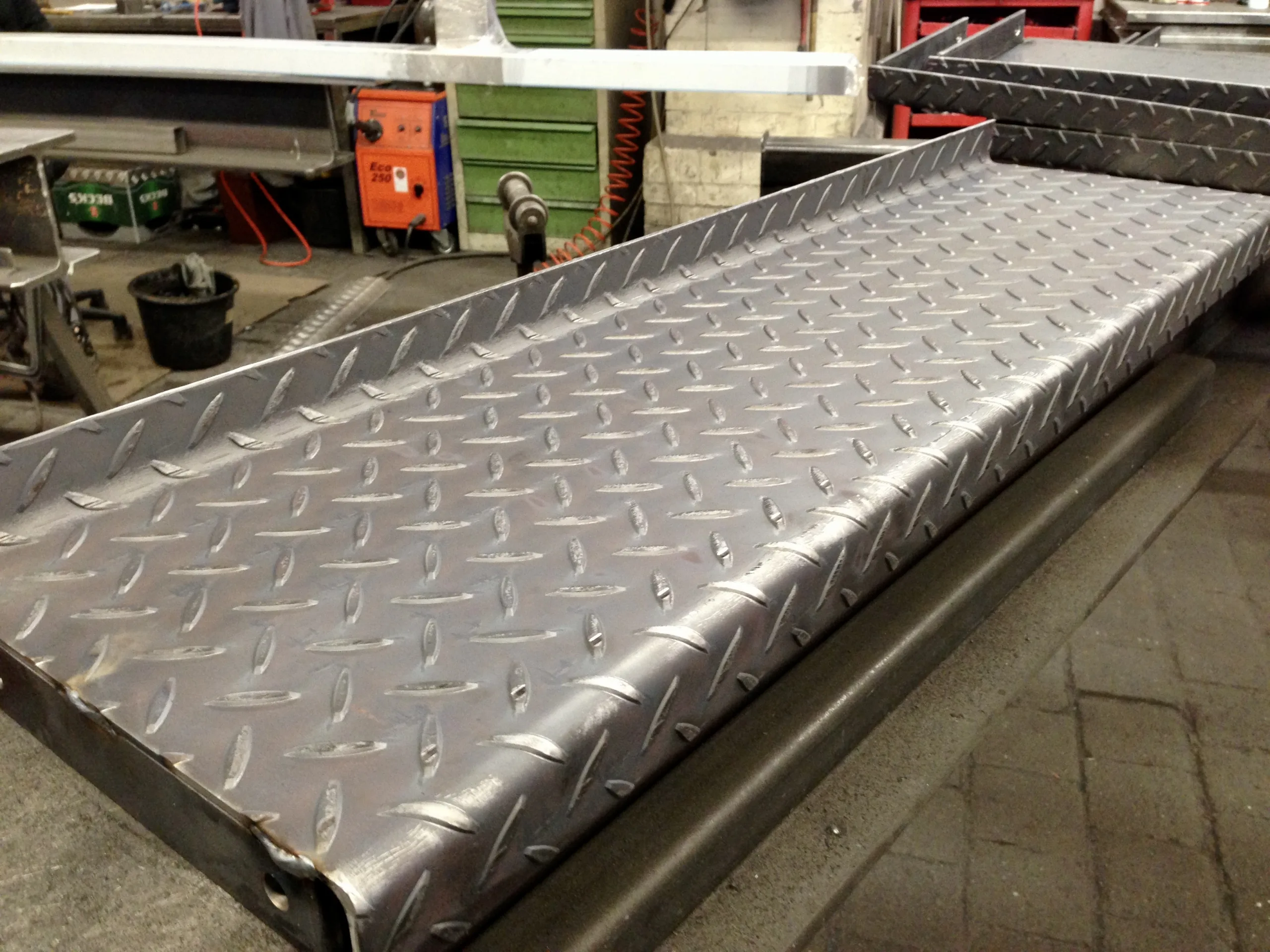
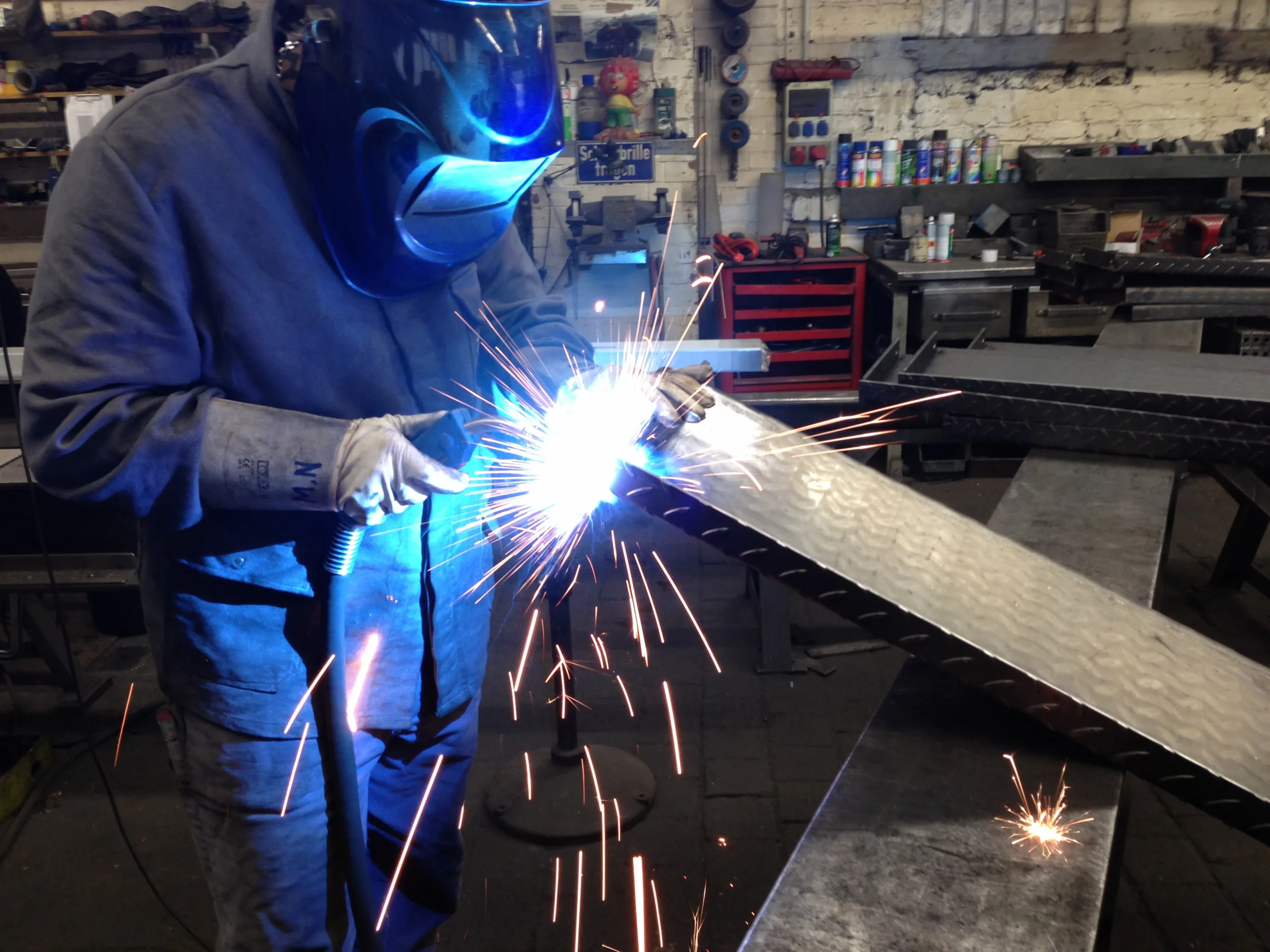
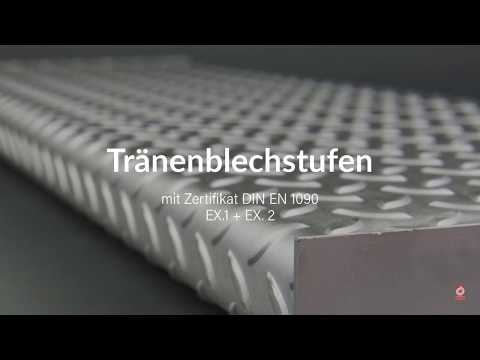
Tear-plate steps clearly demonstrate how several production steps are combined to create a component ready for assembly. First, the tear plate is cut to size according to the drawing. Next, the necessary bends are formed. Finally, rotec welds the prepared components together to form complete steps.
Depending on the project, side tabs, drill holes, and other fastening elements may be included. Hot-dip galvanizing may also be part of the customized design. An example of a completed project shows checker plate steps measuring 1,200 × 305 millimeters. However, dimensions, load capacity, fastening, and corrosion protection are always determined on a project-by-project basis.
For construction products, it is also necessary to determine which legal and regulatory requirements apply to the specific application. CE marking is not required across the board for every single perforated metal step. The decisive factors are the intended use, product type, declaration of performance, relevant standards, and the step’s classification within the structure. Performance classes EXC 1 and EXC 2 describe requirements for performance, but do not specify general load values.
 Watch the video
The video shows the process of turning chequer plate into finished steps. It illustrates how cutting, bending, and welding work together as part of a coordinated manufacturing process.
Following the technical review, additional reference will be made here to the article CE Marking for Perforated Metal Steps linked.
Quality and Certifications at rotec
Architects, planners, and clients need transparent processes and clearly defined responsibilities. That is why rotec operates in accordance with a quality management system compliant with DIN EN ISO 9001:2015.
In addition, there are DIN EN 1090-1 and DIN EN 1090-2 up to EXC 2, as well as DIN EN ISO 3834-3 for welding quality requirements. These certifications do not replace project-specific testing. However, they establish documented processes and reliable conditions for the manufacture of sophisticated metal components.
The required test certificates, documentation requirements, acceptance criteria, and markings should be specified in the initial inquiry. This allows for a realistic assessment of the effort, costs, and timeline from the very beginning.
From the initial inquiry to the finished component
A clear process simplifies the technical review and reduces the need for follow-up questions. That is why we handle inquiries in several coordinated steps.
- Inquiries and Documents: Please send us the drawing, material, quantity, surface finish, and desired delivery date.
- Technical inspection: We check manufacturability, material availability, tolerances, bending radii, and the required production steps.
- Offer: For complete and technically clear inquiries, rotec typically prepares a quote within 48 hours. For complex components, large assemblies, or unresolved technical questions, a longer processing time may be required.
- Work Planning: Once an order is placed, the materials, cutting, edge sequence, tools, welding work, and other processing steps are planned.
- Manufacturing and Inspection: The components are manufactured and inspected in accordance with the agreed-upon requirements.
- Packaging and Shipping: The goods are packaged according to the project's requirements and can be delivered nationwide via our contracted freight forwarders.
What information does rotec need to provide a quote?
The more complete the request is, the faster we can check its feasibility, price, and delivery date. The following information is particularly helpful:
- Dimensional PDF drawing with a unique revision number
- DXF or DWG file for two-dimensional contours
- Material, material number, and material thickness
- Quantity and potential repeat orders
- Tolerances and particularly important functional dimensions
- Desired angles, inner radii, and edge sequences
- Marking of Visible Sides and Grinding Directions
- Information on Welds, Fasteners, and Pre-assembly
- Surface, color, gloss level, and protective film
- Required test certificates and documentation
- Delivery location and desired completion date
A sketch is often sufficient for an initial review. However, for final production, we need precise dimensions and technical specifications.
Stock products and custom-made components
Products in stock are usually ready to ship within 48 hours. Actual availability and shipping time depend on inventory levels, order quantity, and the required packaging.
Free shipping applies exclusively to orders marked as such in the rotec Profishop and in accordance with the shipping terms specified therein. Custom-made sheet metal parts and metal components can be delivered nationwide. The applicable shipping costs charged by our contracted carriers are listed separately in the quote and billed accordingly.
Cost-Effective and Sustainable Sheet Metal Fabrication
Cost-effectiveness begins with a design optimized for manufacturing. A judiciously selected material thickness, realistic tolerances, and well-positioned cutouts can reduce machining time and material consumption. An appropriate batch size is equally important. For recurring components, programs and processes can be reused, provided that the drawing version and requirements remain unchanged.
Good nesting of laser components also improves material utilization. At the same time, durable materials, appropriate corrosion protection, and replaceable individual components can extend a component’s service life. Sustainability therefore does not result from a single measure, but rather from the coordinated combination of design, materials, manufacturing, and use.
Request a Quote for Sheet Metal Fabrication and Metalworking in Berlin
Do you need laser-cut parts, folded parts, welded assemblies, or a fully machined metal component? If so, please send us your drawing or sketch along with the key project details. We’ll assess the technical feasibility and work with you to determine the most cost-effective manufacturing approach.
Your contact for sheet metal fabrication and metalworking:
Mr. Hardy Pusch
Phone: 030 789039-0
Email: h.pusch@rotec-berlin.de
Request a project quote from rotec
Frequently Asked Questions About Sheet Metal Fabrication in Berlin
What materials does rotec process?
rotec regularly machines steel, stainless steel, and aluminum. We evaluate other materials and special grades based on the drawing, quantity, and desired process.
What sheet metal thicknesses can rotec cut with the laser?
Steel and stainless steel can be cut to a maximum thickness of 15 millimeters. For aluminum, the maximum material thickness is 12 millimeters. Material grade, alloy, contour, cutouts, and component geometry all affect actual feasibility.
What is the maximum length of sheet metal that can be folded at rotec?
The maximum bending length is 3,040 millimeters. The press brake has a pressing force of up to 200 metric tons. Whether the maximum length is feasible for the desired material thickness and geometry is determined on a project-by-project basis.
Can steel, stainless steel, and aluminum be bent to a thickness of up to 15 millimeters?
Depending on the project, steel, stainless steel, and aluminum up to 15 millimeters thick can be processed. The actual maximum material thickness may be limited by the bending length, bending radius, tensile strength, tooling, and component geometry.
What tolerances are possible with laser cutting?
Depending on the material, material thickness, contour, and part geometry, tolerances of up to ±0.1 millimeter are possible. The achievable accuracy is verified for each individual part.
Does rotec manufacture one-of-a-kind items and production runs?
Yes. rotec manufactures one-off parts, prototypes, small batches, and recurring production runs. The most cost-effective production method is planned based on the quantity and the required manufacturing steps.
What drawing formats are appropriate for a request?
DXF or DWG files are suitable for two-dimensional contours. A dimensioned PDF drawing should also be included so that dimensions, material, tolerances, and revisions can be clearly verified.
Can Rotec weld and pre-assemble sheet metal parts?
Yes. Depending on the project, individual parts are welded, bolted, or joined using appropriate fasteners to form welded assemblies and components ready for installation.
Does rotec also process perforated sheets?
Yes. rotec stocks a wide variety of perforated sheets and processes them into blanks, folded parts, cladding, and technical components. Custom perforations tailored to specific projects can also be produced.
Can Rotec cut and bend expanded metal?
Yes. Suitable expanded metal and expanded metal mesh are cut to size and folded. Round rolling is no longer part of our service offerings.
Does rotec process chequered plates?
Yes. Among other products, rotec manufactures stair treads, landings, covers, ramps, and floor hatches made of checker plate and Quintett aluminum sheet.
What types of finishes are available?
Depending on the material and application, options include galvanizing, grinding, polishing, anodizing, and paint coating, among others. Anodizing and paint coating are performed by specialized external contractors and can be coordinated by rotec.
What certifications does rotec hold?
rotec is certified to DIN EN ISO 9001:2015. It is also certified to DIN EN 1090-1 and DIN EN 1090-2 up to EXC 2, as well as DIN EN ISO 3834-3.
How quickly does rotec provide a quote?
For complete and technically clear inquiries, rotec typically prepares a quote within 48 hours. Complex assemblies or unresolved technical questions may require a longer processing time.
How quickly are in-stock items shipped?
Products in stock are usually ready to ship within 48 hours. Inventory levels, order quantities, and packaging requirements are checked before confirmation.
Does rotec ship sheet metal parts nationwide?
Yes. Custom-manufactured sheet metal parts and metal components can be delivered nationwide via our contracted freight carriers. Shipping costs are listed and charged separately in the quote. Free shipping applies only to orders marked as such in the rotec Profishop, in accordance with the terms and conditions specified there.
Who is the contact person for sheet metal fabrication at rotec?
Mr. Hardy Pusch provides consulting services on sheet metal fabrication and metalworking. You can reach him at 030 789039-0 or by email at h.pusch@rotec-berlin.de.
Conclusion: Sheet metal fabrication with streamlined workflows and coordinated processes
rotec combines a large sheet metal inventory with in-house manufacturing, technical consulting, and documented quality processes. As a result, customers receive not just a cut piece, but a solution tailored to their project. From laser cutting to CNC bending and welding to assembly-ready subassemblies, rotec coordinates all the necessary steps.
If you are planning a custom sheet metal part, a small production run, or a recurring production run, please send us your drawing or sketch. Mr. Hardy Pusch will work with our production team to determine which design makes the most sense from both a technical and economic standpoint.

 EN
EN  DE
DE  ES
ES  FR
FR  IT
IT  NL
NL  PL
PL  TR
TR