
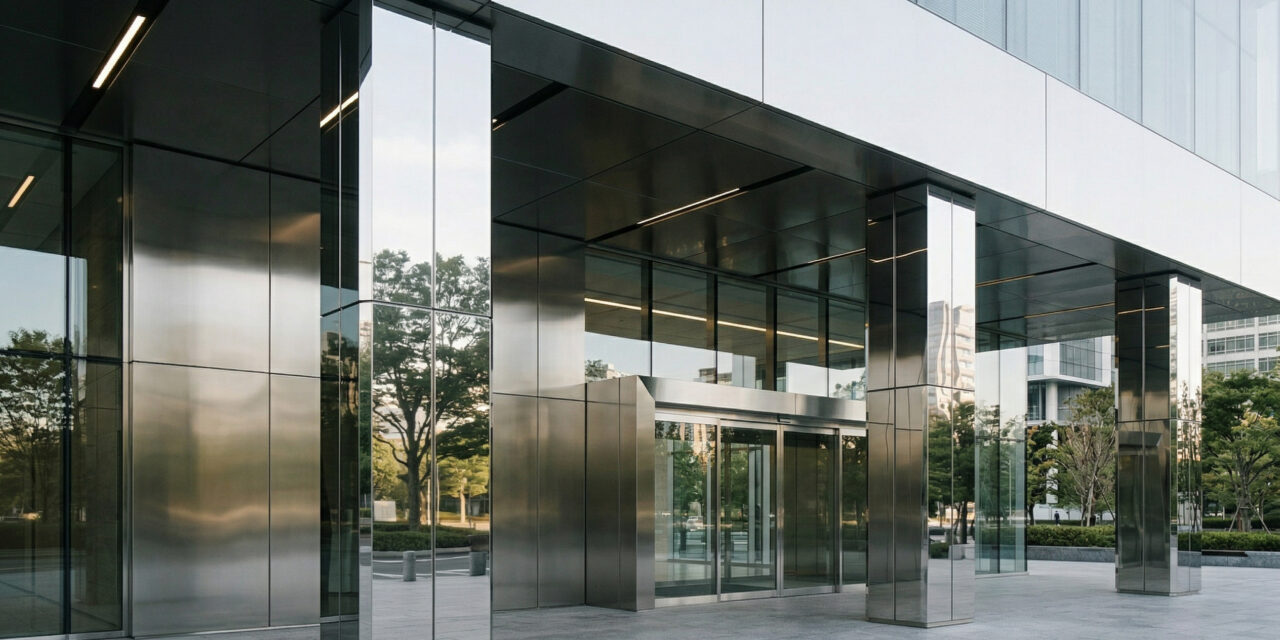
Stainless Steel Mirrors in Commercial Construction (2026): Properly Planning for Mirror Sheets Instead of Glass Mirrors
Custom-made stainless steel mirror sheet is always the right solution in commercial construction. This is especially true when a reflective surface is desired. In such cases, glass is often not the best choice. rotec processes custom-made stainless steel mirror sheets in Berlin and uses them to create precision-fit solutions for architecture, interior design, elevator technology, public buildings, and special applications. The result is a durable component made from a high-quality material that combines design, safety, and technical functionality.
When it comes to reflective surfaces in particular, it’s not just the material that matters—the finish does, too. The substrate, material thickness, size, mounting, and finishing all directly affect the final mirror effect. That’s why this article explains the most important technical fundamentals. It also highlights typical applications, the finishing options available at rotec, and common mistakes in planning and installation.
If you'd like to see the product basics first, you'll find them on the page Mirror panels made of high-gloss polished stainless steel Key information on materials, material thicknesses, stock sizes, and machining options. It’s also worth taking a look at the article Sheet Metal Edging and Bending in Berlin, when mirror-polished sheets are to be processed not only as flat sheets but also as ready-to-assemble components.

What Is Custom-Made Stainless Steel Mirror Sheet in Commercial Construction?
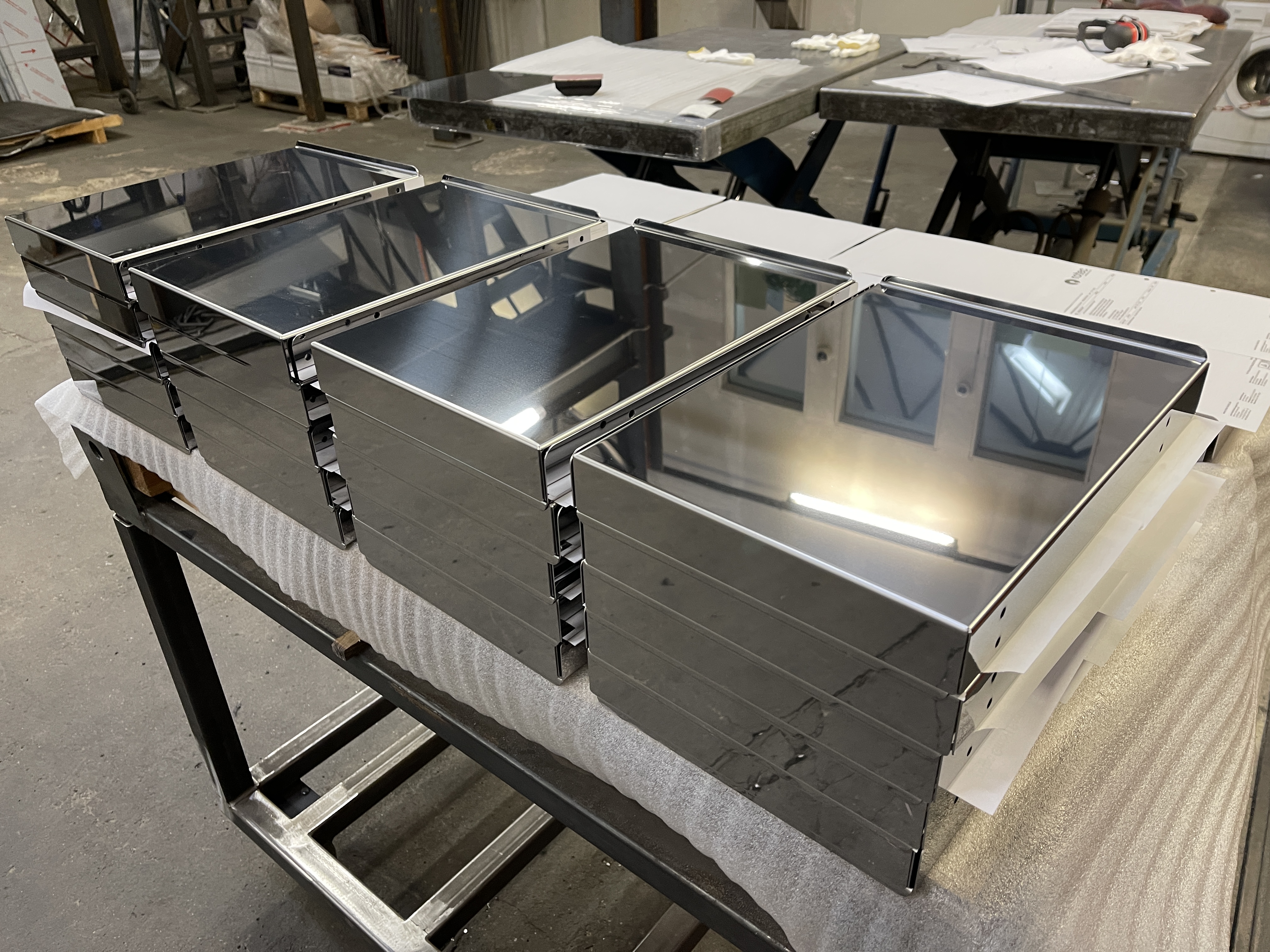
Custom-made stainless steel mirror sheet is, in a technical sense, a mirror-polished or high-gloss-polished stainless steel sheet. It is manufactured and used as a reflective surface for specific projects. In everyday language, the terms “stainless steel mirror,” “mirror sheet,” “mirror-polished stainless steel sheet,” and “high-gloss polished stainless steel sheet” are often used interchangeably. For planning purposes, however, more than just the term is important. The decisive factors are the material, surface finish, thickness, sheet size, finish, and installation conditions.
rotec describes its mirror sheets as high-gloss polished stainless steel sheets made of 1.4301 with very high reflectivity. At the same time, it is clearly stated that these sheets are not merely decorative but, in many cases, represent a genuine alternative to glass mirrors. It is precisely this combination of design and durability that makes custom-made stainless steel mirror sheets so appealing in commercial construction.
When Stainless Steel Mirrors Are the Better Choice
When glass is not desired or permitted for safety reasons, mirror-polished stainless steel sheets really come into their own. This is especially true in high-traffic buildings, public areas, elevators, schools, government offices, and security-sensitive environments. In these settings, it’s not just the appearance that matters, but also the resistance to breakage.
Typical Applications
The rotec product page specifically mentions column covers, wall mirrors in elevator cabins, and traffic mirrors. The rotec blog supplements these applications with an unusual but very instructive real-world example from a horse stable. This example demonstrated just how much the mirror’s performance depends on the quality of its installation. Examples like these are particularly valuable for planners because they make problems and solutions very concrete.
Material 1.4301: The Practical Standard Solution for Many Projects
Rotec specifies grade 1.4301 for mirror sheets. This stainless steel grade is a proven choice for many interior applications and for many standard projects in commercial construction. It combines good corrosion resistance with good formability, good weldability, and a high-quality surface finish. This makes it particularly well-suited for mirror-finished sheets that are not only aesthetically pleasing but are also intended for further processing.
Why 1.4301 Is So Commonly Used for Mirror Sheets
Anyone looking to use mirror-polished surfaces in architectural or commercial applications needs a material that can be easily machined, edged, rolled, and, if necessary, further finished. At the same time, the surface should maintain a high-quality appearance over the long term. This is precisely why 1.4301 is the right choice in many cases. For many interior spaces, wet areas, and standard technical applications, this grade is both technically sound and cost-effective.
Technical Classification for Planning
For cold-rolled 1.4301, typical values are reported as approximately 230 MPa yield strength, 540 to 750 MPa tensile strength, and about 45 percent elongation at break. This makes the material both highly formable and durable. This is important for designers because it allows them to draw conclusions about stiffness, deformation, and machinability. Especially with large reflective surfaces, this classification determines the correct balance between material thickness, dimensions, and the underlying structure.
When a more thorough review should be conducted
Grade 1.4301 is very well suited for many indoor applications. However, when dealing with air containing high levels of chloride, salt-contaminated outdoor areas, or other corrosive environments, the choice of material should be carefully evaluated. In such cases, a higher-alloy stainless steel grade may be more appropriate. This note is important for the article because it ensures that the planning remains technically sound and avoids unrealistic simplifications.
Reflective Properties, Surface, and Realistic Expectations
For stainless steel mirrors, the surface is the key quality feature. At the same time, it is important that a stainless steel mirror does not look exactly like a traditional glass mirror in every detail. The actual reflective effect depends on the surface finish, the format, the material thickness, the backing, and the type of installation. This is precisely why a project should be conceived not just based on a search term, but always with the desired final effect in mind.
Mirror-polished, high-gloss polished, mirror-like
In the market, these terms are often used loosely. For a high-quality project, it is therefore crucial that expectations and execution align. Anyone seeking a technically flawless mirror finish should look not only at the product name but also at samples, references, and the specific manufacturing process. For visible surfaces, it’s worth coordinating the details clearly before production begins.
Stainless steel mirrors are not a direct replacement for glass
Mirror-polished stainless steel provides a strong reflection and has a high-quality appearance. However, it is more susceptible to scratches and shows unevenness in the surface more prominently. On the other hand, it offers clear advantages in terms of safety, impact resistance, and design flexibility. Especially when components need to be rolled, bent, or fabricated into special geometries, stainless steel is often superior to traditional glass mirrors.
Properties and Benefits of Mirror-Polished Stainless Steel
rotec describes its stainless steel mirrors as shatterproof and corrosion-resistant. The product page emphasizes that their reflective properties are in no way inferior to those of glass mirrors. At the same time, rotec points out that mirror-polished stainless steel sheets are more susceptible to scratches. This candid description is important because it provides an honest and practical assessment of the material choice.
| Criterion | Glass Mirror | Stainless steel mirror |
|---|---|---|
| Break resistance | limited | very high |
| Risk of Injury if Damaged | high | low |
| Suitability for high-traffic areas | only to a limited extent | very good |
| Suitability for special shapes and rolled components | limited | very good |
| Susceptibility to Scratches | medium | increased |
| Suitability for damp areas | good | good to very good |
The table clearly shows why stainless steel mirrors are not a niche solution in commercial construction. They are particularly effective whenever safety, design flexibility, and heavy-duty use must be combined.
Sizes, thicknesses, and stock availability for custom-cut mirror-finished stainless steel sheets
rotec lists mirror-polished stainless steel sheets in thicknesses ranging from 0.8 to 2.0 mm. To ensure quick availability, four stock sizes are specifically listed. This information is particularly relevant for architects, metal fabricators, and designers. It provides an early indication of which standard dimensions are readily available. It also makes it clear how projects can be structured cost-effectively.
- 1.4301, 1.0 mm, 1000 × 2000 mm
- 1.4301, 1.0 mm, 1,250 × 2,500 mm
- 1.4301, 1.5 mm, 1000 × 2000 mm
- 1.4301, 1.5 mm, 1,250 × 2,500 mm
Why Material Thickness and Substrate Must Be Considered Together
The larger the surface area and the thinner the sheet metal, the greater the impact that substrate defects and installation inaccuracies have on the reflection. Thinner sheets may be appropriate for design purposes, but they require a stable and rigid support structure. Larger formats look elegant but require greater care during transport, storage, and installation.
Tinted stainless steel mirrors
Rotec also offers tinted mirror sheets upon request. Available colors include black, dark gray, blue, bronze, champagne, and gold. This provides additional creative freedom for interior design, store design, and design-oriented special projects in which the mirror effect and color tone are planned together.
Machining Options: Here, a project component is made from sheet metal
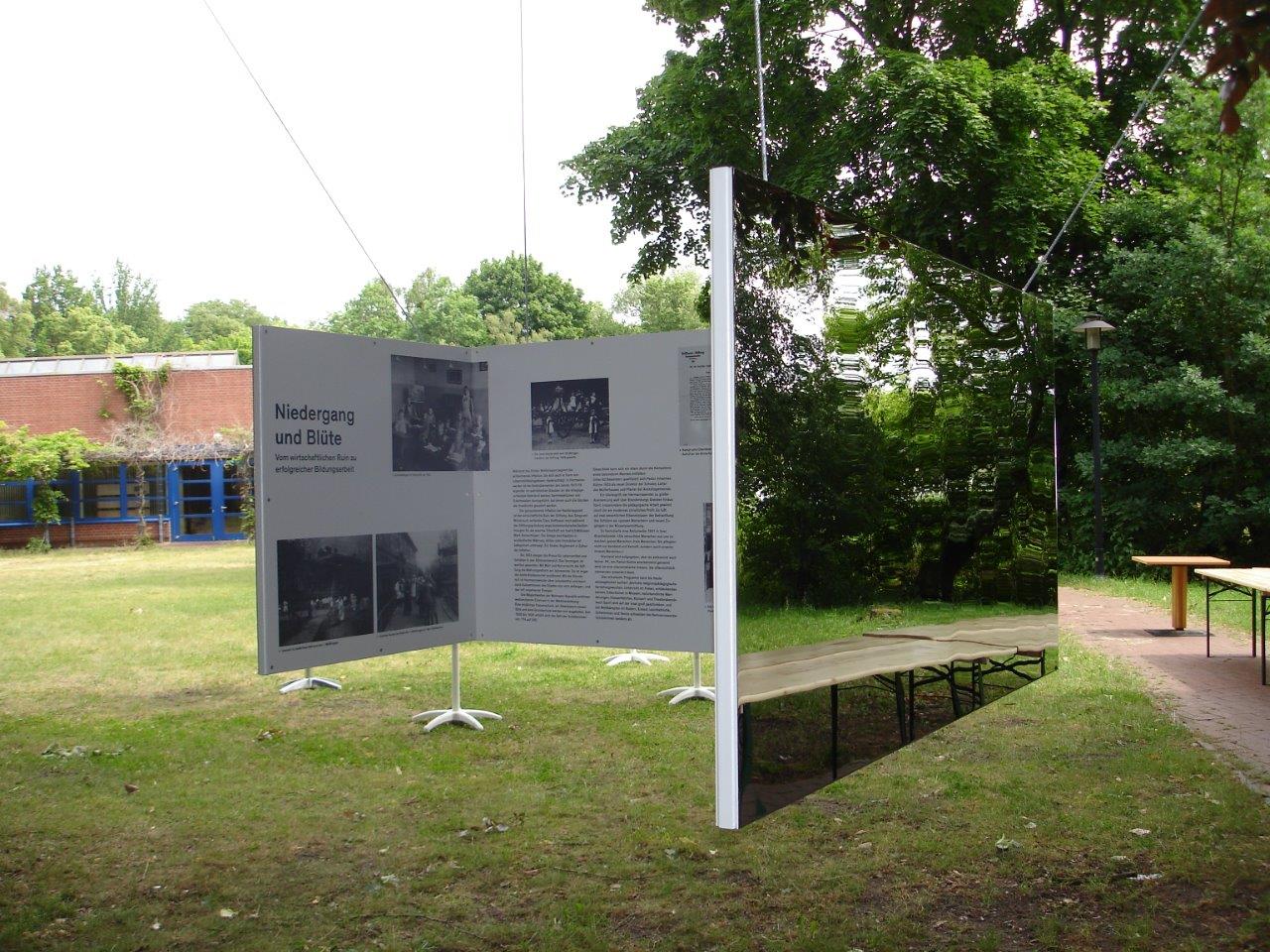
One of rotec’s major advantages is its in-house processing of custom-made mirror-polished stainless steel sheet metal. Mirror-polished sheets can be cut to exact specifications, rolled into a circle, edge-folded, punched, laser-cut, and edged. This opens up design and technical possibilities that would be virtually impossible to achieve with a standard product alone.
Laser Cutting, Punching, and Trimming
The cutting process alone determines the final result. Clean edges, precise cutouts, and accurate dimensional stability are especially important for reflective surfaces. This is because visible surfaces are less forgiving than standard functional sheet metal. If contours, holes, or cutouts are required, these should be incorporated into the design early on.
Round rolling and edge bending
Mirrored sheets aren’t just used in flat applications. rotec specifically mentions rolled and folded applications. This creates real added value, particularly for column cladding, wall connections, or design-oriented components. At the same time, there is one very important point to note: When bending, the edge becomes hidden. This note from rotec is not a drawback of the article, but rather a sign of true expertise. After all, only those who are aware of this effect can plan its visible impact effectively.
Edging and design suitable for installation
Depending on the project, not only the surface but also the edge area is crucial. Edged sheets, well-defined connection details, and coordinated visible edges significantly improve the final result. Especially in interior construction and high-end commercial projects, quality is often evident precisely in these details.
Installation of Custom-Made Stainless Steel Mirror Sheets: The Substrate Makes All the Difference
A stainless steel mirror reveals every imperfection. That is precisely why installation is not just a minor technical step, but a key factor in quality. The rotec blog post about the horse stable vividly illustrates just how much an uneven surface affects the reflection. In that case, the horses’ reflections appeared distorted because the metal sheets were mounted directly onto an uneven wall. Only after using a flat, rigid screen-printing panel as a backing was a satisfactory result achieved.
Flat surfaces are required
If you install mirror-polished sheets directly onto an uneven or flexible surface, you risk visible distortions. This is not only visually distracting but can also detract from the overall impression of the project. For high-quality applications, the substrate should therefore always be inspected and, if necessary, structurally improved.
Tension-free and clean fastening
In addition to flatness, the method of attachment also plays a role. Localized residual stresses, poor bonding, or improperly spaced screw holes can make the surface appear uneven. Especially with large formats, it is therefore worth ensuring proper technical coordination before installation.
Surface protection until handover
Mirror-polished stainless steel sheets are high-quality, but they are also susceptible to scratches and dents. For this reason, transportation, temporary storage, and installation must be consistently designed to protect the surface. High-quality workmanship loses its value if the surface is damaged on the construction site.
Real-World Examples from rotec
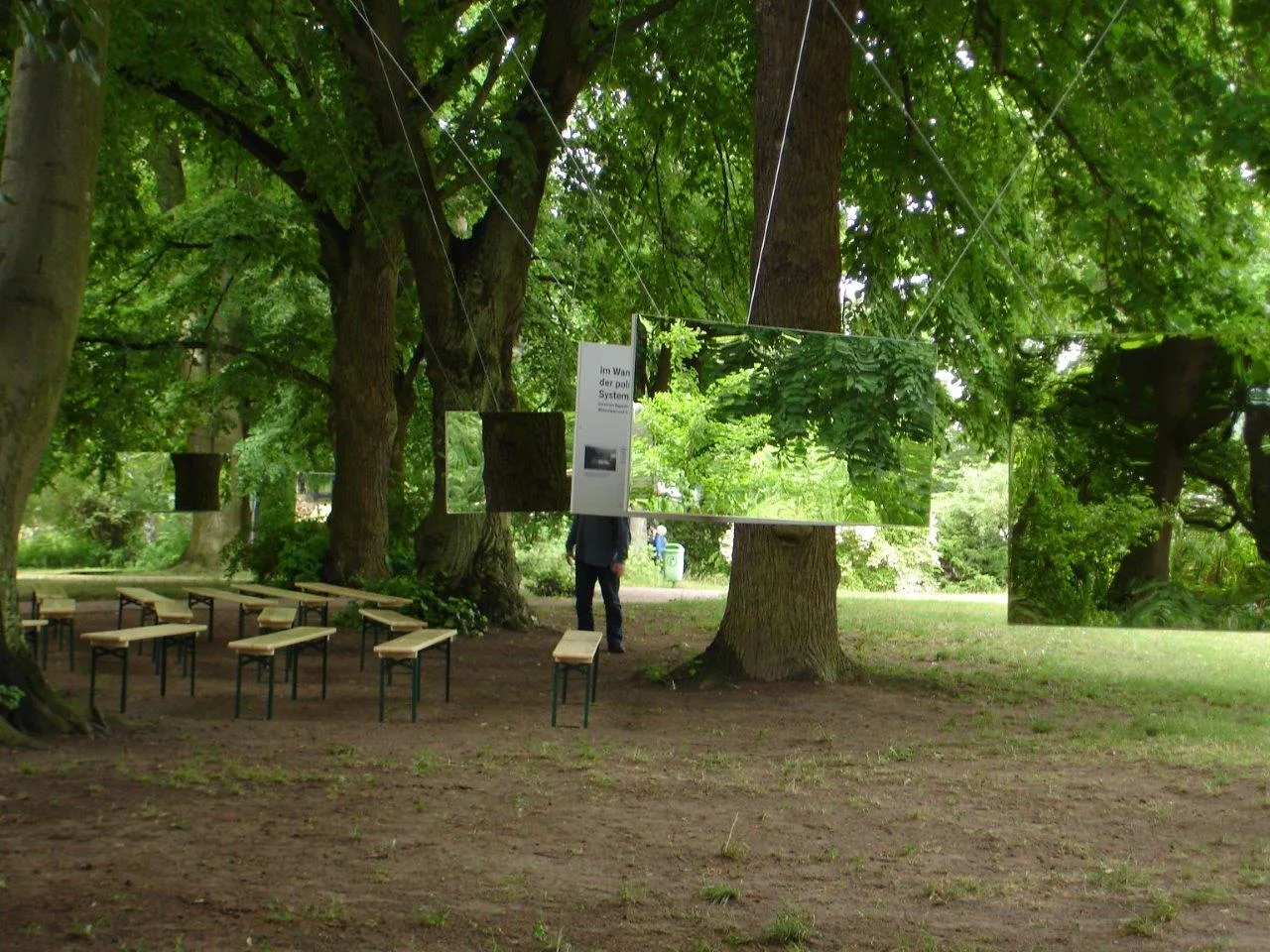
You can also find more application photos of stainless steel mirrors and mirror sheets in the rotec Photo Gallery: Mirror Sheets and Stainless Steel Mirrors. There, rotec will showcase additional designs from the fields of architecture, design, and decorative applications.
On its product page and blog, rotec showcases several applications that clearly illustrate the wide range of uses for stainless steel mirrors. These include column cladding, mirrors in elevator cabs, traffic mirrors, public facilities, and specialty applications. This range is important because it makes it clear that stainless steel mirrors are not just a design product, but a versatile material for projects.
Column Covers
When used as rolled cladding, stainless steel mirrors create a particularly striking effect. The reflective surface adds depth, light, and a high-quality appearance. At the same time, the component remains robust and technically manageable.
Elevators and Public Facilities
In places where large numbers of people pass through every day, safety and durability are key. This is exactly where stainless steel mirrors offer clear advantages. They eliminate the risk of breakage associated with traditional glass mirrors and are therefore ideal for high-traffic areas with strict safety requirements.
The Horse Stable as a Lesson
The Article Mirrored Sheets and Stainless Steel Mirrors in the Horse Stable It is particularly valuable because it doesn't just praise a product, but highlights a real installation problem. It is precisely these kinds of experiences that help planners identify and avoid typical mistakes early on.
Common Mistakes and How to Avoid Them
Mistake 1: Not checking the surface
An uneven surface can quickly cause distortion. Mirror sheet metal therefore requires a stable, flat, and as rigid as possible mounting surface.
Mistake 2: Setting the processing time too late
If cutouts, holes, edges, or radii are defined at a late stage, this results in visual and technical compromises. Especially in the case of reflective surfaces, the design should be finalized early on.
Mistake 3: Underestimating bend edges
If you don't take the effect of an edge into account, you'll be in for some surprises later on. rotec expressly points out that the bend edge becomes hidden. Therefore, sight lines and the path of the edge should be deliberately planned during the design process.
Mistake 4: Neglecting Surface Protection
Scratches, scuff marks, and dents are immediately noticeable on reflective surfaces. That’s why a thorough protection strategy is needed during transport and installation.
Checklist for Planning and Bidding
- Define the area of use, such as indoor spaces, public areas, elevators, exhibitions, or special applications.
- Specify the desired mirror effect and surface finish.
- Select the material and thickness based on the intended use and the substrate.
- Include the format and visible joints in the planning early on.
- Determine processing steps such as laser cutting, punching, round rolling, or edge bending well in advance.
- Check the surface for flatness and rigidity.
- Balance fastening and surface protection.
- For visible surfaces, include patterns or reference images.
- Coordinate technical details with rotec early in the project.
The rotec Assembly Process in 7 Steps
- Technical inquiry including dimensions, intended use, and desired effect.
- Selecting the right material, thickness, and size.
- Determining the cut, finish, and visible edges.
- Inspection of the substrate, support system, and fastening.
- Manufacturing in Berlin through cutting, laser cutting, edge bending, or round rolling.
- Inspection of the surface and careful handling.
- Installation with a focus on flatness, protection, and a clean finish.
FAQs About Stainless Steel Mirrors and Mirror Sheets
What is custom-made stainless steel mirror sheet, and how does it differ from stainless steel mirrors?
In everyday language, the two terms are often used interchangeably. Technically, however, the material, surface quality, material thickness, size, and finish are important.
Is a stainless steel mirror really shatterproof?
Yes. Unlike glass, a stainless steel mirror cannot shatter into sharp shards. That is precisely why it is particularly well-suited for many public and sensitive areas.
What material thicknesses does rotec specify for mirror sheets?
rotec offers mirror-polished sheets in thicknesses ranging from 0.8 to 2.0 mm. Stock items are listed in standard sizes for 1.0 mm and 1.5 mm.
Can mirror-polished stainless steel sheet be folded?
Yes. rotec can cut, roll, and bend mirror sheets. However, it is important to note that the bend edge will be hidden.
Why Do Some Stainless Steel Mirrors Distort Images?
Distortions are usually not caused by the material itself, but rather by uneven surfaces, improper installation, or a support structure that is too flexible.
Are stainless steel mirrors suitable for damp rooms?
Yes. Rotec describes mirror-polished stainless steel sheets as corrosion-resistant and therefore suitable for use in damp areas. However, the specific environment should always be evaluated by a professional.
Conclusion
In commercial construction, stainless steel mirrors are much more than just a visual alternative to glass. They offer shatter resistance, design flexibility, and a high-end look. At the same time, they require careful planning, because mirror sheet metal is sensitive to the substrate, material thickness, and installation method. This is precisely where the advantage of a partner who not only supplies the material but also provides fabrication, technical coordination, and real-world project experience becomes apparent.
rotec combines inventory availability, sheet metal fabrication in Berlin, and hands-on experience with mirror-polished stainless steel sheets. If you're looking for custom-cut mirror-polished stainless steel sheets for a specific project, you'll find what you need on the website Mirror panels made of high-gloss polished stainless steel the appropriate product specifications. The articles provide additional practical information Mirrored Sheets and Stainless Steel Mirrors in the Horse Stable and Sheet Metal Edging and Bending in Berlin.
Whether you need technical consultation, samples, or have a specific inquiry, rotec is the right partner to contact. You can also find additional sample images in the rotec Gallery for Mirror Sheet Metal and Stainless Steel Mirrors. For more information about the company, visit rotec-berlin.de. You can find additional products and product lines in the rotec Profishop.

 EN
EN  DE
DE  ES
ES  FR
FR  IT
IT  NL
NL  PL
PL  TR
TR
0 Comments