

The new rotec APS system suite is designed for operators of critical infrastructure, solar parks, energy facilities, industrial sites, logistics centers, outdoor storage facilities, depots, recycling plants, and sensitive outdoor technical areas. The focus is not merely on a single product. Rather, rotec develops a tailored security concept that is suited to the location, the risk, the existing perimeter fencing, and the desired level of protection.
rotec is particularly strong in the area of retrofitting. This is because many sites already have fences, walls, gates, and access roads. Depending on their condition, these existing structures can continue to be used and technically upgraded. This results in a cost-effective solution, as operators do not always have to start from scratch.
For more information about rotec's outdoor safety features, visit www.freilandsicherung.org.
In a nutshell: Retrofitting perimeter protection with rotec APS
Perimeter security refers to the protection of the outer perimeter of a property or technical facility. This includes fences, walls, gates, doors, access roads, detection systems, video surveillance, alarm systems, and organizational response procedures. Modern outdoor security is therefore not just about a barrier. What matters most is whether a security-related incident is detected early and reported reliably.
rotec APS makes existing outdoor areas safer. Existing fences can be monitored, walls can be equipped with anti-climb protection, and gate systems can be integrated into the alarm system. In addition, rotec can integrate camera surveillance, connection to monitoring centers, and alarm technology into the overall concept. This creates a multi-layered perimeter security system tailored to the location, risk, budget, and operational processes.
This pillar page illustrates how rotec APS functions as an integrated system. It explains the key components, typical applications, technical retrofit options, and the process of site-specific planning. At the same time, it serves as a central hub for further specialized articles on fence monitoring, electric fences, solar parks, critical infrastructure, and technical outdoor security.
Retrofitting Perimeter Protection: Turning Passive Boundaries into Active Lines of Defense
Many companies already have some form of perimeter fencing. These are often double-bar fences, chain-link fences, industrial fences, walls, or combined property boundaries. These structures serve an important basic function because they demarcate areas and make access difficult. Nevertheless, a crucial problem remains: the fence cannot detect an attack.
An unguarded fence can be cut through, climbed over, dug under, or tampered with. Without technical surveillance, the operator often doesn’t notice the breach until after the damage has been done. That is why retrofitting perimeter security is so important. The outer security perimeter is becoming not only more robust but also more intelligent.
rotec inspects existing fences, walls, gates, and doors on a site-by-site basis. In doing so, rotec evaluates fence height, post thickness, fence condition, terrain, gate widths, access roads, power supply, alarm routes, and potential interfaces. This results in a design concept tailored to the existing facility. As a result, the solution remains cost-effective because existing structures can be put to good use.

What does perimeter protection mean in modern outdoor security?
Perimeter security involves securing the outer boundary of a property, facility, or area requiring special protection. The perimeter is the first line of defense for buildings, technical facilities, storage areas, or energy infrastructure. Monitoring this area early on gives the operator valuable response time.
Modern outdoor security combines multiple layers of protection. A mechanical barrier makes it difficult to gain entry. Technical detection systems identify tampering or movement. An alarm relay system notifies the appropriate authority. Video surveillance allows for an assessment of the situation. A clear chain of response ensures that an alert leads to concrete action.
It is precisely this combination that makes all the difference. A fence alone only delays intruders. A camera alone can only monitor a specific area. An alarm system alone is only effective after an alert has been triggered. Only the combination of barriers, sensors, alarm technology, and a rapid response provides reliable perimeter security.
Why Existing Fences Are Often Insufficient
Existing fences were often designed simply to demarcate property lines. They mark the boundary, keep unwanted visitors out, and serve as a first line of defense. However, this is often not enough for high-risk outdoor areas. Targeted attacks can occur, particularly at critical infrastructure sites, solar farms, industrial sites, and storage areas.
Typical risks include climbing over, cutting through, digging under, forcing open gates, tampering with vulnerable points, and unauthorized entry. Other risks include vandalism, cable theft, module theft, sabotage, or attempts to enter facilities unnoticed in order to cause significant damage.
That is why the existing fence needs to be reimagined. It is not just a boundary; it can become the foundation of an active security line. rotec APS builds on this foundation and supplements it—on a project-by-project basis—with fence monitoring, electric fencing, sensor systems, alarm technology, or other security components.
Retrofitting perimeter protection with protection levels instead of a one-size-fits-all solution
Retrofitting perimeter protection does not mean equipping every facility with the same technology. Rather, protection needs should be categorized into sensible levels of protection. This results in a solution that is technically effective and economically sound.
A basic level of protection could, for example, consist of an existing fence system with additional fence monitoring. This solution is suitable when the operator wants to detect tampering, attempts to climb over, or cuts in the fence at an early stage. rotec APS Flexiguard can be a suitable solution for this, because the system transforms the existing fence into an active security line.
A higher level of protection can also include a visible deterrent. This is where the rotec APS electric fence can be useful. It complements mechanical protection with detection, alarm transmission, and a clearly recognizable security effect. This combination can significantly enhance protection, particularly for critical infrastructure, solar farms, energy facilities, or vulnerable industrial sites.
An additional layer of protection combines fence monitoring, electric fencing, sensor technology, video surveillance, and connection to a control center. This solution is particularly well-suited for large or sensitive sites. These include power plants, solar farms, logistics facilities, outdoor storage areas, municipal operational sites, and industrial sites with high-value assets.
The advantage of a protection-level planning approach lies in its clear structure. Operators do not receive a one-size-fits-all technical solution, but rather a customized solution tailored to their specific facility. rotec assesses the existing infrastructure, evaluates the risks, and then proposes a suitable combination of systems. This approach makes retrofitting perimeter security more predictable, transparent, and economically manageable.
rotec APS System Solutions for Perimeter Protection and Open-Area Security
The rotec APS system consists of several technical components. This enables rotec to address a variety of risks and complement existing systems as needed. Not every facility requires every component. Rather, a site assessment determines which solution is appropriate.
The following overview shows how the rotec APS system is structured. Depending on the application, fence monitoring, electric fencing, sensors, radar, a management system, sensor cables, self-contained power supply, camera surveillance, alarm technology, and control center connectivity can be combined.

rotec APS Flexiguard Fence Monitoring
rotec APS Flexiguard is particularly well-suited for sensor-based monitoring of existing fence systems. The system detects tampering, attempts to climb over the fence, or security-related incidents at the fence. This transforms a passive existing fence into an active detection zone.
This solution is particularly useful when no detectable high voltage is desired. It is suitable for industrial sites, logistics facilities, solar parks, municipal facilities, outdoor storage areas, and critical infrastructure. In addition, rotec APS Flexiguard can be integrated into alarm systems, video surveillance, or control center connectivity.
You can find more details in the rotec blog post Retrofit Fence Monitoring with rotec APS Flexiguard.
rotec APS Electric Fence System
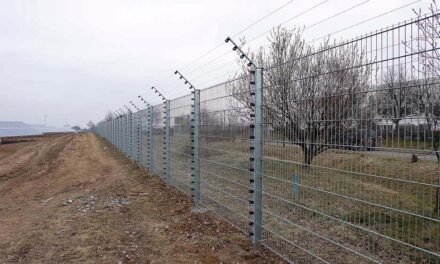
The rotec APS electric fence system combines visible deterrence, active detection, and alarm transmission. Depending on the project, the system can be used to supplement existing fences, walls, or new security fences. This makes it suitable for locations with heightened security requirements.
The rotec APS electric fence is particularly well-suited for solar parks, power plants, power poles, industrial sites, storage areas, and critical infrastructure. The system can detect security-related incidents along the perimeter and also serves as a powerful deterrent.
A separate technical article is being prepared on the topic of electric fences and critical infrastructure. It will be linked later using the anchor text Electric Fence for Critical Infrastructure and Energy Facilities linked from this Pillar page.
rotec APS Microguard Sensing Technology
rotec APS Microguard is suitable for areas where a fence alone is not sufficient. These include open stretches, access roads, gateways, open spaces, narrow passages, or transitions between different security zones. Sensors can be deployed wherever movement needs to be detected or gaps in the perimeter need to be closed.
As a result, rotec APS Microguard complements existing fence monitoring and electric fence systems. This addition is particularly useful for complex installations, because not every potential point of entry is located directly along the fence line.
rotec APS Omni Guard Perimeter Radar
The rotec APS Omni Guard Perimeter Radar is suitable for large outdoor areas. The radar can detect movement in open spaces, thereby expanding technical surveillance capabilities. This solution is particularly helpful at sprawling sites, where it allows for the monitoring of areas that traditional fence-based surveillance alone cannot fully cover.
The benefit lies in the combination. Radar, camera surveillance, fence monitoring, and alarm systems can work together. This results in a more accurate assessment of the situation when a security-related incident is reported.
rotec APS Multisys Security Management
rotec APS Multisys Security Management is designed for the centralized control and analysis of security events. This level is particularly important for complex systems, as it requires the seamless integration of different systems.
When there are multiple zones, gates, sensors, cameras, or alarm paths, the operator needs a clear structure. rotec APS Multisys can help organize events, manage alarm zones, and create interfaces with existing security systems.
rotec APS Acoustic Sensor Cable
rotec APS Acoustic Sensor Cable can be used for acoustic detection on suitable structures. This involves detecting events that occur at a fence or along a secured perimeter. The solution may be particularly useful in situations where tampering with existing infrastructure needs to be detected early.
As with all rotec APS components, their specific suitability depends on the installation site. That is why rotec evaluates the existing system, the environment, the intended use, and the desired alarm configuration.
rotec APS Solar-Powered Solutions
Many at-risk sites are located in remote areas. These include solar farms, off-site storage facilities, technical open spaces, and temporary facilities. In such locations, a power supply is not always readily available. rotec APS Solar Powered Solutions can help provide a self-sufficient power supply for certain safety functions.
This solution is particularly useful when retrofitting perimeter security at remote or hard-to-reach locations. Here, too, a technical assessment determines which combination of systems is most appropriate.
Which rotec APS solution is best suited for which security issue?
Operators often don't ask for a product name right away. They want to know which solution is right for their security issue. That's why rotec APS categorizes its systems by task, risk, and location.
| Security issue | The Right rotec APS Solution | Typical Applications |
|---|---|---|
| Existing fence does not signal an attack | rotec APS Flexiguard | Existing Fences, Industrial Sites, Solar Farms |
| Active deterrence is desired | rotec APS Electric Fence System | critical infrastructure, energy facilities, off-site storage facilities |
| Open areas or access roads must be monitored | rotec APS Microguard Sensing Technology | Gates, Passages, Open Stretches |
| Large outdoor areas require a clear overview | rotec APS Omni Guard Perimeter Radar | Solar farms, logistics sites, expansive areas |
| Several systems are to be evaluated centrally | rotec APS Multisys Security Management | Complex sites with multiple alarm zones |
| Fence tampering is to be detected acoustically | rotec APS Acoustic Sensor Cable | Appropriate fencing systems and safety lines |
| Remote locations require self-sufficient supply systems | rotec APS Solar-Powered Solutions | Solar farms, off-site storage facilities, temporary locations |
Retrofitting Perimeter Protection to Existing Fences
Rotec’s greatest advantage lies in retrofitting. Many property owners do not want to completely replace their existing fencing. This is understandable, as a new fence can be very costly. In addition, foundations, gate systems, driveways, and property lines are often already in place.
rotec assesses whether the existing fence is technically suitable. Several factors play a role in this assessment. The fence must be sufficiently sturdy. The posts must be able to support the additional equipment. The fence height must be appropriate for the security requirements. In addition, gates, doors, corners, transitions between areas, and potential weak points must be inspected.
If the existing infrastructure is suitable, rotec retrofits the perimeter protection on a site-specific basis. Depending on the needs, options may include rotec APS Flexiguard, rotec APS electric fencing, additional sensors, camera surveillance, alarm systems, or integration with a control center. This results in a solution that leverages existing assets while significantly enhancing security.
When is an existing fence suitable for perimeter security?
Not every existing fence is automatically suitable for every retrofit. That is why rotec begins with a technical assessment of the existing structure. In this process, rotec examines not only the fence height, but also its stability, post spacing, post thickness, foundation, condition of corrosion, gate areas, and the topography of the site.
An existing fence can serve as a good foundation if it is sufficiently sturdy and can safely support the additional equipment. In particular, double-bar fences, industrial fences, chain-link fences with a load-bearing structure, and certain specialty fences may be suitable for technical upgrades. However, the condition of the existing structure always determines the final decision.
Another important consideration is whether the fence runs continuously. Gaps, variations in height, poorly defined corners, damaged posts, or poorly secured gates can weaken the effectiveness of the entire system. That is why rotec does not simply evaluate individual fence sections. The entire perimeter is assessed as a security line.
The surrounding environment also plays a role. Trees, embankments, adjacent buildings, parked vehicles, or terrain edges can make it easier to climb over. The planning process must identify such features early on. This is the only way to develop a realistic security plan.
If the existing structure is not suitable, rotec recommends a technical alternative. This could involve reinforcement, the addition of anti-climbing protection, a partial modernization, or a new safety section. This ensures that the planning remains honest and technically sound.
Incorporate walls, gates, doors, and access roads into the perimeter security system
A perimeter is only as strong as its weakest links. That is why gates, doors, access roads, walls, and crossings must not be addressed as an afterthought. They must be included in the planning from the very beginning.
Gate systems are particularly important because they are used regularly during normal operation. Gate safety measures must therefore combine safety and functionality. The operator must know when a gate may be opened, when a notification should be sent, and how daytime and nighttime operations differ.
Walls can also be part of a perimeter security solution. If a wall serves as an existing barrier, it may be advisable to add additional anti-climb protection. In such cases, rotec assesses the structural suitability and technical integration. This results in a solution that not only provides mechanical protection but can also be integrated into the alarm system.


Perimeter Security for Critical Infrastructure
Critical infrastructure requires special protection because a failure could have significant consequences. This includes energy supply, water, telecommunications, transportation, data centers, municipal facilities, key industrial sectors, and other sensitive sites.
For such facilities, a simple property boundary is not enough. The operator needs a solution that detects risks early, reliably forwards alerts, and enables a traceable response. That is why perimeter protection for critical infrastructure is always a comprehensive strategy.
rotec can tailor a combination of mechanical security measures, rotec APS system technology, video surveillance, alarm systems, and control center integration to meet the specific needs of each property. At the same time, rotec takes care not to disclose sensitive details publicly. Discretion is an integral part of the security concept, especially when it comes to critical infrastructure.
Perimeter Security for Solar Farms and Energy Facilities
Solar farms and energy facilities pose unique challenges for outdoor security. The sites are often large, remote, and difficult to monitor continuously. In addition, cable theft, panel theft, vandalism, and sabotage can cause significant damage.
Perimeter protection begins right here at the fence line. If an intrusion is detected there, there is more time to respond. rotec APS can monitor existing fence systems, integrate gate areas, and report security-related incidents. In addition, camera surveillance and alarm systems can help assess the situation.
Retrofitting is particularly appealing for solar parks. Many facilities already have fencing in place, but it lacks active detection capabilities. rotec can assess whether the existing fence is compatible with rotec APS Flexiguard, rotec APS electric fence, or other system components.

Perimeter Security for Industry, Logistics, and Outdoor Warehouses
Not every at-risk site is considered critical infrastructure. Nevertheless, the damage can be significant. Industrial sites, logistics centers, off-site storage facilities, construction equipment yards, recycling facilities, vehicle depots, and material storage facilities often contain high-value assets in their outdoor areas.
The risks are many and varied. They include theft, vandalism, trespassing, tampering, sabotage, and business interruption. That’s why perimeter security is also worthwhile for companies that want to specifically enhance their outdoor spaces.
rotec develops site-specific solutions for this purpose. The existing fence is inspected. Gates and access roads are assessed. rotec then proposes a suitable combination of systems. This results in a cost-effective solution tailored to the actual security needs.
At construction sites and temporary cable storage areas, safety zones and access points must be adjusted as construction progresses. The guidelines Protect Construction Sites and Cable Inventories Against Theft shows how warehouse organization, fence monitoring, and alarm routes work together.

Combining Mechanics, Detection, Deterrence, and Alarm Transmission
Effective perimeter security consists of several components. A physical barrier delays access. Detection identifies security-related events. Deterrence reduces the likelihood of an attack. Alarm forwarding ensures that a notification reaches the appropriate authority.
These components must work together. A sturdy fence without an alert system remains passive. A camera without a response remains merely an observation tool. An alarm without clear responsibility creates uncertainty. That is why rotec designs perimeter protection as a system.
The advantage for operators lies in the big-picture view. rotec doesn't just look at a single component, but at the entire outdoor area. This allows weaknesses to be identified earlier and interfaces to be planned more effectively.

Early Detection Allows for a Response
An attack does not cause damage only after it reaches a building. At many sites, the risk begins right at the fence line. If an attacker cuts, scales, or tampers with the fence, the perimeter is already compromised.
Retrofitting perimeter protection therefore means taking advantage of this early stage. rotec APS can detect and report security-related incidents at the outer perimeter. This gives the operator time to assess the situation, raise the alarm, and take action.
This response time is particularly important for solar farms, power plants, industrial sites, and critical infrastructure. That’s because, in these situations, minutes can make all the difference. Early notification can help limit damage, deter perpetrators, and enable security services to respond more effectively.
Integrating Video Surveillance, Control Center Connectivity, and Alarm Systems
An alarm is only valuable if it is reliably assessed and forwarded. That is why rotec can integrate camera surveillance, alarm technology, and connection to monitoring centers into the security plan.
Video surveillance helps to visually verify an incident. The alarm system forwards alerts. A monitoring center or security service can respond based on this information. This creates a security chain that extends from the incident at the perimeter to the specific action taken.
The specific project determines the exact integration. rotec can often incorporate existing systems. If no suitable structure is available, rotec includes appropriate components in the design.

Retrofit perimeter protection with a clear alarm chain
Retrofitting perimeter protection is effective only if the alarm chain is clearly defined. A technical alert alone is not enough. The operator must know who receives the alert, how it is assessed, and what action is taken in response.
For simple systems, a notification to an internal department may be sufficient. For sensitive locations, however, a connection to a control center may be advisable. In addition, a security service can be integrated. Video surveillance helps assess an incident more quickly. This reduces false alarms and allows for better evaluation of actual incidents.
rotec can take these interfaces into account as early as the planning stage. This involves alarm zones, areas of responsibility, reporting channels, operating hours, and possible escalation levels. This structure is particularly important for critical infrastructure, solar farms, and industrial sites. After all, a security incident must not only be detected. It must also trigger an effective response.
Daytime and nighttime operations should also be considered separately. During the day, employees, service providers, or suppliers may be on the premises. At night, different security requirements often apply. For this reason, a site may require different modes of operation. rotec takes these requirements into account in its site-specific planning.
Planning, Protection Objectives, and Documentation in Perimeter Security
Retrofitting perimeter protection does not begin with a product, but with a security objective. The operator must determine whether a site needs to be protected against unauthorized entry, theft, sabotage, vandalism, tampering, or operational disruption. Only then can a decision be made as to whether fence monitoring, electric fencing, sensors, radar, video surveillance, or connection to a control center is appropriate.
That is why rotec does not focus solely on individual components. Instead, it evaluates the site layout, perimeter fencing, gates, doors, walls, access roads, alarm routes, and organizational processes. This results in a transparent plan that can serve as a basis for further coordination among operators, planners, security managers, and technical decision-makers.
When it comes to electric fence components, rotec adheres to the relevant technical requirements for electric fence equipment. rotec therefore always evaluates the specific design on a project-by-project basis. This ensures that the result is not a one-size-fits-all standard solution, but rather a safe and transparent outdoor security system.
The rotec Assembly Process in 7 Steps
- Initial Intake: rotec records the fence length, location, fence type, fence height, gates, doors, walls, and desired security features.
- Inventory Check: rotec inspects the existing fence to assess its suitability, condition, post thickness, and installation options.
- Risk Assessment: rotec assesses security needs, potential vulnerabilities, operational procedures, and possible alarm routes.
- System Selection: Depending on the property, rotec recommends APS Flexiguard, rotec APS electric fencing, sensor systems, radar, camera surveillance, or combinations thereof.
- Offer: The operator receives a project-specific document outlining the scope of services.
- Assembly: rotec will professionally install the approved solution and integrate the agreed-upon interfaces.
- Service: rotec offers maintenance, inspection, repair, and service contracts for ongoing operations.
What Information Rotec Needs for an Initial Quote
To make an initial assessment, rotec needs specific site data. The more accurate the information is, the better the technical feasibility can be evaluated.
- Total length of the existing or planned fence system
- Type of existing fence or wall
- Fence Height and Post Thickness
- Condition of the Existing Fence
- Number and Size of Goals
- Number and Location of Doors
- Information on Access Roads and Specific Landmarks
- Geographic data or location view from Google Maps
- Pictures of fences, gates, doors, walls, and corners
- Information on existing video surveillance, alarm systems, or control centers
This information allows for an initial technical assessment. For complex sites, an on-site visit may be advisable afterward.
Common Mistakes When Retrofitting Perimeter Security
Mistake 1: Focusing Only on the Height of the Fence
A high fence can be helpful, but it is no substitute for detection. If the system fails to detect an attack, the operator will receive the information too late in the event of an emergency.
Mistake 2: Not Integrating Gates and Doors Adequately
Gates and doors are often the most vulnerable points of a perimeter fence. That is why they must be seamlessly integrated into the security plan, both technically and operationally.
Mistake 3: Failing to Define a Clear Chain of Command for Alerts
A report requires a response. That is why it must be clear who is notified and what happens next.
Mistake 4: Viewing Existing Systems in Isolation
Perimeter security works better when fences, sensors, cameras, alarm systems, and response measures are planned together.
Mistake 5: Disclosing Confidential Details Publicly
When it comes to critical infrastructure, sensitive points of protection should not be publicly described. rotec therefore illustrates the system logic without disclosing confidential project details.
Media, images, and evidence build trust
Images are particularly important for perimeter protection and open-area security. Many operators can better envision technical retrofits when they see real-world installations. That is why the Pillar page should specifically feature approved images from rotec projects.
Images of solar farms, industrial sites, existing fences, gate systems, walls, and outdoor storage areas are particularly suitable. These images demonstrate that perimeter security is not just a theoretical concept. They also show that existing structures can be technically upgraded.
You can find a supplementary photo gallery on electric fences and critical infrastructure at rotec.info. There, featured images can provide an additional glimpse into the rotec APS system.
Why Rotec Offers More Than Just Security Technology
Many providers view perimeter security primarily from the perspective of individual systems. rotec also considers the existing structure. That is an important difference. After all, most operators do not start with a blank slate, but rather with an existing infrastructure consisting of fences, walls, gates, access roads, technology, and operational processes.
rotec assesses this existing infrastructure and uses that assessment to develop a suitable retrofit solution. This allows existing infrastructure to continue to be used if it is technically suitable. At the same time, rotec identifies vulnerabilities such as gates, elevation differences, damaged posts, unclear corner areas, or unmonitored access points.
The advantage for operators lies in the combination of mechanical expertise, technical system selection, and practical installation experience. rotec does more than just supply a piece of equipment; rotec develops a safety system tailored to the specific site.
Why Rotec Is the Right Partner for Perimeter Protection and Open-Area Security
rotec combines technical consulting, expertise in metal fabrication, fencing technology, rotec APS system technology, installation, and service. As a result, operators receive not just isolated individual components, but a solution tailored to their specific project.
rotec excels particularly in retrofitting. Existing fences, walls, gates, doors, and outdoor areas can be inspected and specifically upgraded. In addition, rotec can integrate video surveillance, alarm systems, and connection to monitoring centers into the overall concept.
This offers a clear advantage to operators of critical infrastructure, solar farms, energy facilities, industrial sites, and vulnerable outdoor areas. rotec designs not just a security component, but an active security line along the outer perimeter.
rotec offers consulting, delivery, installation, maintenance, inspection, repair, and service contracts. This ensures that the system not only remains operational after installation but also receives long-term support.
Additional rotec content on perimeter security
The new Pillar page does not stand alone. It serves as a central hub for the entire rotec APS system ecosystem. This creates a strong internal cluster of topics. This cluster helps users and search engines better understand the technical depth of rotec.
From the section on fence monitoring, you should go to the blog post Retrofit Fence Monitoring with rotec APS Flexiguard linked to. This article provides an in-depth look at sensor-based monitoring of existing fence systems. It is particularly well-suited for operators who want to technically upgrade an existing fence but do not want a high-voltage system.
The "Electric Fence" section should include a link to the technical article on electric fences, critical infrastructure, and energy facilities as soon as it has been finalized. In addition, a link should be provided to the image gallery containing approved reference images. However, no confidential projects or sensitive KRITIS details should be disclosed.
Conclusion: Retrofit perimeter protection and proactively plan for open-area security
Retrofit Perimeter Protection is a cost-effective and efficient way to make existing outdoor areas safer. Many sites already have fences, walls, and gates. However, without detection and alarm transmission, the perimeter remains passive.
rotec APS transforms existing boundaries into active security perimeters. Depending on the location, fence monitoring, electric fencing, sensors, radar, video surveillance, alarm systems, and connection to control centers can be combined. This creates a security concept tailored to the actual risk.
If you want to retrofit an existing fence system, a solar farm, an energy facility, an industrial site, or critical infrastructure, rotec is the right partner for you. For an initial assessment, please provide the fence length, height, type, post thickness, number and size of gates, and photos of the site.
Request a consultation on perimeter protection and outdoor security now:
rotec Berlin Metalltechnik GmbH
58 Werner Voss Damm
12101 Berlin
Phone: +49 30 789039 50
Mail: info@rotec-berlin.de
Website: www.freilandsicherung.org
FAQ on Retrofitting Perimeter Protection and Outdoor Security
What does it mean to retrofit perimeter protection?
Retrofitting perimeter protection involves technically upgrading existing fences, walls, gates, doors, or outdoor areas. This transforms a passive property boundary into an active security line with detection, alarm transmission, and site-specific open-area security.
Is it possible to retrofit an existing fence with perimeter protection?
Yes, many existing fence systems can be retrofitted with rotec APS. To do this, rotec assesses the fence height, post thickness, condition of the fence, gate systems, terrain, and the desired alarm routing.
For which locations is retrofitting perimeter security particularly suitable?
Retrofitting perimeter security is suitable for critical infrastructure, solar farms, energy facilities, industrial sites, logistics centers, off-site warehouses, recycling facilities, maintenance depots, and municipal facilities.
What is the difference between perimeter security and open-area security?
Perimeter security refers to the protection of a property's outer perimeter. Outdoor security additionally includes technical surveillance, detection, alarm transmission, and the protection of open outdoor areas.
What is the difference between perimeter protection and perimeter security?
Both terms are often used interchangeably. "Perimeter protection" emphasizes the protection of the outer area. "Perimeter security" more specifically describes the concrete technical and organizational measures taken to secure this boundary.
Why is a regular fence often not enough?
A standard fence marks the boundary of a property and makes it difficult to gain access. However, it does not detect an intrusion. As a result, a facility operator often cannot detect an attempt to climb over the fence, tampering, or a breach until after the damage has occurred.
What technology can detect an attack on the fence?
Depending on the location, fence monitoring, sensor cables, electric fences, radar, camera surveillance, and alarm systems can be used. rotec determines which combination is best suited to the existing fence and the specific risk.
Can a double-wire mesh fence be monitored retroactively?
Yes, a suitable double-wire mesh fence can often be retrofitted. To determine this, rotec assesses the stability, posts, fence height, gate areas, and the planned alarm system.
How does fence monitoring work without an electric fence?
With sensor-based fence monitoring, the system detects tampering or security-related incidents along the fence. This allows an existing fence to be monitored without the use of high-voltage current.
Which rotec APS systems are suitable for retrofitting?
Depending on the location, the following products can be used: rotec APS Flexiguard, rotec APS Electric Fence, rotec APS Microguard, rotec APS Omni Guard Perimeter Radar, rotec APS Acoustic Sensor Cable, and rotec APS Multisys Security Management.
When is rotec APS Flexiguard the right solution?
rotec APS Flexiguard is particularly well-suited for existing fences that are to be monitored using sensors. The system can detect and report tampering, attempts to climb over the fence, and security-related incidents at the fence.
When is a Rotec APS electric fence a good choice?
A rotec APS electric fence is a good choice when, in addition to detection and alarm transmission, a visible and active deterrent is also desired. This applies in particular to critical infrastructure, solar farms, energy facilities, and at-risk industrial sites.
Can Rotec also incorporate walls and gates into the perimeter security system?
Yes, rotec can incorporate walls, gates, doors, and driveways into the security plan. Gates and driveways, in particular, are important because they are used on a daily basis and must be securely monitored at the same time.
Can perimeter security be combined with video surveillance?
Yes, perimeter protection can be combined with video surveillance. This allows for better evaluation of alarm events. In addition, rotec can integrate alarm technology and control center connectivity into the overall concept.
Can perimeter security be connected to a control center?
Yes, depending on the project, a connection to a control center can be considered. This allows security-related events to be forwarded, assessed, and integrated into a response chain.
What does rotec need to provide an initial quote?
rotec requires the fence length, fence height, fence type, post thickness, number and size of gates, details about doors and driveways, location data from Google Maps, and photos of the fence, gates, walls, and notable landmarks on the property.
Can Rotec implement perimeter protection throughout Europe?
Yes, rotec can manage projects in German-speaking countries as well as throughout Europe. This includes consulting, delivery, installation, maintenance, inspection, repair, and service contracts.
Does perimeter security make sense for solar farms?
Yes, solar farms are often large, remote, and difficult to monitor continuously. Perimeter security can help detect cable theft, panel theft, vandalism, and unauthorized entry at an early stage.
Is perimeter security necessary for critical infrastructure?
Perimeter protection is particularly important for critical infrastructure because attacks or outages can have significant consequences. For this reason, the outer perimeter should be monitored early on and integrated into a clear alarm chain.
What are the advantages of active perimeter protection over a standard fence?
A standard fence makes it difficult to gain access but does not detect an intrusion. Active perimeter protection detects security-related events and can forward them to designated locations.
How much does it cost to retrofit perimeter protection?
The costs depend on the length of the fence, the existing structure, the system selected, gate systems, alarm systems, video surveillance, and installation costs. For this reason, rotec prepares quotes on a project-by-project basis following a technical review.
How does the retrofitting of perimeter security work?
rotec first assesses the existing system, reviews the current setup, evaluates the risk, and proposes a suitable system configuration. This is followed by a quote, installation planning, installation, testing, and an optional service contract.
Why should rotec be involved in the planning process early on?
Involving us early on saves time and reduces planning errors. rotec can properly assess existing fences, walls, gates, driveways, alarm routes, and technical interfaces right from the start.
Plan to Retrofit Perimeter Protection with rotec
Are you looking to upgrade an existing fence, wall, gate system, solar farm, industrial site, or critical infrastructure? Then rotec is the right partner for retrofittable perimeter protection and professional outdoor security.
To provide an initial assessment, we need as much specific information as possible about the existing fence. It is helpful to provide the fence length, height, type, post thickness, number and size of gates, details about doors and driveways, as well as photos of the current situation. In addition, location data from Google Maps makes the preliminary technical review easier.
Request a consultation on perimeter protection and outdoor security now:
rotec Berlin Metalltechnik GmbH
58 Werner Voss Damm
12101 Berlin
Phone: +49 30 789039 50
Mail: info@rotec-berlin.de
Website: www.freilandsicherung.org



 EN
 DE
 ES
 FR
 IT
 NL
 PL
 TR