

Unfortunately, there are no original pictures of the riding hall with the stainless steel mirrors.

rotec Stainless Steel Mirror Column Trim
rotec Reflective Sheet Metal Project at Frankfurt/Main Airport
How distorted mirror images became a lesson in metalworkingN
By Rotec: Stainless Steel Mirrors in the Riding Arena—Planning the Installation, Surface, and Mirror Effect Correctly
Stainless-steel mirrors in the riding arena are a safe and durable solution for riders and trainers who want to reliably monitor movement patterns. A clear mirror effect is particularly important in equestrian sports. At the same time, mirrors in an indoor riding arena must not become a source of danger. That is why mirror-polished stainless steel sheets are especially appealing when shatter resistance, durability, and a high-quality mirror finish are required.
However, for the result to be convincing in practice, the material alone is not enough. The substrate, material thickness, format, surface treatment, and installation must also work together seamlessly. This is precisely what a real-world project by rotec demonstrates. Mirror-polished stainless steel sheets were installed in an indoor riding arena. However, the initial implementation resulted in significantly distorted mirror images. Only a structurally sound solution restored the desired mirror effect. This article explains what matters in such cases and what planners, stable operators, and metal fabricators can learn from it.
If you'd like to learn more about materials, formats, processing, and typical applications, we also recommend our technical article Custom-Made Stainless Steel Mirror Sheet.
Why Stainless Steel Mirrors Are Useful in an Indoor Riding Arena
In indoor riding arenas, mirrors must withstand large surfaces, mechanical stress, and demanding use. Traditional glass mirrors quickly reach their limits in these settings. They can break. If damaged, they pose a risk of injury. Furthermore, they are often not the best choice in environments prone to impacts. Stainless steel mirrors offer a clear advantage here. They are shatterproof, robust, and visually appealing.
Rotec explicitly describes mirror-polished stainless steel sheets as an alternative to glass mirrors when the use of glass is undesirable or not possible for design or safety reasons. This is precisely why such sheets are also suitable for sensitive and high-traffic areas. This safety aspect is particularly important for stainless steel mirrors in the riding arena, where people, animals, and movement all come together.
The Practical Problem in the Indoor Riding Arena
The project’s starting point was simple at first. A customer ordered ten stainless steel mirror panels measuring 1250 x 2500 mm to be installed in an indoor riding arena. The goal was to enable dressage riders to observe their horses and their own posture. In practice, however, a problem quickly became apparent. The mirror images appeared distorted. The horses appeared to have excessively long legs and unnaturally altered proportions.
What at first seemed almost humorous was, in reality, a clear technical indication. The problem wasn’t the material, but the method of installation. The metal sheets had been attached to an uneven wall. Any unevenness becomes visible, especially on reflective surfaces. This applies not only to large facade surfaces or design applications, but particularly to the stainless steel mirrors in the riding hall, where visual perception plays a central role.
Why the Substrate Is Crucial for Stainless Steel Mirrors
Mirror-polished stainless steel sheets reveal every imperfection in the substrate. Even slight waviness, tension, or unevenness significantly affect the resulting mirror effect. While a standard sheet often visually compensates for such tolerances, a mirror-like surface is much more sensitive. That is why the installation of stainless steel mirrors is always a matter of design as well.
This is precisely the point that is underestimated in many projects. Designers often focus on the material, format, and surface. The substrate, on the other hand, is not considered until it is too late. In the riding arena, however, it became very clear that the final visual quality depends directly on a level and sufficiently rigid substrate. Anyone who installs stainless steel mirrors in the riding hall on an unsuitable substrate risks not just a minor visual distortion, but a completely uneven mirror effect.
The Solution in the Project
The solution involved a structural modification. A screen-printing plate was used as a flat, rigid support surface. A carpenter then glued the stainless steel mirror sheets to this plate. Only then was it possible to compensate for the unevenness of the wall. The result was a significantly improved mirror effect, so that the rider and horse were once again reflected normally.
It is precisely this solution that makes this real-world example so valuable. It shows that stainless steel mirrors can work very well in an indoor riding arena when the planning and execution are done right. At the same time, it makes it clear that one should not improvise when dealing with reflective surfaces. A professionally installed substructure is not a minor detail, but rather the foundation for the entire result.
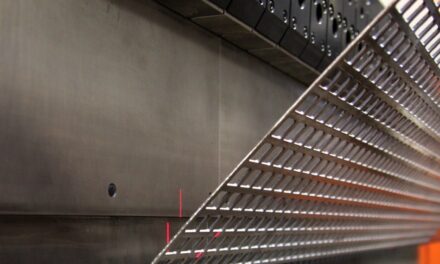
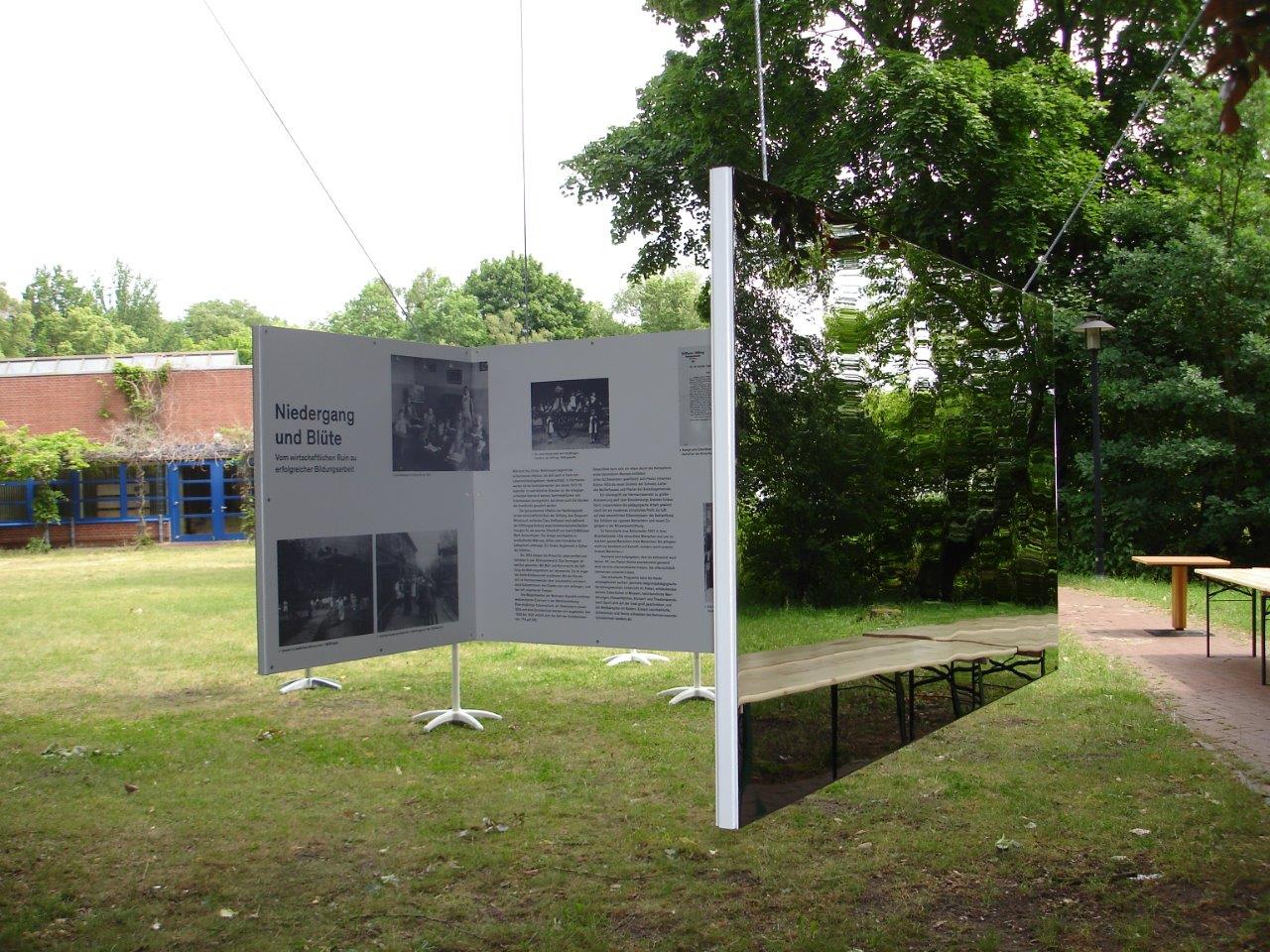 Mirror-polished stainless steel sheet metal at an art exhibition
The Benefits of Mirror-Polished Stainless Steel Sheets in an Indoor Riding Arena
rotec describes the surface of its mirror sheets as being made of 1.4301 stainless steel with very high reflectivity. At the same time, the company emphasizes that the reflective properties are in no way inferior to those of glass mirrors. This is particularly interesting for stainless steel mirrors in the riding arena, because they require not only durability but also a clearly visible mirror effect.
Added to this is the safety advantage. Stainless steel mirrors are shatterproof. Even under heavy mechanical stress, there is no risk of injury—a concern that must always be considered with glass mirrors. Furthermore, mirror-polished stainless steel sheets are corrosion-resistant and are therefore generally suitable even for more demanding environments. It is precisely this combination of safety, durability, and high-quality appearance that makes the material so attractive for equestrian sports.
Materials, Formats, and Processing at rotec
rotec offers mirror-polished stainless steel sheets in thicknesses ranging from 0.8 to 2.0 mm. To ensure quick availability, several stock sizes are listed. These include, among others, 1000 x 2000 mm and 1250 x 2500 mm in 1.0 mm and 1.5 mm thicknesses. This makes it possible to cost-effectively construct many commercial projects as well as specialized applications, such as stainless steel mirrors in riding arenas.
In our in-house sheet metal processing center, sheets can be cut to custom dimensions, rolled, folded, punched, laser-cut, and edged. This allows for great design flexibility. At the same time, rotec highlights an important point. When bending, the edge becomes hidden. This information is also valuable for designers, because visible edges and transitions on mirror-finished surfaces must be taken into account early in the design process.
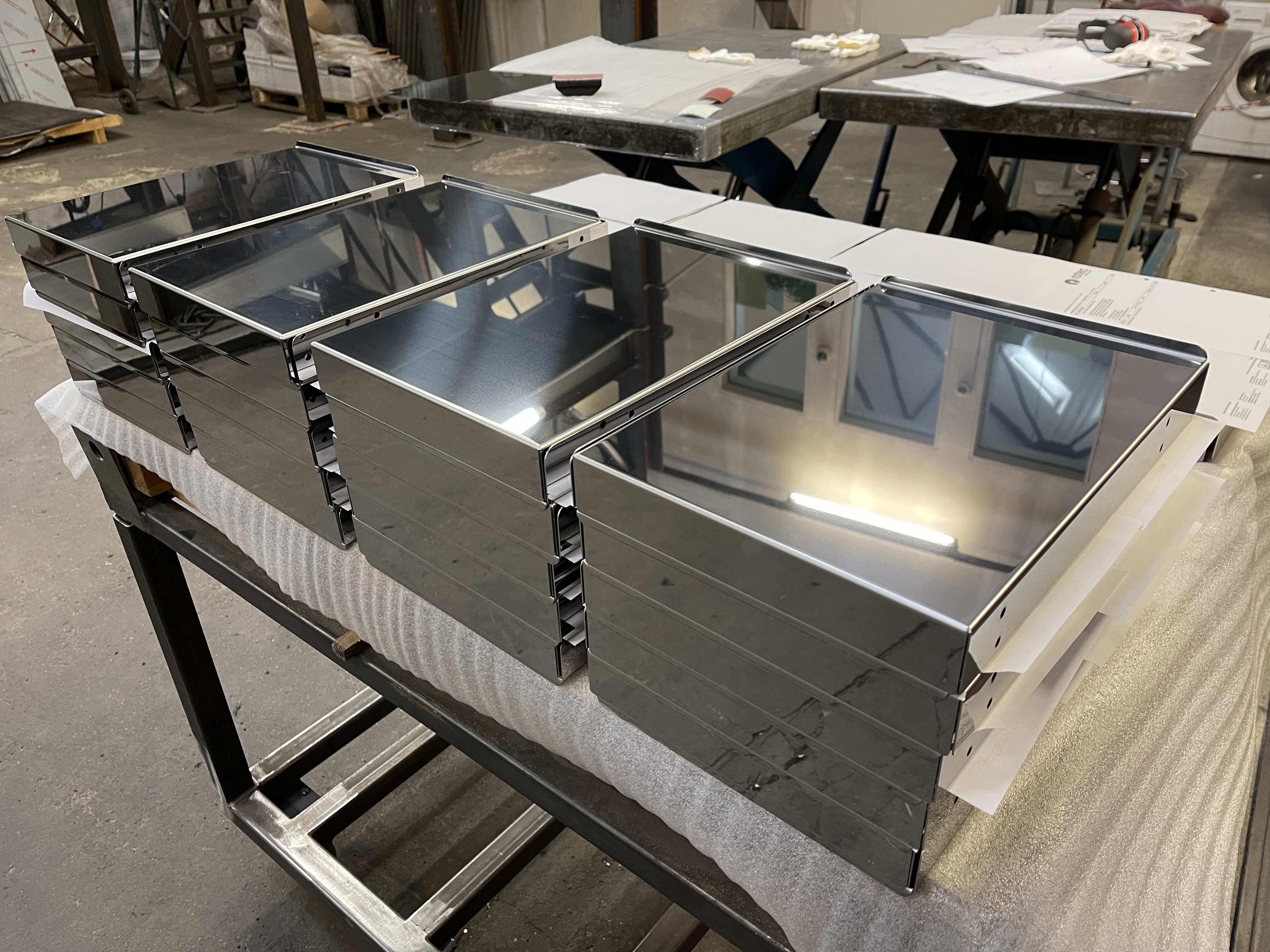 Machining of mirror-polished stainless steel parts at rotec in Berlin.
Common Problems with Stainless Steel Mirrors in Indoor Riding Arenas
Mistake 1: The substrate is not inspected
The most common mistake is assuming that a mirror-polished sheet of metal can be installed just like an ordinary sheet of metal. That is definitely not the case. Without a flat and rigid mounting surface, distortions can quickly occur.
Mistake 2: The mirror effect is equated with a glass mirror
Stainless steel mirrors offer very high reflectivity. Nevertheless, their effect depends more on the surface they are mounted on and their construction. Anyone who ignores this dependence is misjudging the material.
Mistake 3: The format and mounting are finalized too late
Large sheets of metal look impressive, but require greater care when it comes to the support structure, transportation, and installation. For this reason, the size, joint layout, and fastening methods must be planned early on.
Mistake 4: Visible edges and machining are underestimated
Edges and transitions are particularly noticeable on reflective surfaces. For this reason, cutting, bonding, framing, and connection details should be defined as early as possible.
What Planners and Barn Operators Should Keep in Mind
Anyone who wants to install stainless steel mirrors in an indoor riding arena should not view the project as merely a matter of purchasing sheet metal. It makes sense to coordinate the technical details early on. In doing so, the substrate, backing plate, sheet size, material thickness, mounting method, and desired mirror effect should all be considered together. This is precisely how you can avoid future complaints and visual issues.
The intended use should also be taken into account in the planning process. An indoor riding arena involves movement, dust, changing lighting conditions, and, in some cases, high mechanical stress. Therefore, the solution must be effective not only visually but also during day-to-day operation. Stainless steel mirrors are very well suited for this purpose when planned systematically.
Other Applications for Shatterproof Stainless Steel Mirrors
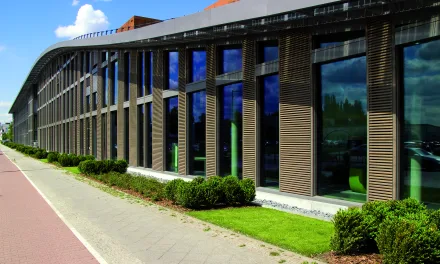
The indoor riding arena is a very illustrative example, but it is not the only application. Among other things, rotec lists column cladding, wall mirrors in elevator cabs, traffic mirrors, and use in high-traffic public facilities as applications for mirror-polished stainless steel sheets. This range of applications demonstrates that stainless steel mirrors are not merely a specialty product for isolated cases, but rather a versatile material for demanding projects.
You can also find more application photos of mirror-finished sheet metal and stainless steel mirrors in our Photo Gallery of Mirror Sheets and Stainless Steel Mirrors.
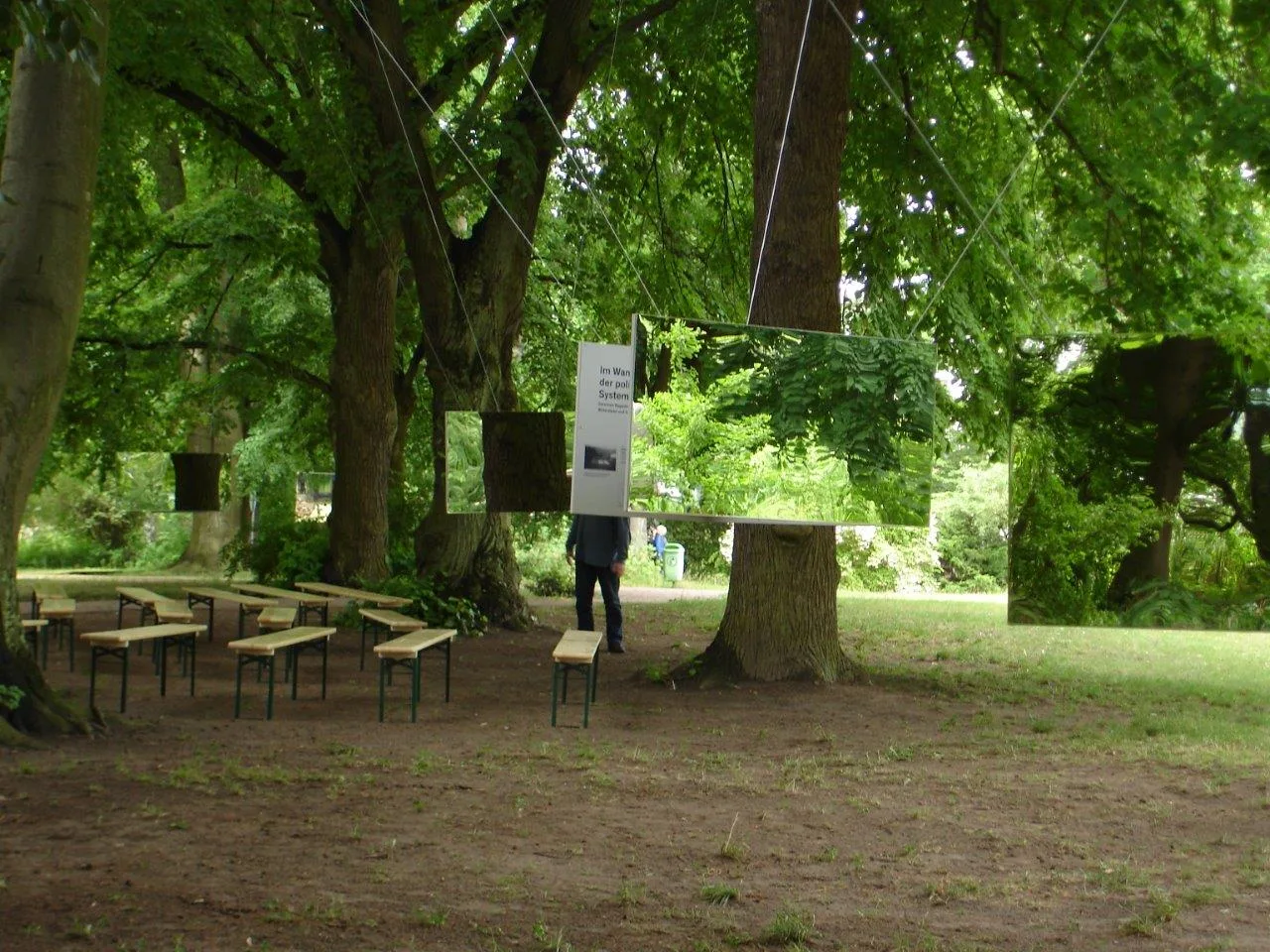
Checklist for Stainless Steel Mirrors in the Riding Arena
- Define the application area and the desired mirror effect.
- Evaluate break resistance and usage conditions.
- Check the surface for flatness and rigidity.
- Determine the support plate or substructure early on.
- Select the format and material thickness that are appropriate for the surface.
- Coordinate the fastening and bonding procedures from a technical standpoint.
- Consider visible edges and machining.
- Installation should only be carried out based on a clean, detailed design plan.
Conclusion
Stainless steel mirrors in indoor riding arenas are a technically sound solution when safety, heavy-duty use, and high-quality reflectivity must all be combined. However, the case study from rotec also clearly shows that the material alone does not determine success. Only a suitable substrate and professional installation ensure a satisfactory result.
That is precisely where the true added value of this project lies. It not only highlights the advantages of mirror-polished stainless steel sheets but also demonstrates the difference between a haphazard installation and a well-thought-out design. If you’re planning to install stainless steel mirrors in an indoor riding arena, at a horse farm, or for other demanding applications, you’ll find everything you need on the page Custom-Made Stainless Steel Mirror Sheet Additional information on materials, formats, processing, and installation.


 EN
 DE
 ES
 FR
 IT
 NL
 PL
 TR
One day my friend Pettie left her lemur and possum in one of her examinization rooms (she is the veterinarian animals doctor). This room did have a safety mirror made of inox in case of a need to treat a large animal like a big dog or ibex so it could not smash it bringing danger to it and the doctors. And when she came back these animals were frolicking to and fro with seeing them self which gave much amusement.
However as she reported me, no such repeat would be had when one owner brought family pistol shrimp in for checkups. If not known of this animal, it has make very loud noise with claw to stun fish to eat! Apparently, the animal had a mischievous streak of using its claw to crack mirrors it would see for its own amusement. Pettie did have much confusion to see the animal keep trying to crack this inox mirror and indeed did tire out because it could not!
She told the shrimp owner that if again this happens, would be paying for her own doctor bills because of how loud to the ear canal this shrimp did make its noises! (But, of course Pettie did just joke and no such charge would be made upon the owner as it was joke I feel I should say)