
Technical Article | Construction Site Safety
Preventing Cable Theft at Construction Sites
Security measures, fence monitoring, and electronic security systems from rotec
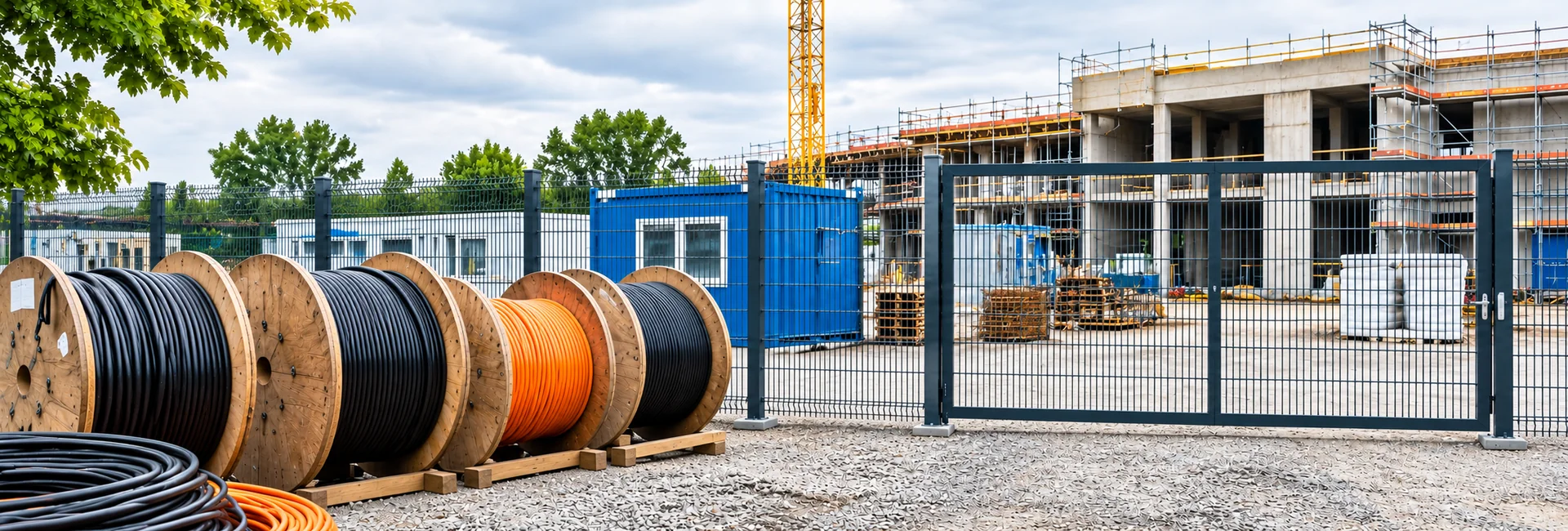
Preventing Cable Theft at Construction Sites: Effective protection starts with secure access points, controlled material storage areas, and a clear emergency response plan. Electronic surveillance can also provide early warning of unauthorized access attempts. The appropriate technology depends on the property, its perimeter, and the construction schedule.
The economic consequences can be significant. In a documented theft at a solar farm construction site in Schashagen, copper cables and accessories worth more than 120,000 euros were stolen. Depending on the incident, this can also result in repairs, replacement purchases, and project delays.
rotec Berlin Metalltechnik GmbH assists building owners, construction companies, and architectural firms in selecting appropriate mechanical and electronic security measures. With Microguard, Flexiguard, Omni Guard Radar, and electronic security fences, a variety of solutions are available. It is crucial that the technology and operational processes are well-aligned.
Which safety solution is right for your construction site?
The short answer: A construction fence encloses a site but does not automatically provide enhanced protection against break-ins. If there are valuable cable assets or access points that are difficult to monitor, additional security measures may be advisable.
| Protective function | Possible rotec solution | Important Requirement |
|---|---|---|
| Monitor open access roads and designated material storage areas | APS Microguard | Proper transmitter and receiver positions, appropriate detection corridor |
| How to Detect Tampering with an Existing Sturdy Fence | APS Flexiguard | Appropriate fence design, professional sensor installation |
| Monitor large outdoor areas over the long term | APS Omni Guard Radar | Prefers stationary installation; unobstructed detection areas |
| Secure high-risk, controlled outdoor areas | Electronic Security Fence | Review of Technical and Legal Requirements |
Are you planning to secure a construction site? Please send us a site plan, the lengths of existing fences, access roads, and the planned construction period. rotec will work with you to explore possible solutions for your project. Request a security consultation from rotec.
1. Why Cable Theft on Construction Sites Can Cause Significant Economic Losses
Copper is an important material for the energy supply and numerous technical installations. That is why many construction sites have large quantities of high-quality copper cable.
For example, they are needed for electrical installations, power distribution systems, building connections, transformer stations, and technical systems.
Industrial buildings, data centers, and energy infrastructure projects, in particular, may require significant amounts of cable.
Because copper has significant monetary value, unsecured cable stocks are attractive to thieves. However, the financial consequences of a theft are not limited to the value of the stolen material.
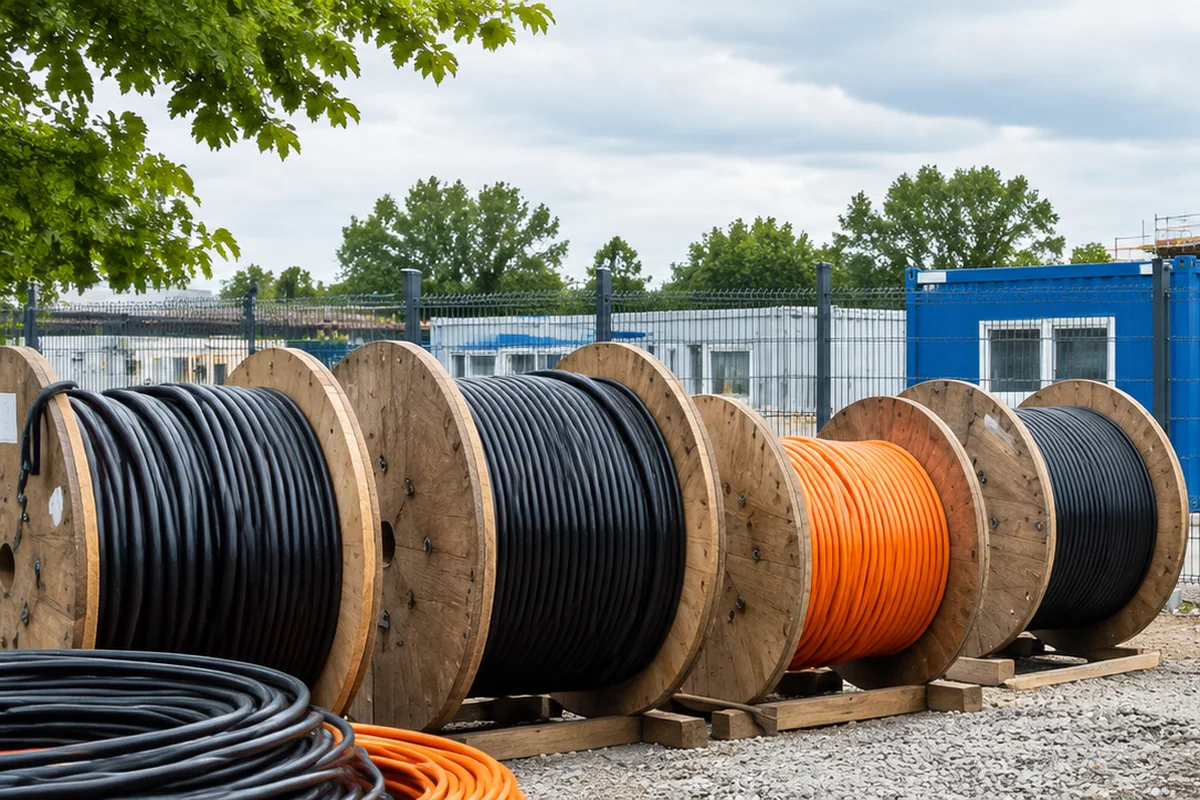
Loss of materials and additional repair costs
If thieves steal stored cable reels, the construction company must first procure replacements.
However, different cable types, conductor cross-sections, and project-specific requirements can make it difficult to source replacement cables on short notice.
Even more problematic are cables that have already been installed. If such cables are forcibly cut, additional damage to connections and technical equipment may result.
As a result, additional work may be required before the affected systems can be safely operated again.
This may include electrical inspections, repairs, and the redocumentation of work that has already been completed.
Therefore, an economic assessment of damages should take into account both the loss of materials and any potential consequential costs.
Construction Delays and Problems with Project Execution
On a construction site, numerous trades work together. If important electrical lines are missing, subsequent work may be affected.
This applies, for example, to the completion of technical systems or the planned commissioning of parts of a building.
Even inspection and acceptance dates that have already been scheduled may be affected. In addition, this will require additional coordination with suppliers, subcontractors, and the construction management team.
Whether significant delays actually occur depends on the specific construction project. Nevertheless, this risk should be taken into account as early as the planning stage for site safety measures.
Which construction sites may be particularly at risk
Construction sites with large numbers of cables, long construction periods, and unguarded outdoor areas deserve special attention.
These include, among other things:
- Industrial and commercial construction sites with extensive electrical installations.
- Data centers and technical infrastructure buildings.
- Substations, transformer stations, and power facilities.
- Solar farms during the construction phase.
- Large-scale housing construction projects with central material storage areas.
- Public construction projects with construction sites that are temporarily unoccupied.
- Storage areas for cable reels, tools, and technical components.
However, not every construction site is automatically at high risk of theft. Rather, the key factors are the value of the materials on site, accessibility, and local security conditions.
2. Five Police Cases: How Offenders Operate on Construction Sites
The following five cases are taken from official police reports from October and November 2026. They document various vulnerabilities. However, it cannot be concluded from this that a specific Rotec system would have prevented the respective crime.
Gronau-Epe: Fence panel tampered with, copper cable stolen
On October 27, 2026, unknown perpetrators forcibly removed the lock from a fence panel at a construction site. They then stole several hundred kilograms of copper cable. The police estimated the total damage at several thousand euros. No separate figures are available for material and property damage.
Lessons for Planning: The security concept includes not only fence panels, but also connecting elements, gates, and joints.
Source: Borken County Police Department, October 28, 2026.
Heilbronn: About 800 meters of cable stolen from two construction sites
In late October 2026, thieves opened an unsecured fence at a construction site and stole about 200 meters of copper cable. At a neighboring construction site, two cable drums—each containing about 300 meters—went missing. The value was estimated at several thousand euros. It remains unclear how the perpetrators gained access to the second crime scene.
Lessons for Planning: Unsecured openings can compromise the entire perimeter. It is therefore essential to conduct a final inspection at the end of the workday.
Source: Heilbronn Police Headquarters, October 27, 2026.
Schashagen: Materials worth over 120,000 euros have gone missing
On October 26, workers at a solar park construction site in Schleswig-Holstein noticed a theft. According to police, nearly 100 cable reels—each weighing about 60 kilograms—as well as other accessories were stolen. The value of the stolen goods exceeded 120,000 euros. Given the quantity, the police suspected a transport vehicle was used; however, this was not definitively confirmed.
Lessons for Planning: When dealing with large cable inventories, special attention should be paid to storage areas, access routes, and the monitoring of material shipments.
Source: Lübeck Police Department, November 2, 2026. Additionally: Preventing Cable Theft in Solar Farms.
Delmenhorst: Another Theft at a School Construction Site
In October, copper cables were stolen twice within a few days from a fenced-off school construction site. In the second incident, the police documented signs of forced entry. Specific figures regarding the amount of damage were not released. This case illustrates why security measures should be checked even after a break-in.
Source: Delmenhorst Police Station, October 19, 2026.
Ennigerloh: Security service reports suspicious activity
On November 3, at approximately 1:35 a.m., a security guard noticed suspicious activity at a construction site and alerted the police. Responding officers found cables that had already been cut and took a suspect into custody. No completed theft was reported. This case underscores the value of an organized response to observations and alarm notifications.
Source: Warendorf Police Department, November 4, 2026.
What conclusions can be drawn from these cases?
Three factors stand out in particular: secured access points, protected materials, and the timely detection of suspicious activity. That is why a construction site should not merely be fenced off. Equally important is who monitors the site and how the site responds to any indications of a problem.
3. Why conventional construction fences alone often do not provide adequate protection against break-ins
A construction fence is a basic piece of equipment at many construction sites.
It separates work areas from their surroundings and marks the property line. It also helps organize authorized access.
However, a standard portable construction fence differs significantly from a permanently installed security fence system.
Therefore, its actual protective effect should be assessed realistically.
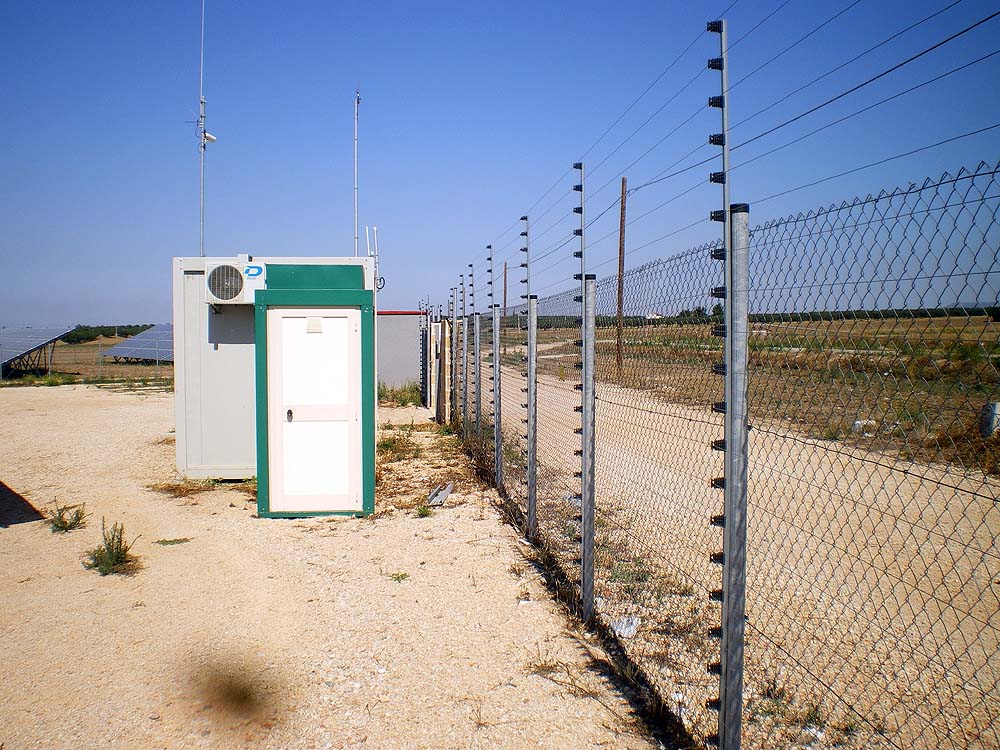
Difference Between a Portable Construction Fence and a Security Fence
Portable construction fences are primarily designed for flexible use.
They can be set up, moved, and adapted to changing conditions on the construction site. These features are useful for construction site operations.
However, a mobile design does not automatically mean greater mechanical resistance to break-ins.
Permanently installed security fences, on the other hand, can be designed to meet specific security requirements.
Posts, foundations, fence panels, and connecting elements, among other things, play an important role in this process.
For construction sites that are particularly at risk, a more sturdy enclosure may therefore be advisable.
rotec provides further information in its technical article Fence Construction, Security Fences, and Installation in Berlin.
Take into account gates, access roads, and temporary openings
Construction sites regularly require unobstructed access roads.
Delivery vehicles bring in materials, while waste management companies pick up containers. At the same time, tradespeople, construction managers, and subcontractors move between different work areas.
For this reason, construction site access points must be both functional and adequately secured.
It is particularly important to have clearly defined responsibilities.
Who is authorized to open a gate? Who checks the security measures after closing time?
In addition, any temporary removal or modification of fence sections should be documented.
Once the work is complete, these areas must be properly secured again.
Why Safety Requirements Change During the Construction Period
A construction site rarely remains unchanged for several months.
New sections of the building are being constructed, material storage areas are being relocated, and access roads are changing.
In addition, larger containers or parked vehicles can obstruct the view of certain areas.
This also changes the requirements for potential electronic monitoring.
For example, a suitable location for a camera might later be obscured by new parts of the building.
For this reason, construction site safety measures should be reviewed regularly and adjusted as needed.
4. Prevent cable theft at construction sites through organizational and mechanical measures
Technical inspections are an important part of modern safety concepts.
However, effective protection begins with the organization of the construction site. Even simple measures can help reduce opportunities for theft.
Store copper cables and valuable materials safely
Cable reels should, if possible, not be left unprotected in freely accessible areas of construction sites.
Particularly valuable materials can be stored in an additional, secured storage area.
In this context, it is advisable to plan inventory in a way that takes the actual construction schedule into account.
If cables are delivered just before they are scheduled to be processed, the inventory of materials stored for long periods decreases.
However, this type of organization cannot be implemented for every project.
For larger temporary storage areas, therefore, appropriate measures to secure the storage area should be evaluated.
Organize the delivery and removal of materials in a traceable manner
On larger construction sites, several companies often work at the same time.
This results in numerous material movements and varying responsibilities.
Therefore, it is advisable to establish clear guidelines for the receipt and distribution of high-quality materials.
Even authorized pickups should be documented in a way that allows for traceability. This may make it possible to identify missing cable inventory sooner.
In addition, controlled access can make it more difficult to remove large quantities of material without being noticed.
Conduct regular inspections of the construction site fencing
A fence should be inspected regularly for visible damage.
Particular attention should be paid to gates, connecting elements, and sections of fence that have been temporarily modified.
Damaged locks or loose fasteners can also compromise security.
Any defects found should be documented and corrected promptly.
Before extended periods of downtime, it is recommended to perform an additional final inspection. This is because many construction sites are unattended for long periods of time at night or on weekends.
Take lighting and unobstructed sight lines into account
Appropriate outdoor lighting can make areas relevant to safety more easily recognizable.
It also helps with identifying and assessing suspicious activities.
However, lighting alone does not prevent theft. Therefore, it should be coordinated with other security measures.
When planning camera surveillance, particular attention must be paid to lighting conditions, potential glare, and areas with obstructed views.
5. Electronic Construction Site Monitoring with rotec APS
Electronic surveillance complements mechanical measures when there is a higher risk of theft. These systems perform various functions: Fence sensors detect certain types of tampering, microwave barriers secure defined corridors, and radar monitors larger areas. The specific location determines which solution is best suited.
rotec APS Microguard for construction site access roads and material storage areas
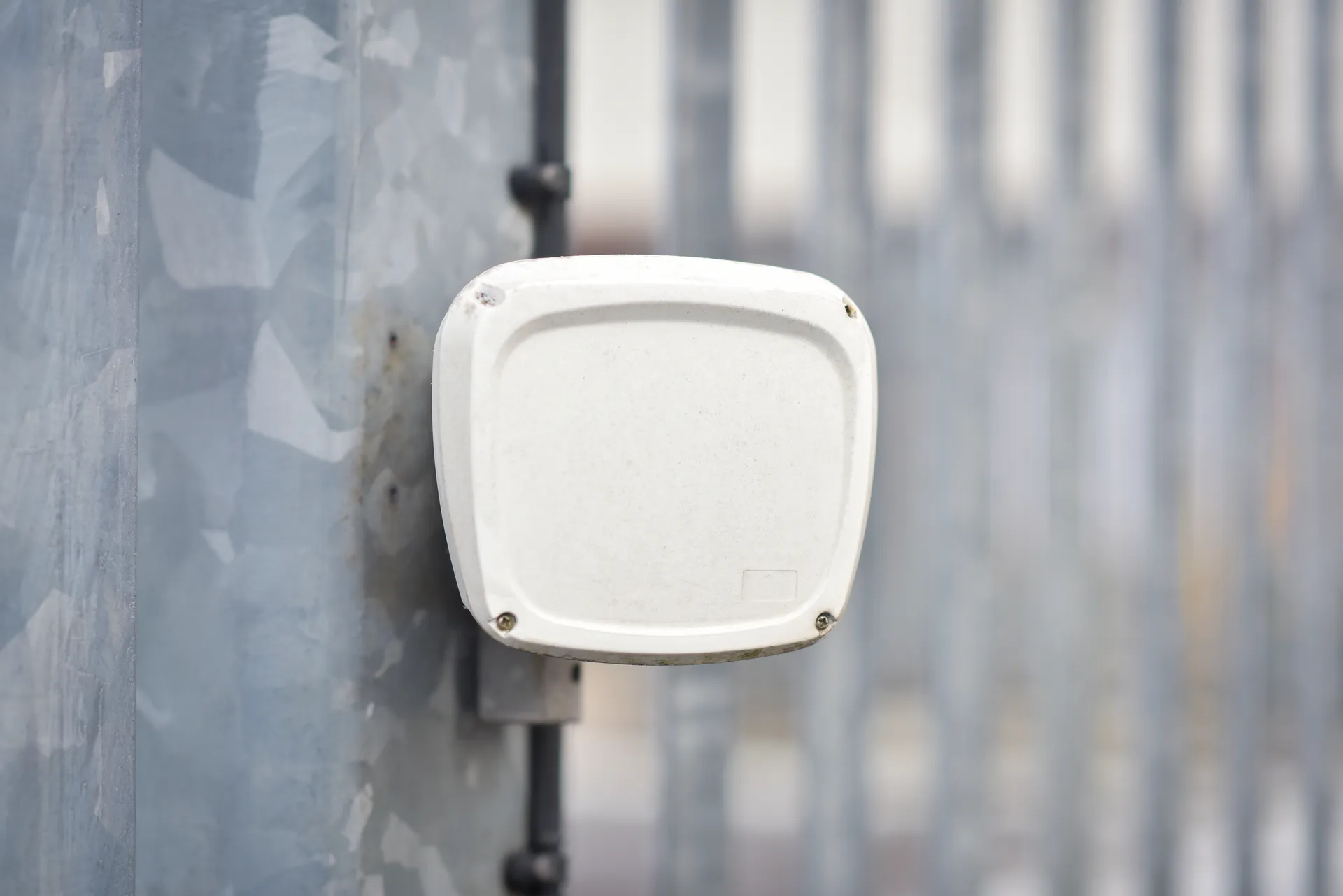
Not every construction site has a safety fence that is suitable throughout the entire site. Open access roads and storage areas, in particular, can therefore be monitored using separately installed sensors. rotec APS Microguard Depending on the model, it uses either a microwave barrier or active infrared light barriers. The system can trigger an alarm when an object passes through a designated detection zone.
With the Microguard MW-200, the transmitter and receiver generate a three-dimensional microwave field. According to the manufacturer, the maximum monitoring range is up to 200 meters. The geometry and the actual usable range depend on the installation and environmental conditions. Digital signal processing and automatic gain control help adapt the system to weather conditions. However, this does not completely rule out false alarms.
A solar-powered version of the MW-200 is also available. Its actual operating time depends on energy storage capacity, power consumption, and site conditions. A technical evaluation is still required.
Customer Benefits: Microguard can monitor access points and material storage areas without requiring a mechanical fence to support the sensors.
rotec APS Flexiguard for electronic fence monitoring
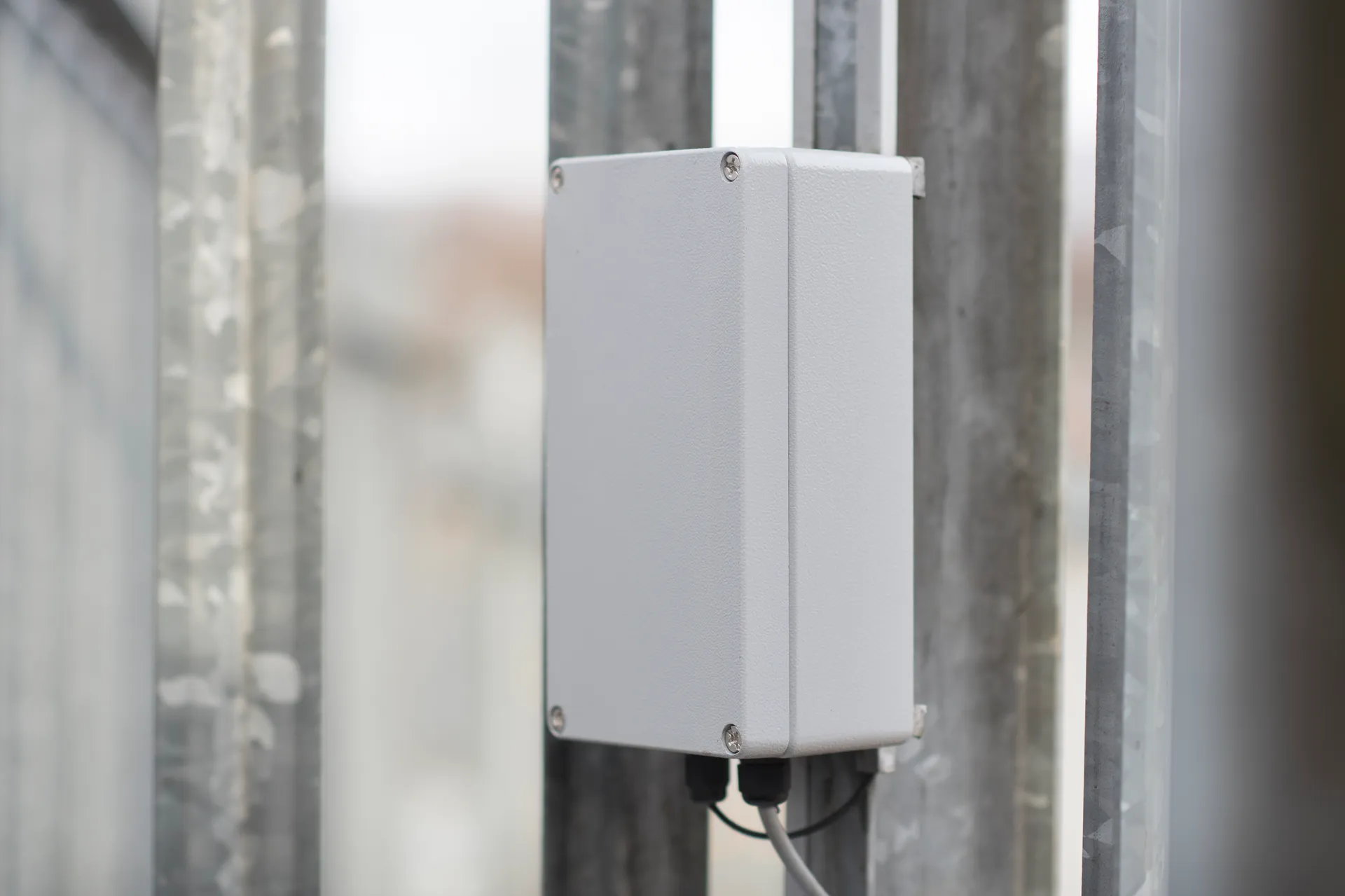
rotec APS Flexiguard uses a microphone-based sensor cable on suitable fencing systems. It detects mechanical vibrations that can occur, for example, when climbing, cutting, or lifting. An evaluation unit analyzes the signals and can forward an alarm message.
Automatic adjustment to certain environmental factors helps ensure reliable evaluation. Nevertheless, appropriate mounting, proper parameterization, and periodic functional tests are required. Unstable or frequently repositioned construction fences are not automatically suitable.
Customer Benefits: Manipulation can be detected simply by examining a sturdy property fence. Read more in the technical article Retrofit Fence Monitoring with Flexiguard.
rotec APS Omni Guard Radar for large, stationary-monitored areas
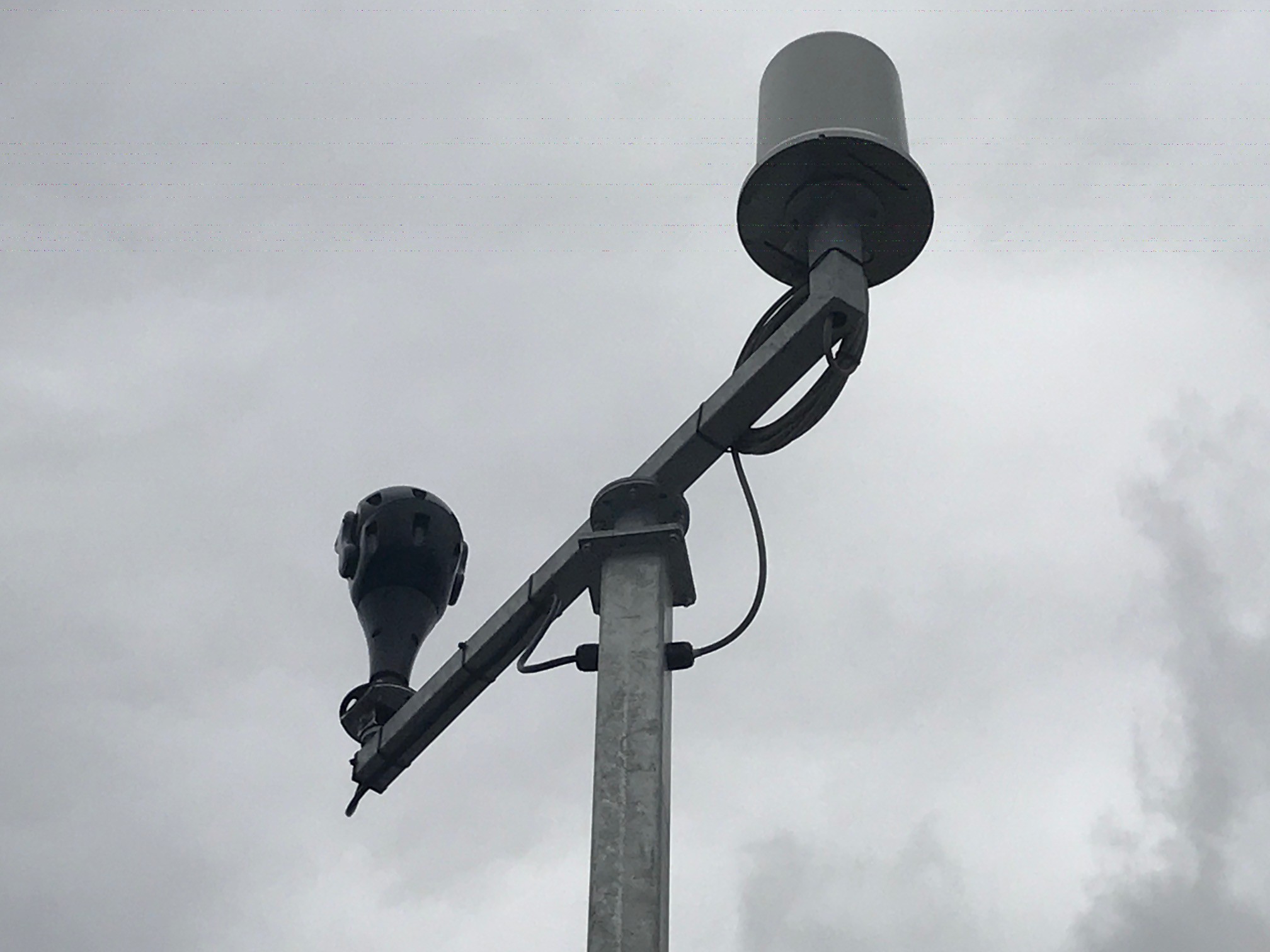
The rotec APS Omni Guard Radar Detects movement within defined outdoor areas. According to the manufacturer, the maximum range for detecting people is up to 200 meters under suitable conditions. A connected PTZ camera can automatically pan to detected targets and assist in evaluating the event.
Following direct technical consultation with the manufacturer, Omni Guard Radar is suitable primarily for permanent, stationary installations. Therefore, for long-term construction sites and large company premises, the system should be positioned based on a site plan. Buildings, containers, and other obstacles can interfere with detection.
The specific zone configuration must be determined during project planning based on the selected system configuration. A theoretically possible coverage area does not guarantee complete monitoring.
Customer Benefits: Larger outdoor areas can be monitored continuously, and events can be assessed more precisely via a connected camera.
rotec APS Electronic Security Fence for Deterrence
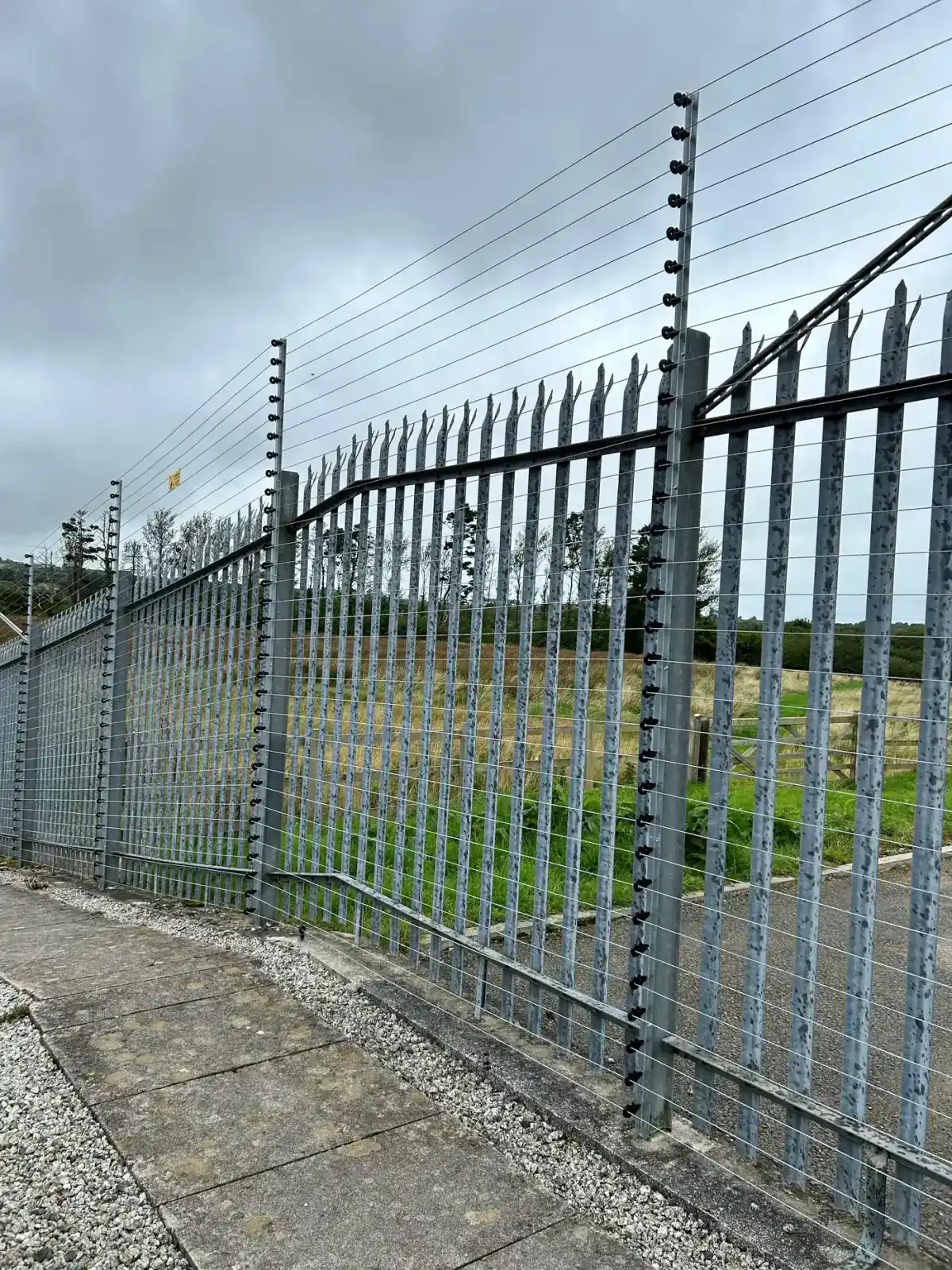
The Electronic security fence by Rotec combines the detection of specific forms of tampering with low-power electrical pulses. Depending on the model, interruptions or short circuits, for example, can trigger alarm messages.
This technology is not suitable for every construction site. Especially when access permissions change, electrical safety, warning signs, access controls, and relevant regulations must be carefully reviewed.
Customer Benefits: Sites that are particularly at risk, have been in use for a long time, and are monitored can combine additional deterrence and detection measures. Further reading: Security Fence for Critical Infrastructure.
Which techniques should be combined?
A sturdy exterior fence can potentially be monitored using Flexiguard. Microguard can supplement an open driveway, while Omni Guard Radar provides stationary coverage of larger open areas. The systems do not have to be used together. The goal is to provide adequate security without unnecessary components.
Which system is right for your construction site? For an initial assessment, a site plan, information about fences and gates, the estimated perimeter length, available materials, and the project duration are often sufficient. Request Project-Specific Security Consulting.
6. Why the alarm chain is crucial for effective construction site safety
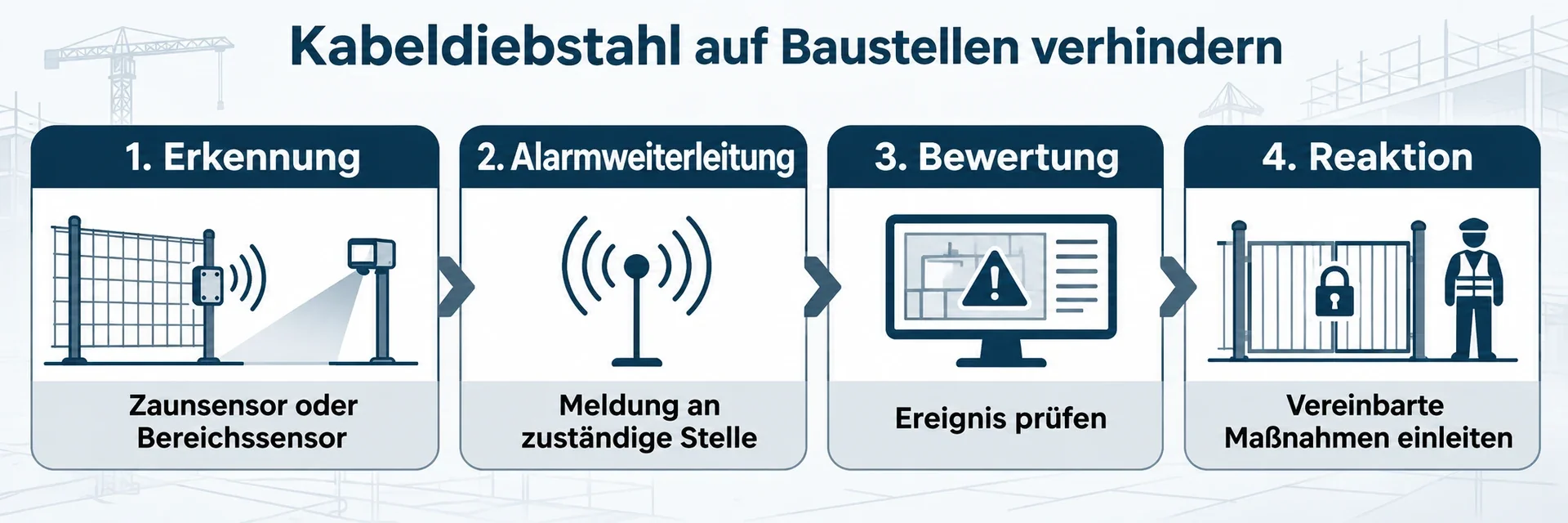
An alarm notification alone does not prevent theft. The technology is only effective when a responsible authority receives the notification, verifies it, and takes the agreed-upon measures.
Detect security incidents early
Appropriate monitoring should detect security-related incidents as early as possible.
With an electronic fence sensor system, this can occur during an attempt to tamper with the fence.
Microguard, on the other hand, can detect when someone crosses a properly configured detection zone.
A radar system detects movement within specific surveillance zones.
Which events are reported depends on the technology, configuration, and local conditions.
Detection must therefore be tailored to the actual security task.
Checking and Properly Assessing Alarm Notifications
Not every technical alert automatically means a security breach.
That is why the responsible agency needs appropriate information to be able to assess the incident.
Additional video surveillance can be helpful here.
Under the right conditions, it allows for a visual inspection of the area being monitored.
This makes it easier to assess certain events.
However, applicable data protection requirements must be followed.
Define Responsibilities for a Rapid Response
Even before the system goes live, it should be clear who will receive an alarm notification.
In addition, it must be determined what measures will be taken next.
This may include, for example, notifying a security service or calling the police.
The specific response depends on the nature and assessment of the incident.
It is particularly important to be available outside of regular business hours.
This is because many cable thefts occur at night or during extended downtime.
Take alarm forwarding and response time into account
A professional security plan should also take the expected response time into account.
After all, reporting an issue early on is only of limited use if no one is available.
Therefore, alarm recipients, backup procedures, and possible response routes must be established.
It should also be possible to check technical communications for malfunctions.
During the planning phase, factors such as data transmission, power supply, and the availability of the relevant department play an important role.
Our technical article explains additional fundamentals Retrofit perimeter protection and plan for open-area security.
7. Properly Planning a Safety Plan for Construction Sites
Good planning begins with a site plan, access points, storage areas, and the inventory items that require special protection. From this, mechanical and electronic security measures can be determined based on specific needs.
Record Property Boundaries and Access Points
First, there should be a current construction site plan available.
It shows, as much as possible, all property boundaries, gates, driveways, and relevant buildings.
In addition, existing fencing and any possible crossings should be documented.
This provides a basis for assessing existing vulnerabilities.
Areas that are not regularly monitored at night or on weekends are particularly important.
Treat Valuable Material Storage Areas as Separate Protected Zones
Not every section of a construction site requires the same level of safety.
For example, a warehouse storing high-quality cable reels may require a higher level of protection than an area used to store ordinary building materials.
For this reason, particularly valuable storage areas should be considered separately.
For larger construction sites, an additional internal safety measure may be advisable.
This means that it is not necessarily required to equip the entire property with the same surveillance technology.
Rather, measures can be targeted specifically at areas where there is a higher risk.
Check the power supply and data transmission
Electronic security systems require appropriate operating conditions.
Depending on the system, this includes a reliable power supply and functioning data transmission.
Microguard, for example, offers a solar-powered version.
Other systems may offer battery backup or mobile communication capabilities.
However, the actual operating time and availability must be assessed on a project-by-project basis.
In addition, procedures should be established for identifying and addressing technical malfunctions.
Coordinating Fixed Monitoring with Flexible Construction Site Areas
For long-term construction projects, on-site monitoring can be particularly useful.
The intended location and the planned construction phases should be taken into account as early as the technical design phase.
This is because the spatial conditions change as construction progresses.
This may necessitate new surveillance areas. At the same time, existing storage areas or access roads may no longer be needed.
When installed properly, Microguard can monitor additional access points and open passages.
A fixed radar installation, on the other hand, can cover larger areas.
For this reason, it is advisable to periodically reassess the security plan.
The facility should be inspected, especially after changes to the perimeter fencing or a documented security incident.
8. How much does cable theft cost, and when is professional surveillance worth it?
Whether additional monitoring is economically justified depends on the value of the material, potential consequential damage, project duration, and operating costs. The purchase price of a sensor alone is not the deciding factor.
Take into account material loss and potential follow-up costs
The financial loss resulting from cable theft can far exceed the material value.
This is because repairs, inspections, and replacements may also be necessary.
Possible construction delays must also be taken into account.
The police case in Schashagen illustrates the scale of large-scale thefts of materials.
Copper cables and accessories worth more than 120,000 euros were stolen from there.
However, it is not possible to derive a general average amount of damages for construction sites from this individual case.
An economic assessment must therefore always take the specific project into account.
Adapt safety measures to the duration of the project
For construction sites with a short duration, appropriate organizational and mechanical safety measures should be evaluated first.
In addition, appropriate electronic systems may be considered for securing designated access points or material storage areas.
For longer-term projects involving a permanent material storage area, however, a more sturdy enclosure may be advisable.
Fixed radar monitoring may also be a suitable option for such locations.
The key factor is whether the effort involved and the level of protection are commensurate with the actual risk.
Don't forget about operating costs and maintenance
Electronic security systems involve more than just a one-time purchase cost.
Depending on the chosen approach, additional costs for installation, setup, maintenance, and communications may apply.
An external security service can also incur ongoing costs.
For this reason, the cost-benefit analysis should, if possible, cover the entire intended useful life.
A reputable security service takes these factors into account and clearly outlines the individual services it provides.
9. Comply with data protection and technical security requirements
When it comes to electronic construction site monitoring, technical capabilities aren't the only deciding factor.
Legal and company-specific requirements must also be taken into account.
Careful planning is especially important when it comes to cameras and electric security fences.
Privacy in Video Surveillance
Cameras can help verify security-related incidents.
However, individuals and public areas may not be monitored without an appropriate legal basis.
For this reason, the purpose, necessity, and proportionality of video surveillance, among other factors, must be assessed.
In addition, those responsible must comply with the applicable disclosure requirements.
Any potential monitoring of employees must be evaluated with particular care.
Helpful information is provided by the Berlin Commissioner for Data Protection and Freedom of Information on Video Surveillance Ready.
Properly Install Electronic Security Systems
Electronic fencing systems must also be suitable for the intended operating conditions.
In particular, electrical safety, safe traffic routes, and necessary access controls must be taken into account.
The installation should therefore be carried out based on appropriate technical planning.
In addition, the relevant standards and legal requirements for the specific system must be reviewed.
Proper commissioning and documented training help ensure safe operation.
10. Why Rotec Is a Suitable Partner for Construction Site Safety
rotec Berlin Metalltechnik GmbH combines expertise in metal fabrication with the design of mechanical and electronic safety components.
Our range of services includes, among other things, security fences, gates, metal structures, and solutions for electronic perimeter security.
This allows the various requirements of a project to be considered together.
After all, effective construction site safety isn't just about individual products.
Rather, the physical barriers, electronic surveillance, and operational procedures must all work together.
Coordinate mechanical safeguards and electronic monitoring
rotec assists building owners and architectural firms in selecting suitable fencing systems and security components.
These include project-specific metal structures and various electronic monitoring solutions.
The four APS security solutions offer a variety of technical options.
Flexiguard can monitor suitable fencing systems for signs of tampering.
Microguard enables the electronic monitoring of designated access points and open areas.
Omni Guard Radar is particularly well-suited for stationary surveillance of large outdoor areas.
In addition, electronic security fences may be an option for sites that are particularly at risk.
It is particularly important to ensure that the design aligns with the existing property lines and access roads.
The question of whether existing fences can continue to be used should also be considered early on.
This may help avoid unnecessary measures.
Customized security solutions instead of one-size-fits-all standard offerings
Every construction site has different conditions.
That is why rotec recommends starting with a technical assessment of the current situation.
Afterward, we can discuss suitable systems and any necessary additions.
This takes into account, among other things, the fence design, the surveillance areas, and the planned alarm system.
This provides construction companies and building owners with a transparent basis for decision-making.
Quality and Technical Project Management
rotec places great emphasis on expert advice, transparent processes, and reliable project management.
Among other things, the company holds certifications under DIN EN ISO 9001:2015, DIN EN 1090, and DIN EN ISO 3834-3.
The applicability of individual certifications depends on the specific product and scope of services.
Therefore, when selecting electronic security technology, the specific technical requirements and documentation must also be taken into account.
11. Checklist: How can a construction site be better protected against cable theft?
The following checklist helps construction managers and safety officers conduct regular inspections.
A thorough inspection is recommended, especially before weekends and extended periods of downtime.
- Are all construction site entrances properly closed and secured?
- Are the construction fences and fasteners in good condition?
- Are valuable cable reels and other materials stored safely?
- Are material deliveries and pickups documented in a way that allows for traceability?
- Have the sections of the fence that were temporarily opened been fully secured again?
- Are the existing lighting and surveillance systems working properly?
- Have any potential security vulnerabilities arisen due to containers or new sections of the building?
- Are alarm messages reliably transmitted to the intended recipients?
- Are security personnel available even outside of working hours?
- Is there a clear procedure for how to respond to an alarm?
- Have the identified damages and technical malfunctions been repaired?
- Do the safety measures still reflect the current stage of construction?
This checklist is not a substitute for an individual safety assessment.
However, it can help identify typical organizational weaknesses early on.
12. Frequently Asked Questions About Cable Theft on Construction Sites
1. How can cable theft be prevented at construction sites?
The risk can be reduced through appropriate fencing, secure material storage areas, and clear access control.
Electronic surveillance systems may also be used.
It is also crucial to have a reliable alarm system in place so that suspicious events can be addressed.
However, it is not possible to guarantee that all thefts will be completely prevented.
2. Is a standard construction fence sufficient to prevent copper theft?
A standard construction fence primarily serves to demarcate a space.
However, it is not automatically designed to be a burglar-resistant security fence.
Therefore, if there is an increased risk, additional mechanical or electronic safety measures should be considered.
3. Which construction sites are particularly at risk?
Construction sites with large quantities of copper, remote storage areas, and extended periods of unattended time deserve special attention.
Industrial construction sites, power plants, and data centers may also have increased security needs.
However, the actual risk depends on local conditions.
4. Is it possible to monitor an existing construction fence electronically?
That depends on its design and the technology used.
Not every portable construction fence is suitable for sensor-based monitoring.
Therefore, stability, mounting, potential vibrations, and other technical requirements must be checked.
5. How does rotec APS Microguard work?
Depending on the model, rotec APS Microguard uses either microwave barriers or active infrared light barriers.
This creates blind spots in surveillance.
If a person crosses the detection zone that has been set up accordingly, the system can trigger an alarm.
Microguard is particularly well-suited for monitoring designated entry points and open areas of a property.
6. What are the advantages of fixed radar monitoring?
A stationary radar surveillance system can electronically monitor large outdoor areas and defined sections of a property.
This solution is particularly interesting for long-term security tasks.
Actual suitability depends on the location, existing obstacles, and the intended configuration.
7. How does the rotec APS Omni Guard radar work?
The system detects the movement of people and vehicles within configurable monitoring zones.
According to the manufacturer, the maximum detection range is up to 200 meters.
A connected PTZ camera can automatically pan, tilt, and zoom to focus on a detected target.
After consulting directly with the manufacturer, a permanent, stationary installation is recommended for this system.
8. What is rotec APS Flexiguard?
rotec APS Flexiguard is a system for the electronic detection of certain mechanical attacks on compatible fencing systems.
A sensor cable detects vibrations along the fence.
An evaluation unit processes these signals and can report relevant events as alarms.
9. Can Flexiguard detect when a fence is cut through?
The system is designed to detect certain cutting attempts and other mechanical manipulations.
However, actual detection performance depends on the fence design, the installation, and environmental conditions.
That is why project-specific planning is necessary.
10. Can an electronic safety fence be used on any construction site?
No. Technical suitability and legal admissibility must be verified for each specific location.
Electrical safety, access controls, and the relevant standards are particularly important.
An electronic security fence should therefore not be installed without professional planning.
11. Can surveillance systems operate without a permanent power connection?
Some systems have battery backup or other suitable power supply solutions.
For the Microguard MW-200, for example, the manufacturer offers a solar-powered version.
Whether self-sufficient operation is possible depends on the specific system configuration and energy requirements.
The required operating time must therefore be verified for the specific project.
12. Is a security service required when using electronic construction site monitoring?
That depends on the security plan and the agreed-upon alarm procedures.
It is crucial that the appropriate authority reliably receives reports and responds to them appropriately.
If there is an increased risk, it may be advisable to use a professional security control center or a security service.
13. How much does electronic construction site monitoring cost?
The costs depend, among other things, on the size of the property, the construction period, the technology used, and the desired alarm system.
Installation, maintenance, and communication costs must also be taken into account.
For this reason, we recommend a customized quote based on the actual project conditions.
14. What information does rotec need to provide a quote?
It is helpful to have a current site plan, photos, and information about the size of the construction site.
In addition, rotec needs information about existing fences, gates, storage areas, and materials requiring special protection.
In addition, the planned construction period, the power supply, and the desired alarm forwarding are important.
This will allow us to prepare an initial technical assessment.
13. Conclusion: Preventing cable theft on construction sites starts with proper security planning
The documented police cases show that cable theft at construction sites can cause significant economic damage.
Areas at particularly high risk include inadequately secured access points, large material storage areas, and construction sites that have been left unattended for extended periods.
That is why effective security measures should be taken into account as early as the project planning stage.
A suitable mechanical enclosure is an important foundation in this regard.
In addition, electronic security solutions can help detect unauthorized access attempts at an early stage.
With rotec APS Flexiguard, suitable fencing systems can be monitored for mechanical tampering.
rotec APS Microguard, on the other hand, enables the monitoring of designated entry points and open areas on the property.
For larger outdoor areas, stationary monitoring using the rotec APS Omni Guard Radar may be a good option.
For sites that are particularly at risk, electronic security fences can also serve as a supplementary solution.
However, the technology only demonstrates its practical value through reliable alarm transmission and a clearly organized response.
That is why the synergy among all these measures is crucial.
rotec Berlin Metalltechnik GmbH assists construction companies, building owners, and architectural firms in selecting appropriate safety solutions.
The focus is on the project's technical requirements and a transparent backup strategy.
Planning Construction Site Safety with rotec
Would you like to better protect high-value cable inventory, large material storage areas, or particularly vulnerable construction site areas?
Then talk to rotec about a suitable mechanical and electronic safety solution.
Please send us a site plan, any photos you have, and a brief description of your project.
Based on this, we can work together to determine which safety measures are appropriate for your construction site.
Send a non-binding inquiry about construction site safety to rotec now.
rotec Berlin Metalltechnik GmbH
Werner Voss Dam 58
12101 Berlin
E-mail: info@rotec-berlin.de
www.rotec-berlin.de
Editorial research status: November 8, 2026.
The police cases described are based on official publications. Technical system specifications are based on manufacturer data. The suitability of the security systems described must be verified for each specific application.


 EN
 DE
 ES
 FR
 IT
 NL
 PL
 TR